Boxing Gyms in Dallas: Local Classes, Youth Programs and Published Costs
Compare four Dallas boxing options by neighborhood, adult classes, youth eligibility and published fees, with practical questions for choosing a program you can attend.
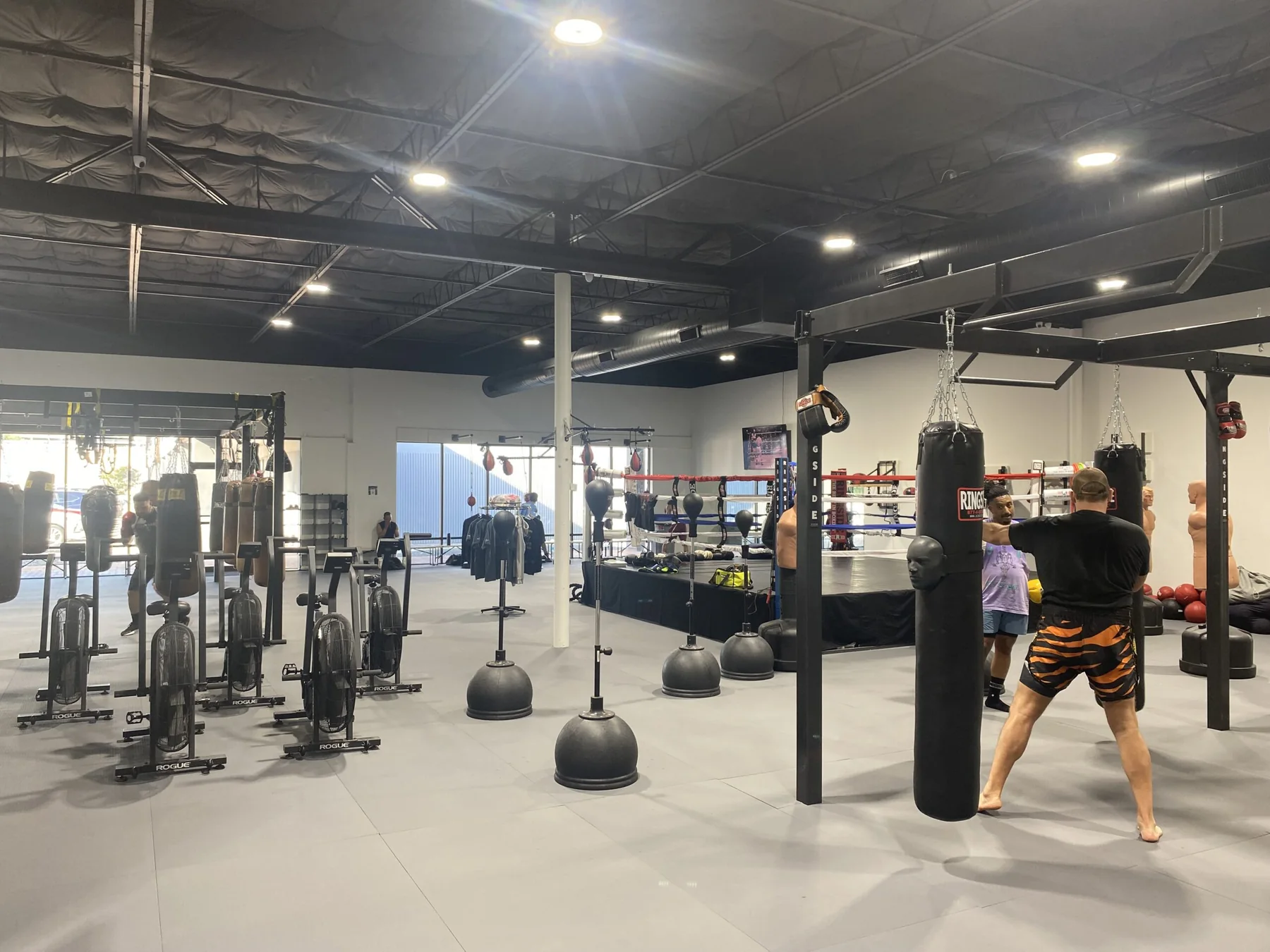
Build a Dallas Shortlist Around Where You Can Train
A useful search for boxing gyms in Dallas should end with a class you can attend regularly. Start with four concrete options: Dallas Fight Club on North Stemmons Freeway, LaBori on East Grand Avenue, R & R on Monroe Drive and AlphaBox on Harry Hines Boulevard. They offer different combinations of group instruction, youth training and individual coaching. This guide compares their public information checked on October 20, 2026; it is an editorial shortlist, without a claim that we visited or tested the gyms.
Keep the search boundary clear. A Plano private trainer or Fort Worth club might be an excellent choice for somebody living there, but a metropolitan Dallas label does not make either a Dallas neighborhood option. Put your home, workplace or school alongside the actual street addresses before comparing offers. Check the journey at your intended training time, including parking and the walk to the correct suite. A map estimate obtained at lunchtime cannot settle whether an evening lesson fits between work and collecting a child.
Provider pages are especially valuable when addresses disagree. Dallas Fight Club currently identifies its facility as 2629 N Stemmons Freeway, Suite 207. Use that information rather than an old directory address, and confirm arrival instructions when reserving. LaBori lists 5440 E Grand Avenue, Suite 100; R & R lists 10018 Monroe Drive; AlphaBox lists 11171 Harry Hines Boulevard, Suite 117. Those are starting points for a trip, not a promise about parking access or daily opening hours.
Then decide what you want to repeat. Fitness training can revolve around bag rounds and conditioning; technical lessons should also help you understand stance, balance, range and defensive movement. A competitive pathway introduces additional decisions about partner work and preparation. A ring photograph cannot tell you which of those experiences a particular group booking includes. Our beginner boxing classes guide explains the broader differences; the local sections below identify the provider questions that matter in Dallas.
Choose two realistic candidates rather than trying every gym across the metroplex. Keep a third as a reserve if the first options cannot accommodate your age group or timetable. The aim is enough contrast to make an informed choice: perhaps a technical recreational group near work and an East Dallas session closer to home. Geography narrows the field; the actual lesson, written terms and your willingness to return should make the final decision.
Compare Stemmons and East Dallas Training Options
Dallas Fight Club and LaBori provide useful contrasting starting points. One publishes separate recreational, open-gym and competitive offers; the other clearly separates its paid adult booking cards from a free youth program. Begin with that distinction, because a gym name alone does not describe the service you are purchasing. Neither a complimentary introduction nor a free children's program establishes the cost of an ongoing adult membership.
Dallas Fight Club: Separate the Class From Open Gym
The Dallas Fight Club program page lists recreational boxing from age seven, $125 monthly unlimited classes, $25 individual drop-ins and a separate $150 monthly open-gym offer restricted to ages sixteen and above. A beginner seeking instruction should establish which coached class is included rather than buying independent access because it sounds more flexible.
The recreational class description combines conditioning circuits with boxing movement. Trial gloves are supplied; clean training shoes must be carried in, and bookings for three or more people attract the stated $25 per-person group charge. These details affect a family or friends' first visit even when the headline says the first class is free.
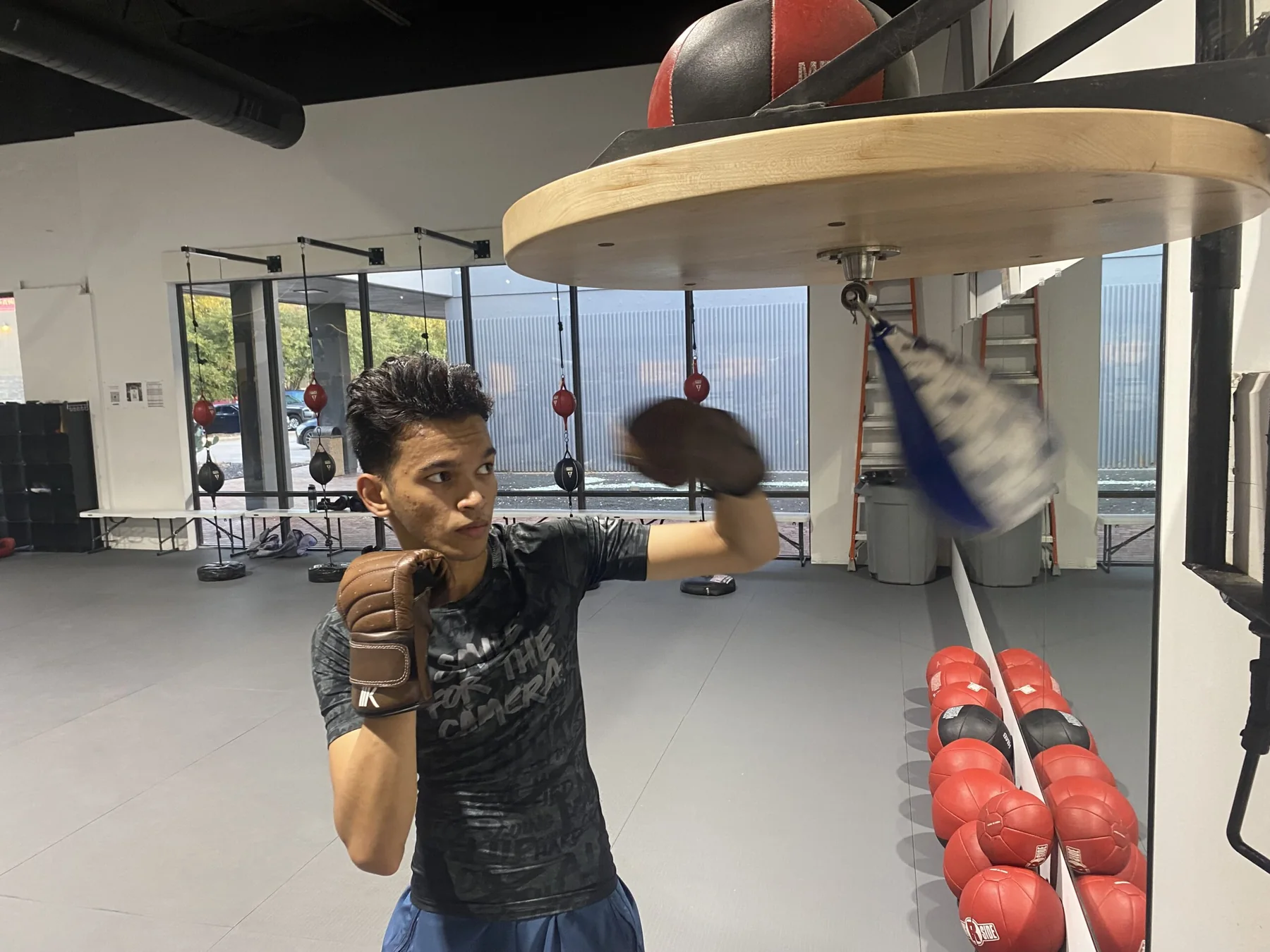
In a trial, notice whether the coach can explain how each station serves your goal. A speed bag develops a different rhythm from a heavy bag, and neither automatically teaches judgment against a moving opponent. If your interest comes from watching counterpunchers, ask how a beginner learns distance and returns to position after a punch. The answer should fit the lesson you are joining, without turning an introductory circuit into a promise of competitive readiness.
LaBori: Adult Sessions and the Youth Program Are Different Offers
On LaBori's paid class timetable, the Monday and Wednesday Boxing Fit listings show forty-five-minute adult workouts at 6:15 pm, subject to change. Each lists a $10 donation for a single session, $32 for four or $50 for eight. The same page directs families to a separate youth program. Ask which pack applies to your intended class and whether it has an expiry before purchasing.
That format may suit an East Dallas adult who wants to test attendance before committing to a larger monthly bill. It also allows a more focused question than “Do you teach boxing?” Describe whether you want a workout based on punches, detailed technique or a route toward partner drills. A class described as Boxing Fit is a useful lead, but the provider should explain the amount of individual correction and the expected experience level.
For either location, try the session you would actually use. An unusually quiet lunchtime introduction may reveal little about an evening group. Ask whether you can continue at that same time, how new starters enter an established class and what happens if it fills. Those answers make the comparison practical: the better option is the one whose instruction and booking arrangements you can sustain, rather than the one with the most attractive introductory headline.
Look North for R & R and AlphaBox
Northwestern Dallas has alternatives worth comparing before extending the search to another city. R & R and AlphaBox both publish local addresses and beginner-facing boxing instruction, but the useful details are different. R & R supplies specific group times and fee blocks; AlphaBox names a fundamentals course and a dedicated women's session. Treat those as different pieces of evidence, rather than filling every blank with assumptions.
R & R: Group Times and a Price Question Worth Asking
R & R's official page lists adult groups Monday through Thursday at 8–9 am and 6:30–8 pm, with children's groups at 5–6 pm. Its adult description identifies footwork, punching and defense fundamentals. That gives an early-shift worker a different possibility from someone who can only train after dinner. Confirm the session and available places before traveling.
The displayed prices are $20 for one day, $80 monthly and $1,000 for a year. Twelve payments of $80 equal $960, so the annual headline is not automatically a saving. Ask whether the plans have different inclusions, whether a displayed figure needs updating and what you would actually sign. An ambiguous web page is a reason to request a written quotation, not enough evidence to accuse a gym of overcharging.
For a technical goal, use the fundamentals description to ask a concrete follow-up: will the instructor watch you move after throwing a combination? A beginner may hit a bag enthusiastically yet finish square, with feet too close together to retreat comfortably. Receiving a correction, practicing it and checking it again is a more useful trial observation than trying to judge the coach by how exhausted everyone looks. Ask how that feedback works within the actual group size.
AlphaBox: Fundamentals and a Dedicated Women's Class
AlphaBox's class listings identify Boxing Essentials 101 Monday through Saturday and Women's Box Fit on Saturdays from 9:30–10:30 am. Personal training is available by inquiry. The main page does not give a precise daily start time for Essentials or a comparable monthly fee, so request those details rather than interpreting “Monday–Saturday” as unlimited coached access.
A dedicated women's session may make the first booking easier for someone who prefers that setting. Ask how the class handles absolute beginners, whether the format is fitness-focused and what equipment is required. The title alone does not explain contact policy, age eligibility or the balance between bag work and technical instruction. If you enjoy the introductory session, find out which weekday course continues the skills you started learning.

Between these northern options, give priority to the detail that changes your attendance decision. A confirmed morning group may be decisive; a suitable women's class may be decisive instead. Neither consideration requires a universal winner. The comparison becomes reliable when the provider confirms the specific product you need and you can explain why its timetable, teaching format and complete price suit you.
Choose a Youth Pathway With Clear Boundaries
For a child, start with the named program and its current enrollment rules. Dallas Fight Club describes its youth recreational offer as noncompetitive and noncontact. That is a meaningful distinction from the same gym's amateur pathway, and it should remain explicit when you book. Ask the provider to confirm the child's age, intended group and contact boundaries in the reservation rather than assuming every session in the building follows the same format.
LaBori's youth page describes a free program for ages eight through eighteen. Its specific eight-to-twelve boxing listings show Monday and Wednesday at 5 pm and Saturday at 10 am, while a separate High School+ open-gym listing shows Tuesday and Thursday at 5:45 pm. Confirm the appropriate registration route; the broad program age range does not mean every listed session is suitable for every child.
This matters particularly for siblings. A ten-year-old and a fifteen-year-old may be eligible for the same organization but belong to different groups, with different arrival and collection times. Ask whether both have places before building the family schedule around a single visit. Also establish what a parent is expected to do during training and who can collect the child. A low advertised tuition cost is valuable only if the arrangements can work week after week.
During an introduction, watch the way instructions are broken down. Can the child repeat a stance, make a small movement and understand what to change next? Some children enjoy vigorous circuits immediately; others need a quieter explanation before participating. A useful conversation with the coach concerns the child's response to the lesson and the next manageable task. It should not begin with a prediction about winning tournaments or a guarantee that boxing will solve confidence, school or behavior difficulties.
Ask separately about any future change in contact. Work on a bag, holding a target, rehearsing a defense with a partner and sparring are different activities. Families should understand what is proposed, how participation is agreed and whether remaining recreational is possible. Our boxing for kids guide develops those distinctions without replacing a conversation with the local instructor.
Finally, treat free enrollment as an eligibility and availability question rather than a walk-in entitlement. Ask about waiting lists, equipment, required attendance and any paperwork before promising a child a start date. For a paid youth group, obtain the complete initial and recurring cost. The strongest first choice is a specific, available place whose teaching and family arrangements you understand; moving toward competition can remain a later and separate decision.
Turn Two Trial Visits Into a Sustainable Training Plan
After visiting your two candidates, write down one thing you learned at each. It might be a correction to where your feet finish after a cross, an explanation of why your jab leaves you reaching or a clear method for reducing intensity while keeping good form. If you can only remember being tired, ask what the next lesson will build on. Enjoying a hard workout is worthwhile, but a technical goal needs a recognizable learning process as well.
Compare the actual experience with the offer you researched. Did the reserved group run at the expected time? Could you hear and follow the instruction? Was there enough room to work without colliding with another station? Could you ask a question without interrupting everybody else's lesson? These observations are more useful than trying to infer quality from the number of bags or photographs of successful fighters on a wall.
Compare Attendance Costs Before Buying More Access
Use the Dallas fees as conditional arithmetic, then ask each provider to confirm the complete bill. At Dallas Fight Club's displayed $125 monthly class rate, four visits would work out at $31.25 each; eight would be about $15.63 each. The same advertised $125 buys a six-class pack, approximately $20.83 per redeemed visit, with the stated three-month expiry. A busy traveler could reasonably value the longer redemption window more than theoretical unlimited access.
LaBori's displayed eight-class $50 adult pack works out at $6.25 for each redeemed class. R & R's displayed $80 monthly fee would be $10 a visit at eight attendances. Those calculations describe attendance cost only. They do not prove that the instruction, duration, booking rights or contract terms are equivalent. Add any required equipment or enrollment charge the provider confirms, and check whether missed bookings consume a credit.
Do not increase your expected attendance just to make a monthly plan look economical. Put your real work and family commitments on the calendar first. A repeatable pair of sessions may be more useful than an optimistic five-day plan that collapses during the first busy week. If you need independent practice, ask exactly when it is allowed and what supervision is available; do not assume a coached-class membership includes every open-gym privilege.
Before committing, obtain the renewal, cancellation and freezing terms in writing. Confirm which program name will appear on the agreement and when the next payment is taken. Then choose one local training goal for the opening month: becoming more balanced while moving, keeping a consistent guard through a simple combination or understanding the coach's basic defensive cues. That gives your next visit a purpose without pretending a few weeks can establish fight readiness. Dallas has several plausible starting points; your decision becomes stronger when location, instruction and realistic attendance all support the same plan.
Keep reading
Related boxing articles
Fight Guides
Why UNLV Moved a Football Game for Canelo–Crawford at Allegiant Stadium
By Boxing Schedule Editorial TeamFight Guides
Boxing Ringwalks and NFL Kickoffs: A Sports Viewing Guide
By Boxing Schedule Editorial TeamFight Guides
Join the conversation
Comments
Comments are reviewed before publication. Keep the discussion useful and focused on boxing.
Sign in with Google to comment
Your public comment shows your account name. Your email address is not displayed.
Commenting as
Loading comments…