Beginner Boxing Classes: How to Choose a Gym and Prepare for Your First Lesson
Choose the right beginner boxing class, understand contact and sparring policies, prepare for the first lesson and compare equipment, fees and membership terms.
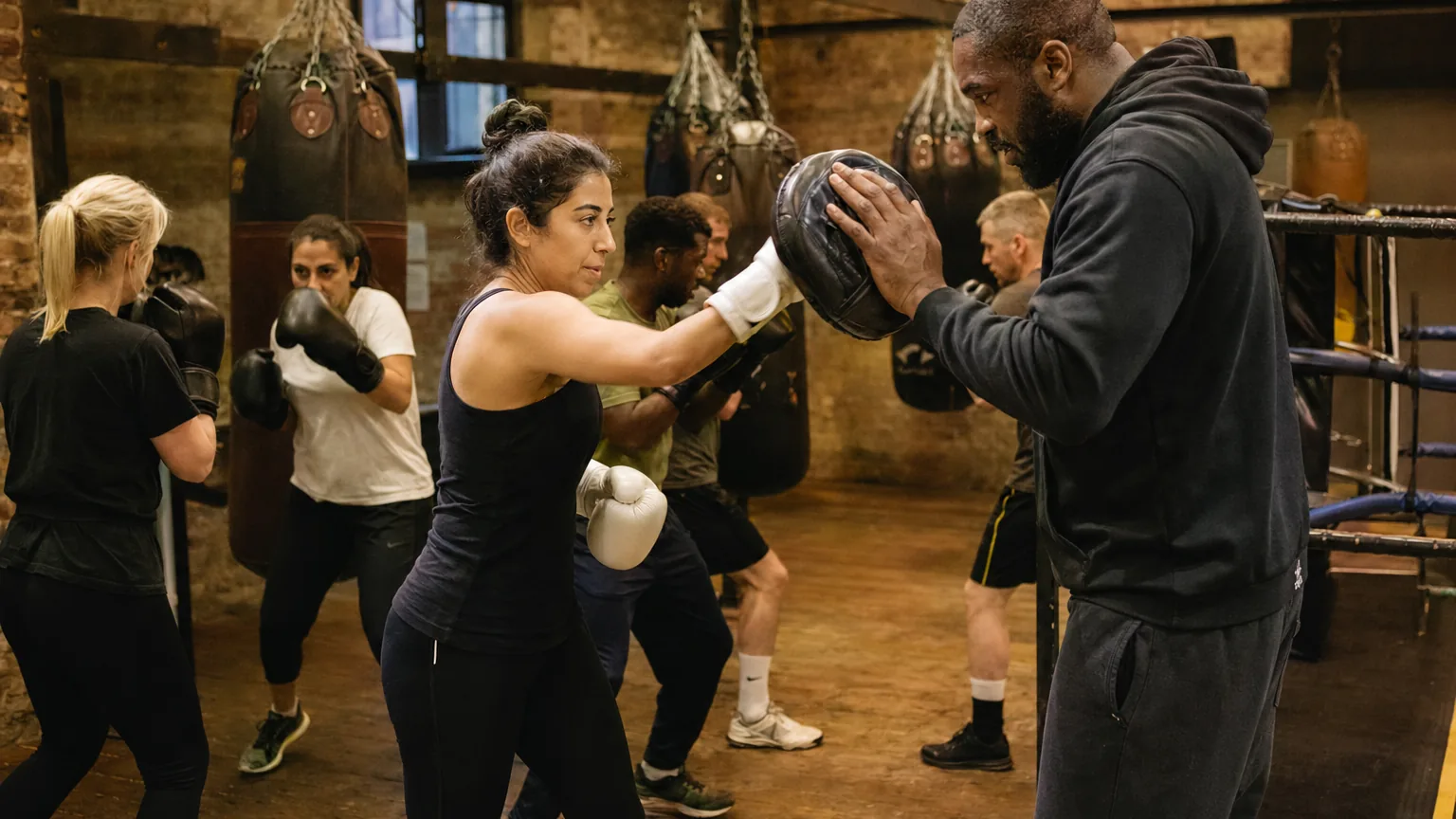
The best beginner boxing class is not necessarily the toughest room, the cheapest trial or the gym with the most fight posters. It is the class that teaches what you actually want to learn, at a pace you can repeat, with a coach who notices what you are doing. That sounds obvious, yet “boxing class” is used for very different products. One studio may offer a choreographed bag workout with no contact; another may teach the sport from stance to defense; a third may be built around an amateur team.
You do not need to be fit before you begin, and you do not need to promise that you will spar. You do need to describe your goal honestly, disclose relevant injuries or health concerns, and verify what the class includes. This guide gives you a practical way to choose, prepare and evaluate your first month without buying unnecessary gear or letting enthusiasm replace consent.
Start With the Kind of Boxing Experience You Actually Want
Before typing “beginner boxing classes near me,” decide what specific success would look like three months from now. Better conditioning, a genuine jab and guard, a welcoming group, stress relief and a path toward competition are all legitimate aims. They simply lead to different shortlists.
Fitness Boxing, Technical Boxing and Competitive Programs Are Different
Fitness boxing borrows rounds, punches, bags and conditioning from the sport. It may use music and circuit stations, and it normally excludes sparring. It can be an excellent workout and a comfortable entry point. However, a class designed to keep thirty people moving may spend less time correcting each person’s balance, punch recovery or defensive habits.
Technical boxing treats stance, footwork, distance, guard, offense and defense as skills that build on one another. Expect slower repetition, shadowboxing, bags or mitts and individual corrections. You can learn those skills recreationally for years without competing. Competitive programs teach the same foundation but also maintain an amateur team, sparring sessions and bout preparation. A competition-focused club may welcome a first-timer; the important question is whether it has a real beginner pathway rather than throwing everyone into the fighter session.
Some gyms blend all three. Do not judge from the sign outside. Read the timetable, ask what happens in the named class and watch one session. Parents looking for a child’s program should use the separate readiness and safety checks in our boxing for kids guide.
Four Questions That Clarify Your Goal
- Do I want a workout, a skill or both? If technique matters, ask how the coach gives corrections and how much class time goes to footwork and defense.
- Do I want any person-to-person contact? Bag and mitt work are not sparring. Say “non-contact only” if that is your boundary and confirm that it will be respected.
- What schedule can I sustain? A brilliant class you can attend once every three weeks is a worse beginner plan than a good class near home or work that fits twice weekly.
- What environment helps me learn? Decide whether you prefer a small traditional club, a polished fitness studio, a women-only session, private instruction or a mixed-level community.
Write the answers in one sentence: “I want non-contact technical instruction twice a week in a coached beginner group,” for example. That sentence becomes your filter. It prevents a salesperson, a friend or the atmosphere of a hard session from quietly choosing your goal for you.
How to Evaluate a Boxing Gym Before You Join
A website can show the schedule; a well-timed visit shows the culture. Ask to watch or take a genuine beginner session at the time you would normally attend. The evening class may have a different coach, crowd and student-to-coach ratio from the quiet midday tour. Arrive early enough to see how loaner equipment is stored and stay long enough to see how the room is left.
Watch Who Gets Coached, Not Just Who Hits Hardest
Look away from the fastest boxer and find the newest one. Does a coach check that person’s stance, demonstrate the drill from more than one angle and return to see whether the correction worked? Or does the beginner copy a neighbor while the instructor runs a timer? Good group coaching cannot provide constant private attention, but it should include observation, specific feedback and a safe alternative when someone cannot perform a drill.
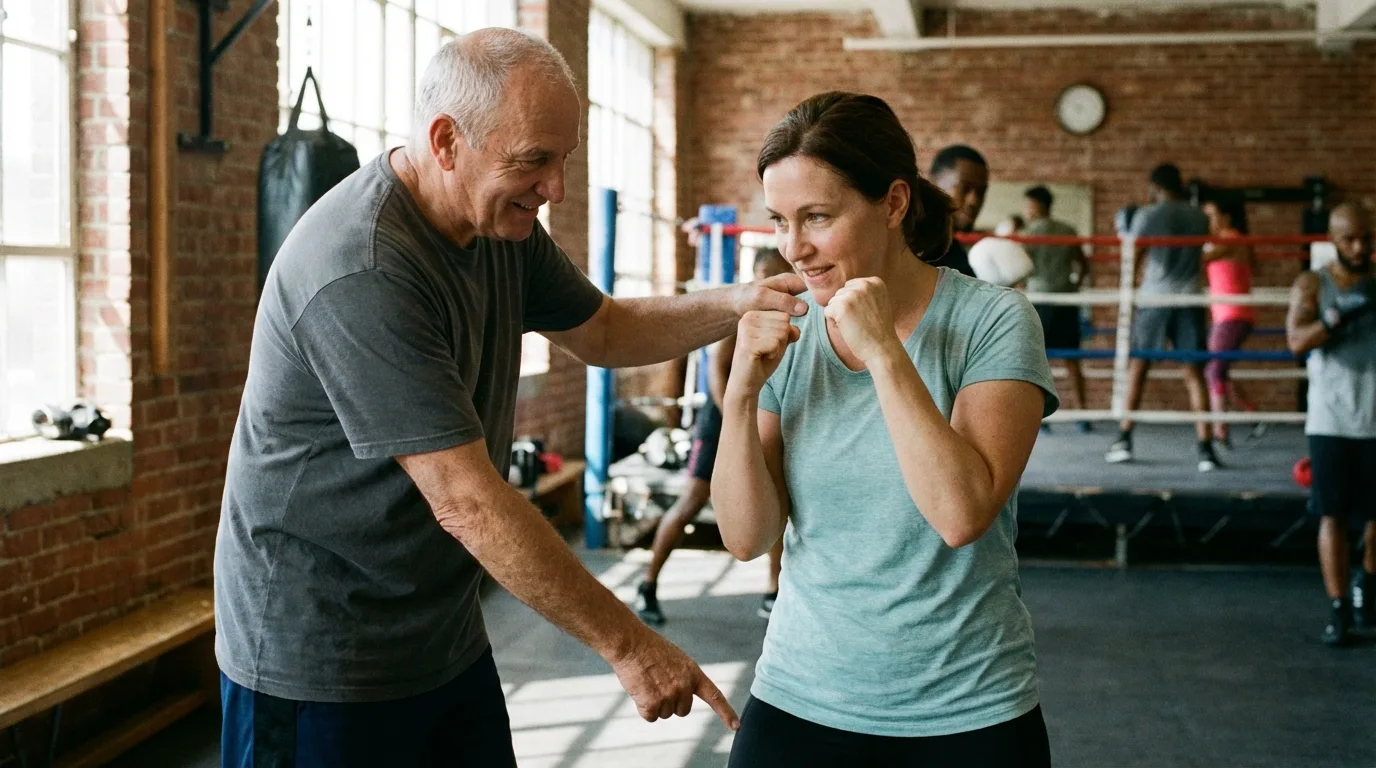
Notice partner behavior too. Experienced members should be able to reduce speed and power, explain a rotation without showing off and accept a coach’s stop command immediately. Clean shared equipment, clear walking space and routine wipe-downs are mundane but meaningful. So is tone: correction can be direct without humiliation, body-shaming or using fear as motivation.
Ask Direct Questions About Contact, Safety and Progression
Ask the person who actually runs your class, not only the salesperson:
- Is this session completely non-contact, or are there partner drills in which punches may land?
- Is sparring optional? What technical standards must a student meet first?
- How are partners matched by size, experience and purpose, and who watches every round?
- What happens after a head impact or suspected concussion, and who is trained in first aid?
- Which coach will normally teach, and what boxing or governing-body credentials can be verified?
In the United States, USA Boxing provides a registered-club route for amateur programs. Local boxing committees publish club information, and coach processes include registration, training and SafeSport requirements. That affiliation matters if competition is your goal, but it is one data point rather than a quality seal for every session. For minors, also ask about background screening, adult-minor boundaries, locker-room practices and the reporting process. The U.S. Center for SafeSport specifically provides prevention resources and policies that limit unsupervised one-to-one interactions.
Treat evasiveness as information. “We’ll see whether you’re tough enough” is not a progression standard. A credible coach can explain what you must demonstrate and can say plainly that ordinary membership does not require sparring.
Read the Membership Terms Before the Adrenaline Wears Off
A free or discounted trial tells you little about the full obligation. Ask for the written agreement and review it away from the front desk. Identify the enrollment fee, recurring price, billing date, minimum term, automatic renewal, cancellation method and notice period. Check whether unused classes expire, whether a medical or travel freeze is available, and whether open gym, beginner sessions, mitt work or private coaching cost extra.
Do not assume a verbal promise overrides the contract, and do not rely on another state’s cancellation rules. Consumer law varies by location. If the gym will not let you read the terms before payment or pressures you to sign immediately after a hard workout, pause. A sustainable class should survive one calm night of comparison.
What Your First Boxing Lesson Will Probably Include
There is no universal first-class script, but many beginner sessions share a recognizable arc: arrive and disclose what the coach needs to know, warm up, learn a small technical idea, apply it to a target, condition and cool down. A studio may run 45-minute circuits while a traditional club trains longer. Treat the sequence below as a map, not a minute-by-minute promise.
From Check-In to Stance, Footwork and Punch Mechanics
Arrive 15–20 minutes early unless the gym gives another instruction. Tell the desk that you are new, confirm the equipment policy and complete any waiver without rushing. Tell the coach about relevant injuries, recent illness, pregnancy, medications or a health condition that may affect vigorous exercise. A waiver does not make that conversation unnecessary. If you have been inactive or have medical concerns, ask your health care professional what intensity is appropriate before class.
The warm-up may use easy skipping, mobility, shadowboxing or body-weight movement. Its job is to prepare you, not eliminate you. Next comes the base: which foot leads, how wide the stance is, where weight sits, how the hands return to guard and how to step without bringing the feet together. Feeling awkward is expected. Balance is more valuable on day one than throwing every named punch.
A coach may teach the jab alone, add the rear straight or show a short combination. Watch the whole demonstration, then work slowly enough to notice the path out and back. Exhale briefly with the punch, keep the fist relaxed until impact and do not chase power. When the coach stops the room, stop hitting so you can hear the next safety or technique cue. Professional fights on the boxing calendar can inspire you, but their speed and force are not a first-lesson target.
Bags, Mitts, Conditioning and the Right to Scale Down
Shadowboxing means moving and punching without a physical target. A heavy bag lets you apply the pattern to resistance; it does not require maximum force. Focus mitts are small targets held by a coach or trained partner, useful for accuracy, rhythm and feedback. None of those activities is sparring. If a partner will throw toward you or contact is possible, the coach should explain that separately and obtain your agreement.
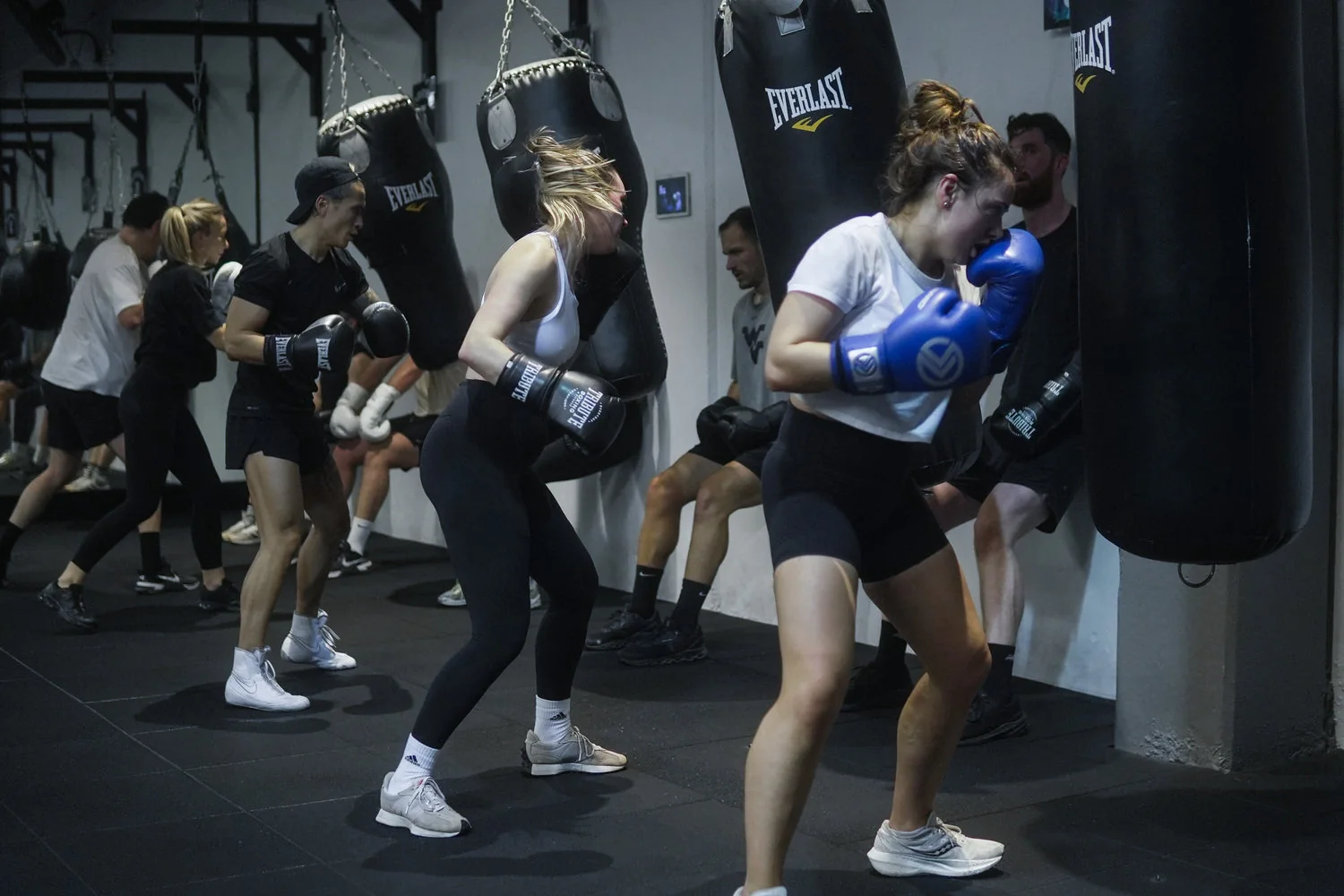
Rounds create bursts of work and rest, so the session can become demanding quickly. You can scale by slowing the combination, shadowboxing instead of striking, reducing squat or jump depth, or taking an extra rest. Tell the coach rather than disappearing. Ordinary exertion may include faster breathing and tired muscles; pain in a joint, dizziness, chest discomfort, feeling faint, unusual shortness of breath or sudden illness is a reason to stop and seek appropriate help, not a test of character.
Conditioning might include core work, medicine balls or simple calisthenics, followed by a gradual cooldown. Before leaving, ask one technique question and one practical question: “What should I focus on next time?” and “Do I need to reserve the class or bring different gear?” The answer gives you a manageable next step instead of a vague demand to get fitter.
What to Wear, Bring and Budget For
Preparation should remove avoidable friction, not turn your trial into a shopping project. The gym’s rules come first because facilities differ on outdoor shoes, wraps and loaner equipment. Call or message one day ahead and ask exactly what is required for the named class.
A First-Day Packing List Without the Shopping Spree
- Clothes you already train in: a fitted or close-cut top and shorts, leggings or athletic pants that allow rotation without catching your gloves.
- Approved footwear: clean, stable athletic shoes if the gym allows them. Do not buy boxing boots before learning the facility’s surface and rules.
- Water and a small towel: arrive hydrated, sip during breaks and wipe shared surfaces as instructed.
- Hair tie and a small bag: secure long hair and keep damp wraps or clothes separate after class.
- Personal wraps only if requested: ask whether the gym sells them and whether a coach will demonstrate wrapping.
Remove rings, bracelets, necklaces, earrings and watches before training; metal can catch, press into skin or damage equipment. Keep nails short enough to make a relaxed fist. Do not assume gloves are included: many gyms lend them for a trial, but others rent or require them. A two-minute call is more reliable than any universal packing list.
Gloves and Wraps Should Fit the Training, Not a Generic Chart
Glove ounces describe glove weight; they do not tell you whether your fingers reach the grip bar, your thumb sits naturally or the wrist closure stabilizes your hand. Different models with the same label can fit differently. Intended use matters too: a coach may approve one glove for bags and mitts while requiring more padding or a particular weight for partner work. That is why “every beginner needs 12-ounce gloves” or “everyone should buy 16s” is incomplete advice.
After the trial, ask the coach to name the activity, required specification and acceptable closure, then try gloves while wearing the wraps you will use. You should be able to make a comfortable fist without fingertip crushing, thumb strain, numbness or the hand swimming inside. Wraps should support the wrist and knuckles without cutting circulation. Learn the gym’s method, wash them after each use and dry gloves open outside a sealed bag.
Do not buy a mouthguard, headgear or competition kit as a symbolic commitment. Those items belong to a later contact decision and must meet the gym or governing body’s current rules. Equipment never turns premature sparring into appropriate sparring.
Compare the Total Cost of a Month, Not One Class
Build a four-week comparison using the days you can really attend. A class pack can beat unlimited membership for a once-weekly student; unlimited access can win for someone attending three times. Include every required cost:
| Cost | Question to ask | Why it changes the comparison |
|---|---|---|
| Access | Which beginner classes and open-gym hours are included? | A cheap plan may exclude your available time. |
| Joining and billing | Is there enrollment, automatic renewal or a minimum term? | Upfront and exit costs can exceed the trial saving. |
| Equipment | Are gloves supplied, rented or required, and are wraps sold? | A personal starter kit moves cost into month one. |
| Coaching | Are mitt work and corrections part of class, or is private training extra? | “Gym access” may not mean instruction. |
| Logistics | What will parking, transit and travel time cost? | A nearby program is often easier to use consistently. |
Ask the gym to write down the total due today and the next billing date. Affordability means being able to continue without skipping essentials—not merely being able to pay after an exciting trial.
Build a First Month That Rewards Skill, Not Ego
The first month is an orientation, not a fight camp. Its purpose is to learn enough to judge the coaching, establish a schedule you can recover from and make core fundamentals more repeatable. The IBA coaching manual describes beginner development as staged and recommends moving from simple tasks toward complex ones. That is a better model than chasing exhaustion or collecting combinations.
A Simple Two-Session Rhythm for Complete Beginners
Two classes per week with recovery days between them is a reasonable conservative experiment for many healthy adults. It is not a medical prescription. Someone accustomed to vigorous training may tolerate more; someone returning after inactivity, managing a condition or taking a very intense class may need less. Let health advice, recovery and the actual session determine frequency.
A four-week beginner scorecard
- Week 1: learn the room, stance and stop commands; finish both sessions without trying to win the workout.
- Week 2: step while preserving balance, breathe on punches and repeat one short combination cleanly.
- Week 3: keep the non-punching hand near guard and reset the feet after a bag or mitt sequence.
- Week 4: ask the coach for one technical priority and decide whether the schedule, culture and total cost remain a fit.
Track attendance, sleep, unusual symptoms and one skill note after class. Do not score power or compare how soaked your shirt is with another member’s. Muscle tenderness after unfamiliar work may appear later, especially in shoulders, calves and trunk. Reduce load when movement quality deteriorates. Sharp pain, swelling, pain centered in a joint, worsening symptoms, dizziness, numbness or symptoms that interfere with ordinary activity deserve more caution and, when appropriate, medical assessment.
Easy walking or coach-approved light movement can fill the days between classes. Avoid adding unsupervised full-power bag sessions before you can align the wrist and fist reliably. Rest is part of learning because fatigue makes it harder to repeat the pattern you are trying to build.
Sparring Is a Separate Decision
Sparring is person-to-person boxing practice in which blows may be delivered. It is not the same as mitts, a heavy bag or a cooperative drill with no contact. You can gain conditioning, coordination and technical skill without it, and you can remain a recreational boxer indefinitely. Your progress does not need to appear in the boxing results.
If you become curious later, restart the questions from the gym visit. Ask what skills you must demonstrate, what medical or registration requirements apply, how partners are matched, what “light” means, who supervises, what protective equipment is required and how either person stops the round. Rules differ by governing body. England Boxing, for example, defines and regulates recreational sparring with registration, medical clearance, qualified supervision and concussion protocols. That illustrates why casual “jump in and see” advice is inadequate.
Do not treat headgear as permission to ignore head-impact risk. A 2024 Association of Ringside Physicians position statement found it useful for reducing facial cuts but said it should not be relied upon to prevent concussion or other traumatic brain injury. Contact requires informed consent even when equipment and a coach are present.
At the end of four weeks, keep the gym if it meets three tests: you are learning something specific, your boundaries are respected and you can realistically return. Leave or pause if coaching disappears after the sale, pain is normalized, costs change without clarity or contact pressure replaces instruction. The right beginner class makes the next lesson feel possible—not compulsory.
Keep reading
Related boxing articles
Fight Guides
Why UNLV Moved a Football Game for Canelo–Crawford at Allegiant Stadium
By Boxing Schedule Editorial TeamFight Guides
Boxing Ringwalks and NFL Kickoffs: A Sports Viewing Guide
By Boxing Schedule Editorial TeamFight Guides
Join the conversation
Comments
Comments are reviewed before publication. Keep the discussion useful and focused on boxing.
Sign in with Google to comment
Your public comment shows your account name. Your email address is not displayed.
Commenting as
Loading comments…