Boxing Classes for Women: Beginner Options and Costs
Compare women's-only and mixed boxing classes, real provider prices, contact policies and a practical beginner training plan.
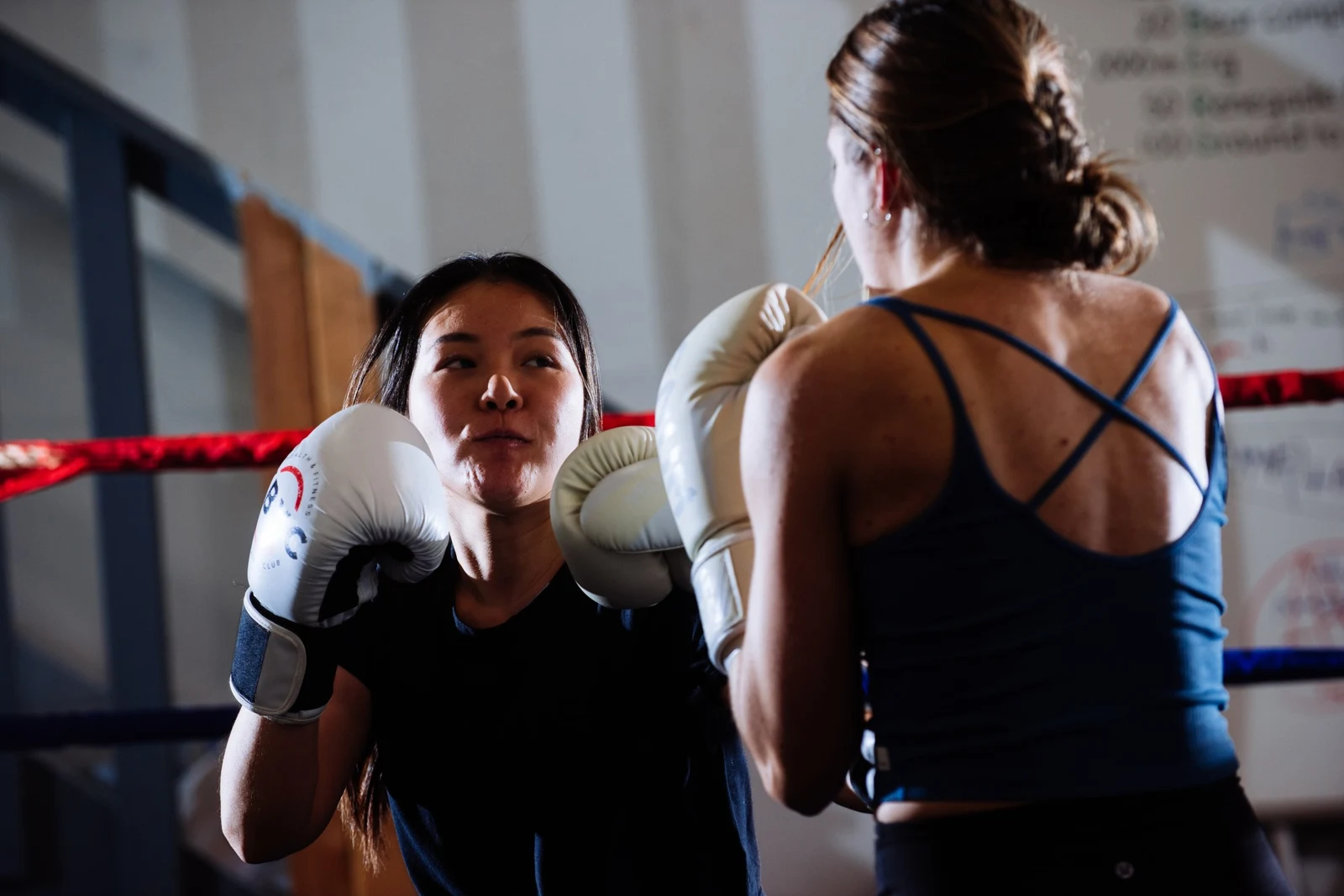
Choose the Class Format Before You Choose the Gym
The best boxing class for a woman starting out is one that matches her goal, explains its contact policy and gives her useful coaching. A women-only technical session, a mixed bag-work class and a competitive boxing program can all be valid choices. They serve different needs, so the first task is to identify the experience you actually want.
This guide uses real provider examples and prices checked on October 1, 2026. They illustrate what to compare rather than establish a national best-gym ranking. Reconfirm the current timetable, introductory eligibility and total charge before booking: a published program page can describe a format without guaranteeing an available place in the next session.
Women-Only and Women-Welcoming Mean Different Things
A women-only class sets an attendance boundary for that session. A gym that welcomes women may instead run mixed classes with members of different genders. Neither phrase tells you whether the coach is a woman, how much individual correction you will receive or whether partner drills include contact. Those are separate questions worth asking directly.
If a dedicated room helps you feel comfortable learning, ask which sessions are specifically women-only rather than assuming the whole timetable is. If you prefer a mixed technical class, ask whether beginners receive a clear entry route. The useful outcome is a setting in which you can ask questions and make early mistakes without being rushed or ignored.
Eligibility policies should also be explicit. An adult program may have a minimum age, and a youth participant should not assume she can attend an adult class. If you need clarification about an inclusion policy, use the gym's stated contact route before paying. A clear answer is more helpful than interpreting a photograph or a marketing slogan.
Non-Contact Classes Can Still Teach Boxing
Non-contact does not necessarily mean shadowboxing to music without instruction. A coach can teach stance, a balanced jab-cross, defensive movement and pad work without asking students to hit one another. Ballard's women's program, for example, describes a pads-only format, while Rumble Alpharetta describes a non-contact bag-and-strength class. The training emphasis differs even though neither description requires sparring.
For fitness, you may value an organized workout with scalable intensity. For technical development, look for explanations and correction as well as exertion. If competition is your eventual goal, ask about a separate supervised pathway rather than treating the first beginner class as a tryout.
You do not need to promise to spar in order to justify learning a jab. Equally, a bag class should not promise that it prepares you automatically for a competitive bout or guarantees self-defense. Choose the scope you want, then check that the lesson actually delivers it.
Verified Women's Programs Show What to Compare
The following examples are useful because their own websites disclose different things. They are not a ranking, and they do not cover every local market. A reader can borrow the comparison method even when none of these locations is nearby: identify the actual session, read its eligibility, check its equipment and contact rules, and then inspect the booking terms. Information was checked on October 1, 2026; confirm availability directly before traveling.
Ballard: Pads-Only Coaching in Seattle
Ballard Barbell and Boxing Club publishes a women-only, 60-minute, pads-only class in Seattle, led by Coach Megan. The listed sessions are Tuesday and Thursday at 6:30 PM. This is a fairly clear answer for a newcomer who wants a defined women's session without sparring. The schedule also creates a practical constraint: a good program is difficult to use if both evenings clash with work.
Before enrolling, ask whether a first-time attendee needs to arrive early for wrapping and stance instruction, and how the coach adjusts a drill when the room contains several experience levels. A pads-only description tells you about contact; it does not tell you how much individual feedback you will receive. The trial visit should answer that second question.
Battle Zone: A Dedicated Women's Plan in Florida
Battle Zone Boxing in Pinellas Park advertises women-only sessions separately from its mixed programs. Its women's plan includes four classes per month, with Thursday at 6 PM shown on the program page. That is a specific weekly commitment rather than a promise of unlimited women's sessions.
The site also welcomes women into regular classes, sparring and the fight team. Those are additional pathways, not evidence that a newcomer must spar. Ask which session is appropriate for your goal and whether access to another program requires a different membership, coach approval or separate registration. A club offering competition preparation can still be suitable for a recreational beginner; the relevant question is what happens in the class you book.

Onyx and Heathrow: Different Ways to Start
Onyx Boxing advertises beginner access, loaner gloves and a $15 trial week at its Scottsdale and Mesa locations. Its women's information page describes a welcoming community; it does not establish that every available class is women-only. Someone comfortable in a mixed room may value testing several sessions before deciding on a regular time.
Heathrow Boxing Club provides a different example: ladies-only classes for women aged 18 and over in West Drayton, with a £10 class price and current dates on its booking page. This is a UK option, so its currency and travel context should not be folded into a US price comparison. In either model, the decisive evidence comes from the exact available session rather than a general homepage slogan.
Compare the Total Price and the Classes You Will Attend
The most useful price is the amount you expect to pay for each coached session you actually attend. An unlimited membership can be good value for someone who uses it regularly and an expensive commitment for someone whose available evening repeatedly changes. Start with your realistic calendar, then divide the total monthly cost by those expected visits. Do not count aspirational visits that will rarely happen.
For example, Ballard's listed $125 monthly women's membership works out to $31.25 per visit at four visits or about $15.63 at eight. Its $250 ten-class card works out to $25 per class and is listed as valid for a year; the drop-in is $35. Those calculations illustrate different attendance patterns. They are not a prediction that eight sessions will always be available in every calendar month or that a missed booking can always be recovered.
Battle Zone's $95 plan includes four women's classes, making the simple allocation $23.75 each if all four are used. Its $20 day pass and $35 drop-in class are different products. Open-gym access may suit someone who can practice independently, but it should not be priced as though it automatically includes an instructor's lesson. Ask what happens in months with an extra Thursday, on holidays and when you miss the scheduled session.
Onyx's published five-class pack is $90, or $18 per class; ten classes are $140, or $14 each. Its $129 unlimited month should be compared with the pack you would otherwise use, along with any expiry or booking conditions you receive at checkout. The page advertises no contracts and cancellation anytime. Get the cancellation method and effective date in writing rather than assuming that wording settles every billing detail.
Heathrow's £10 class is a separate British example. Currency conversion alone would not make it a meaningful alternative to a neighborhood US class: transport, session availability and eligibility differ. A useful local shortlist should compare options you can actually reach.
Ask about equipment rental, required wraps, joining fees, taxes, parking and late-cancellation charges before purchasing a package. If the program does not publish one of those items, mark it unknown and contact the desk. A free trial can clarify the format but is not proof of the ongoing total cost. Also ask whether your chosen membership is valid at every advertised location or only the branch where you signed up.
Finally, compare instruction as well as dollars. A class where a coach remembers your stance, notices a repeated mistake and gives you a manageable correction may be more useful than cheaper access with little feedback. Record what the trial taught you alongside its price. That makes the decision about learning and practical attendance, rather than the size of a discount banner.
Look for Coaching That Respects Your Goals and Boundaries
A useful trial visit gives you evidence about teaching, not just atmosphere. Watch what happens when you cannot follow a combination. Does the instructor break it into smaller actions, demonstrate from an angle you can see and check that you understand? Or does the music and pace continue while you improvise? Either class may offer a workout, but only the first observation demonstrates that your learning problem received attention.
The coach's stated experience is a starting point for questions. Ballard identifies the leader of its women's program; Onyx's website says its coaches hold USA Boxing certification. These are provider disclosures, and a certification claim should be checked for the person teaching your actual session. Ask who supervises beginners, whether substitutes use the same introductory process and how many participants are normally in the room. A prominent founder's biography does not establish who will correct your punches on Tuesday evening.
Look for practical instruction that connects a punch to balance and recovery. You should be able to explain one thing you are practicing: returning the hand, keeping your feet under you or moving without crossing them. A coach does not need to give every newcomer the same correction. What matters is that the feedback is specific enough to try again, rather than a stream of praise or a demand to hit harder.

Ask How Partner Work and Sparring Are Introduced
Partner work needs a precise description. Holding a pad for another student, rehearsing a movement with a partner and exchanging punches in sparring create different expectations. Before participating, ask what the drill involves, whether punches are directed at you and how to opt for an alternative. You should not have to infer the answer from a poster showing professional fighters.
If competition interests you later, ask how the club assesses readiness and separates ordinary classes from sparring preparation. Tell the coach clearly if your current goal is non-contact training. A statement such as “I want to learn technique and conditioning, but I am not booking sparring” gives the instructor an actionable boundary. The trial is successful when that boundary is understood and the planned session matches it.
Also notice ordinary interactions. Are questions welcomed without ridicule? Can you take time to reset equipment? Does the coach explain how a drill is adapted instead of comparing everyone with the fastest participant? Confidence in a room often grows from predictable instruction. You can enjoy a demanding class while still expecting clear explanations, respectful communication and a way to decline an activity outside your chosen format.
Build a First Month Around Skills You Can Recognize
You do not need a dramatic transformation goal to make the first month useful. Choose a repeatable class time and a small set of questions you can revisit. Can you find your stance without looking down? Can you return your hands after a short combination? Can you follow the drill while remaining balanced? Those observations tell you more about learning than the amount of sweat on a borrowed pair of gloves.
Prepare for the First Session
Check the equipment policy before leaving home. Loaner gloves do not necessarily include wraps, and a trial's rental policy may differ from the policy for returning members. Rumble Alpharetta provides a concrete example: its beginner page asks first-time visitors to arrive 20 minutes early, lends gloves for the first visit, then lists $4 glove rental for later visits. Wraps are required and are not loaned; the page lists $25 quick wraps for sale. Your local club may use different arrangements.
Bring clothing that allows ordinary movement, your required equipment and water. Tell the instructor you are new before the group starts. Ask for the basic stance and an explanation of the class signals: when to work, when to stop and how to request a simpler version of a drill. If a combination becomes confusing, reduce the number of actions with the coach's help rather than racing through movements you cannot reproduce.
For broader preparation, our beginner boxing class guide explains equipment and lesson formats. Use it alongside the exact program's instructions. A national guide cannot know whether your booked session needs its own registration, a particular type of wraps or a different arrival time.
Measure Progress Without a Sparring Deadline
After the first session, write down one correction you understood and one question that remained. In the next class, see whether you can apply that correction when the pace increases. For example, a beginner may learn to finish the cross with balance, then need another reminder when it is added to a longer combination. Repeating the same skill is normal; a new drill at every visit is not necessarily a better curriculum.
Across the month, look for continuity. The instructor should be able to connect today's exercise with something you have already practiced. You might spend an early session recognizing stance and guard, another on a clean short combination, and later sessions on moving before and after the combination. That is an illustrative learning sequence, not a universal weekly timetable. Your coach may change the order to fit the class.
Review the practical side as well: did you attend the sessions you paid for, receive useful attention and feel able to ask questions? If the schedule does not work, a different branch or a class pack may be a better choice even when you like the coach. Our boxing gym selection guide offers a wider checklist for comparing a trial visit.
Sparring does not need to be the deadline that validates your progress. Someone training for non-contact skill and fitness can continue improving inside that format. Someone considering competition can ask for the club's next assessment and preparation steps. In both cases, the next decision should follow what you have learned about your goals, the teaching and the session you can consistently attend.
Keep reading
Related boxing articles
Fight Guides
Why UNLV Moved a Football Game for Canelo–Crawford at Allegiant Stadium
By Boxing Schedule Editorial TeamFight Guides
Boxing Ringwalks and NFL Kickoffs: A Sports Viewing Guide
By Boxing Schedule Editorial TeamFight Guides
Join the conversation
Comments
Comments are reviewed before publication. Keep the discussion useful and focused on boxing.
Sign in with Google to comment
Your public comment shows your account name. Your email address is not displayed.
Commenting as
Loading comments…