Boxing Classes Austin: Beginner Programs and Real Costs
Compare Austin boxing programs by actual class format, introductory offers, monthly terms, women's eligibility and private lesson prices.

Match the Austin Location to the Class You Want
Boxing classes in Austin range from a short introductory workshop to an ongoing gym membership, with private instruction and mixed combat-sport programs alongside them. The useful starting question is what you want to attend each week. A class teaching boxing fundamentals, a bag workout and a session progressing toward competition may all appear in the same search, but they do not create the same learning experience.
This guide compares published Austin products checked on October 1, 2026, with attention to prices, commitment periods, equipment and eligibility. It is a practical shortlist method rather than a ranking of every gym. Confirm the exact current session before traveling or paying: a page can describe a program without showing whether the time you need still has space.
Several addresses help narrow the initial search. Lord's Boxing Gym lists 5528 North Lamar Boulevard. Archetype Boxing Club lists 2700 West Anderson Lane, Suite 203. HIT Athletic lists 7797 Burnet Road. Austin Women's Boxing Club lists 2919 Menchaca Road, number 210. Use the actual destination and your ordinary pre-class starting point to judge which options you can repeat. A broadly attractive offer is difficult to use when its session regularly clashes with your commute or family commitments.
Ask about the training product as early as the location. Does the advertised fee include instructor-led boxing classes, independent practice or both? If a membership also covers kickboxing, MMA or grappling, which boxing session suits a complete beginner? A broader timetable may be valuable, but those sports should not be counted as extra boxing lessons merely because they are included in one payment.
Keep opening hours separate from class times. Access to a room at an early hour does not necessarily mean a coach is there to introduce a new member. Similarly, an all-levels class may still have a registration or equipment process. Request the next appropriate session, its duration, the expected arrival time and the name of the instructor or staff member who handles first visits.
Choose two options you can actually reach and compare them with the same questions. You do not need to settle every possible long-term ambition before trying a class. You do need to know whether you are booking non-contact practice, technical instruction with partner activities or a competitive pathway. That description makes the later price comparison meaningful and gives the coach a clear idea of what you hope to learn.
Introductory Offers Should Answer a Learning Question
An introductory offer is most useful when it resolves a question you cannot answer from the website. Do you need a single guided explanation of the basics, or several visits to see how regular lessons build on one another? The lowest entry price is not automatically the better test. The content, equipment and opportunity to return determine what you learn about the program.
Archetype's Three-Class Starter Package
Archetype Boxing Club advertises a $99 starter pack comprising three classes, glove rentals and one set of hand wraps. The rental distinction matters: it is not a promise that you receive a pair of gloves to keep. Ask when the credits expire and which classes you can reserve with them.
Three visits can test continuity. In the first, identify a correction the coach gives you. At the second, see whether you can apply it while following a new drill. At the third, ask what your next learning step would be. That is a practical way to evaluate the provider's description of small-group technique instruction without treating marketing language as proof of individual attention.
Also compare the timetable with your regular week. If the starter offer only works for you during an exceptional vacation, it may tell you less about an ongoing membership. Ask which beginner-friendly session you would attend after the package ends and what that next purchase would cost.
Austin Women's Boxing Club's One-Time Workshop
Austin Women's Boxing Club lists a one-time beginner workshop for women and girls aged eight and over: $30 for 75 minutes, with loaner gloves and wraps provided and arrival requested 15 minutes early. Its description covers stance, movement, core punches and equipment practice.
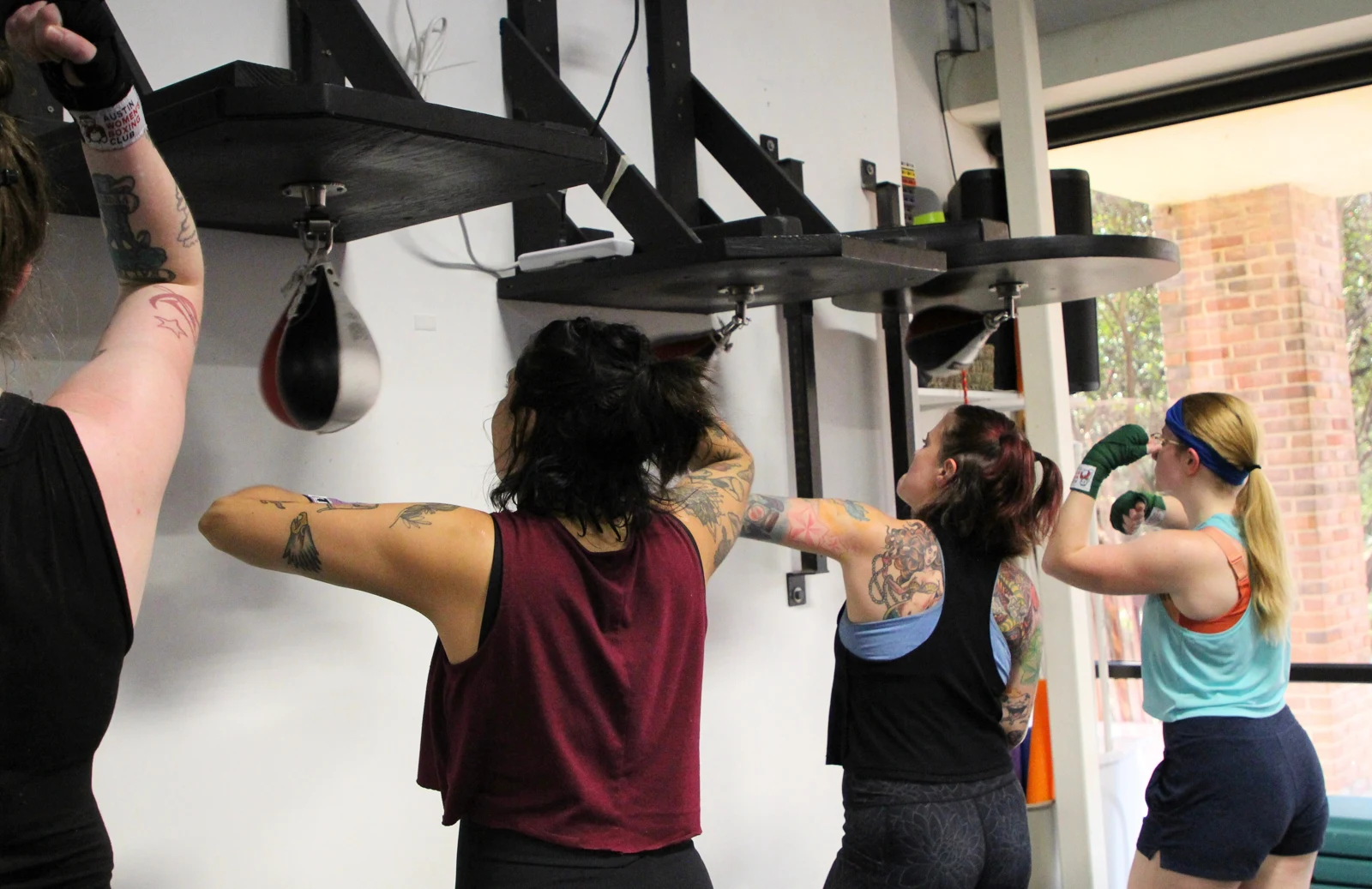
This offer answers a different question from a recurring class plan: what does a coached introduction to the sport feel like, and which regular class should follow it? The workshop is not an adult membership and its age threshold should not be applied to every other program. A parent should ask how younger participants are grouped and supported in the specific booked session.
The page lists forthcoming workshop dates, but use its registration route or contact the club to confirm an available place. A date shown in a list can remain visible after it passes. Decide on the next step after receiving the introductory feedback, rather than buying a long commitment solely because the first session includes equipment.
Read the Membership Term Alongside the Price
Austin's published memberships show why the term and included activity must sit beside the price. A lower monthly charge may require a longer commitment, and a class-credit plan may cover several sports rather than a fixed number of boxing lessons. Write down what each product buys before comparing the totals.
Lord's: Scheduled Classes and a Cash-or-Check Policy
Lord's Boxing Gym lists a $90 adult monthly membership covering operational-hour access and any class on its schedule, with a $20 day drop-in. Its payment policy is cash or check, with cards and online payment services not accepted. That is an immediate first-visit detail to settle rather than discover at the door.
The page separates fundamentals classes, shown Monday through Thursday at 6 PM, from sparring entries. Ask which session suits your experience and whether the day drop-in covers that particular activity. Scheduled sparring should not be interpreted as an obligation for every member. Private instruction is also arranged with individual coaches; obtain its price separately.
HIT: Annual and Monthly Commitments
HIT Athletic's boxing membership page lists $109 per month with a 12-month contract or $129 per month on a month-to-month contract. The described access includes boxing and kickboxing classes plus open gym. Confirm the current quote and exact terms with the facility before committing.
The $20 monthly difference is a comparison of commitment periods, not evidence that the annual option is best for a newcomer. Ask about notice, freezes, early cancellation and when billing begins. If you have not yet tested the class time or coaching format, the ability to change your plan may matter more than the lower monthly headline.
Pressure: Class Credits Across Different Sports
Pressure Gym publishes $65 for four monthly classes, $99 for eight and $150 for unlimited monthly access. Its plans include activities across boxing, MMA and grappling, so ask which boxing sessions you can reserve and whether credits are interchangeable across the timetable.
The page presents both a first-class-free banner and a $30 one-time drop-in offer. Those should prompt a question about eligibility, not an assumption that every visitor pays the same amount. Likewise, a cancellation entry saying no fees does not describe every notice or unused-credit rule. Request the terms for your chosen product and make sure the trial booking uses the correct offer. The useful purchase is the one whose sessions, charges and conditions you understand.
Women's and Youth Programs Have Their Own Eligibility
A women-focused gym can make the environment easier to identify, but it still needs separate policies for age, class level and activity. Austin Women's Boxing Club provides a useful example because its pricing page distinguishes adult memberships, youth membership and selected drop-in classes. Those labels should guide the booking rather than be treated as interchangeable access.
The published adult plans are for ages 16 and over, while the youth membership covers ages eight to 17. The overlap means a teenager's age alone does not settle which session is appropriate. Ask the club where the participant should begin, how experience affects placement and what a parent or guardian needs to arrange. The beginner workshop's eight-plus threshold is a workshop condition, not a rule that every adult class admits an eight-year-old.
Compare the Included Sessions and Equipment
The club's pricing page lists $189 for eight adult classes per month, covering boxing and strength. Its $239 adult unlimited plan also lists open gym and a starter kit including gloves and wraps. The youth membership is $150 per month, with equipment available to rent or purchase. Ask which sessions count toward the chosen allowance and how equipment arrangements work after your introductory visit.

The $35 drop-in includes loaner wraps and gloves but is described for Basics, All-Levels and Youth classes only. That restriction matters when someone spots an advanced or competition session on the timetable. A payment product is not automatically permission to join every activity. Confirm the appropriate introductory session and whether any later class needs a separate assessment.
The club also describes a color-band progression system, giving members skill goals beyond a fight record. That can help someone who wants technical development without making competition the immediate objective. Ask what the first skill checkpoints involve and which regular lesson supports them; the existence of a ranking system does not tell you when an individual will be ready for its next test.
For families, prioritize clear explanations of grouping, supervision, equipment and contact. For adults, prioritize the format you want and the lessons you can attend. In either case, published eligibility is a starting boundary, and the staff conversation should connect it to the specific participant and session.
Consider Private Lessons When You Need Specific Feedback
A private lesson can be useful when your question needs sustained observation. You may be following a group combination but losing balance after the final punch, or moving your feet in a way that makes the next action awkward. Individual time should let the coach identify the problem, simplify the movement and check whether the correction works. The purchase should have a learning purpose beyond a harder workout.
Castle Hill Fitness's boxing lesson page, last updated April 14, 2026, lists individual lessons with Caleb Noah. Thirty minutes are $48 for members or $53 for non-members; 45 minutes are $63 or $68 respectively. Its member package is $307 for five 45-minute lessons. Confirm the current availability and quote with the facility at 1112 North Lamar Boulevard.
The package works out to $61.40 per lesson, but the member-only condition matters. Someone who is not already a member should not compare that number with a public group-class price while ignoring any membership purchase required to qualify. Ask about eligibility, expiry and cancellation as well as the lesson duration. A longer session and a cheaper per-session package are different comparisons.
When arranging the appointment, describe one technical issue and your experience. A useful first objective might be to leave knowing where your feet should finish after a jab-cross, with a short drill you can reproduce. Ask whether you can practice that assignment between lessons and whether the coach wants to assess your movement again before increasing complexity.
During the session, notice the balance between explanation and repetition. You need enough time to try the corrected movement, receive another observation and understand why the change matters. Constantly adding punches can make a pad sequence entertaining while hiding the original problem. Conversely, a short combination practiced with clear corrections may be a productive lesson even if it looks less dramatic.
Private coaching does not require abandoning a suitable group class. It can answer a focused question that helps you use regular instruction better. If the coach recommends an ongoing package, ask what the next several lessons would work on and how progress will be assessed. Decide after the first appointment whether the teaching matched your goal, the quoted product was clear and the practice assignment made sense. That evidence is more useful than assuming individual instruction is automatically better for every beginner.
Turn Two Trial Visits Into a Sustainable Training Plan
Use two trial visits to answer the same practical questions. Book sessions at the times you would normally attend, tell both instructors your experience and goal, and request the complete price and equipment policy. Record the answers immediately afterward while the lesson is still clear. You will then have evidence about two usable products rather than memories of two different advertising pitches.
Calculate Costs for Your Actual Attendance
At Pressure's published prices, using all four $65 monthly credits allocates $16.25 per class; using all eight $99 credits allocates about $12.38 each. The $150 unlimited plan allocates $37.50 at four attended classes or $18.75 at eight. These are arithmetic examples before any additional costs, and they assume the chosen credits cover available sessions you actually want.
An unlimited plan can still be useful to someone attending more often or using several included sports. It simply should not be called cheaper for every attendance pattern. Ask whether credits expire, whether missed sessions can be recovered and how reservations affect access. If the class you need repeatedly fills before you can book, theoretical unlimited access will not solve that scheduling problem.
Add equipment rental, required purchases and the transport costs you expect. Check the renewal date and notice procedure before a trial becomes a recurring membership. A promotional first visit cannot establish what the second month will cost. Where an item is not published, write a question beside it rather than assuming there is no charge.
Check Instruction and Contact Before Renewing
The most useful learning observation is a correction you can understand and repeat. A coach might help you return your rear hand after a cross, adjust the distance to the bag or finish a combination with your feet underneath you. Notice whether the next attempt improves and whether you receive a manageable assignment for another visit. Class intensity is only part of the experience.
Ask explicitly about partner activities and sparring. A gym covering several combat sports may have different policies for different classes, so a broad label cannot settle the exact boxing session. State whether you want non-contact practice and ask how the instructor handles that goal. Someone interested in fighting later should ask about assessment and preparation rather than treating a paid membership as automatic permission to join live rounds.
Our beginner boxing class guide covers first-lesson preparation. The boxing gym selection guide provides a broader trial checklist. Use those questions with the local distinctions here: the introductory product, the class credit, the age or level requirement and the membership commitment.
After the visits, choose a session you can attend consistently and whose teaching matches your objective. Keep a short note of one skill to practice and one question to ask next time. That gives the first month a practical purpose and makes it easier to judge whether your Austin program is helping you learn the sport.
Keep reading
Related boxing articles
Fight Guides
Why UNLV Moved a Football Game for Canelo–Crawford at Allegiant Stadium
By Boxing Schedule Editorial TeamFight Guides
Boxing Ringwalks and NFL Kickoffs: A Sports Viewing Guide
By Boxing Schedule Editorial TeamFight Guides
Join the conversation
Comments
Comments are reviewed before publication. Keep the discussion useful and focused on boxing.
Sign in with Google to comment
Your public comment shows your account name. Your email address is not displayed.
Commenting as
Loading comments…