Bivol vs Beterbiev Results and Scorecards: Why the Two Decisions Went Different Ways
Compare both Bivol–Beterbiev results using the official round-by-round cards, the judges' disputed rounds and the tactical questions behind two majority decisions.
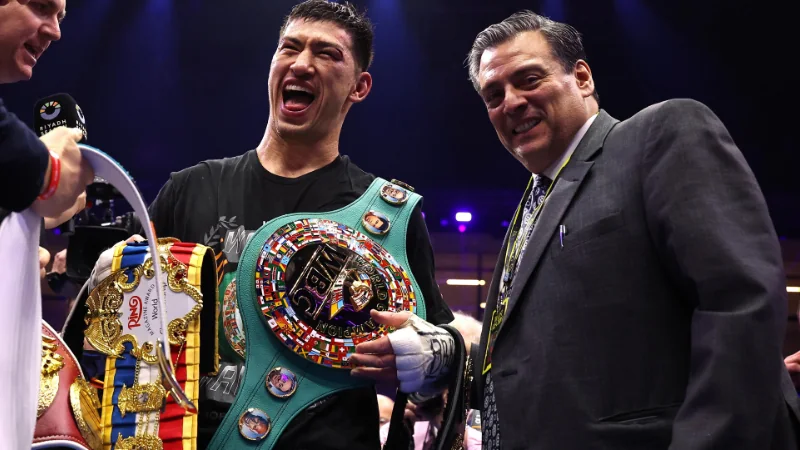
The two official results in one table
Artur Beterbiev won the first meeting with Dmitry Bivol on October 12, 2024. Bivol won the rematch on February 22, 2025. Both contests went twelve rounds and ended by majority decision, with the same set of final numbers favoring a different boxer. That symmetry makes the rivalry memorable, but the round-by-round cards reveal two different paths to those totals.
| Fight | Official winner | Cards in the winner's favor |
|---|---|---|
| October 12, 2024 | Artur Beterbiev, MD12 | 116–112, 115–113; third card 114–114 |
| February 22, 2025 | Dmitry Bivol, MD12 | 116–112, 115–113; third card 114–114 |
The WBA's official master-score collection supplies the judges' identities and cards. Majority decision means two judges selected the winner while one scored a draw. It is different from a split decision, where the third judge selects the other boxer. In neither meeting did an individual judge's drawn card make the official bout a draw.
Both were historical contests for the four major light-heavyweight belts, with the division's championship limit at 175 pounds. The first made Beterbiev undisputed; the second transferred that position to Bivol. Those statements describe the stakes and outcome on those dates. They should not be treated as a timeless list of whoever holds every belt now.
The useful comparison is not simply “power won, then skill won.” Each boxer needed offense, defense and control of distance in both contests. The difference lies in which exchanges and rounds produced a scoring advantage, and how the cards responded across the twelve rounds. A result can be official while individual rounds remain open to a fan's reasoned disagreement.
Below, the scorecard facts are separated from the tactical interpretation. No new unofficial total is presented as an authoritative replacement. For background on one participant, see the Dmitry Bivol profile; the focus here is the twenty-four rounds of the rivalry and why matching final numbers do not mean matching performances.
The first fight: Beterbiev won the late rounds on every card
The clearest shared judgment in the first fight came at the finish. Manuel Oliver Palomo, Glenn Feldman and Pawel Kardyni all awarded rounds ten, eleven and twelve to Beterbiev. Whatever a viewer thought of the earlier exchanges, the official decision did not depend on one judge alone admiring his late work. Those three rounds supplied the decisive movement on every card.
The position after nine shows why that matters. Bivol led 87–84 on Palomo's card and 86–85 on Feldman's. Beterbiev led 86–85 on Kardyni's. Three consecutive 10–9 rounds then produced a draw on the first card and Beterbiev victories on the other two. Bivol could lead on two cards with a quarter of the fight remaining and still lose without any unusual scoring mechanism.
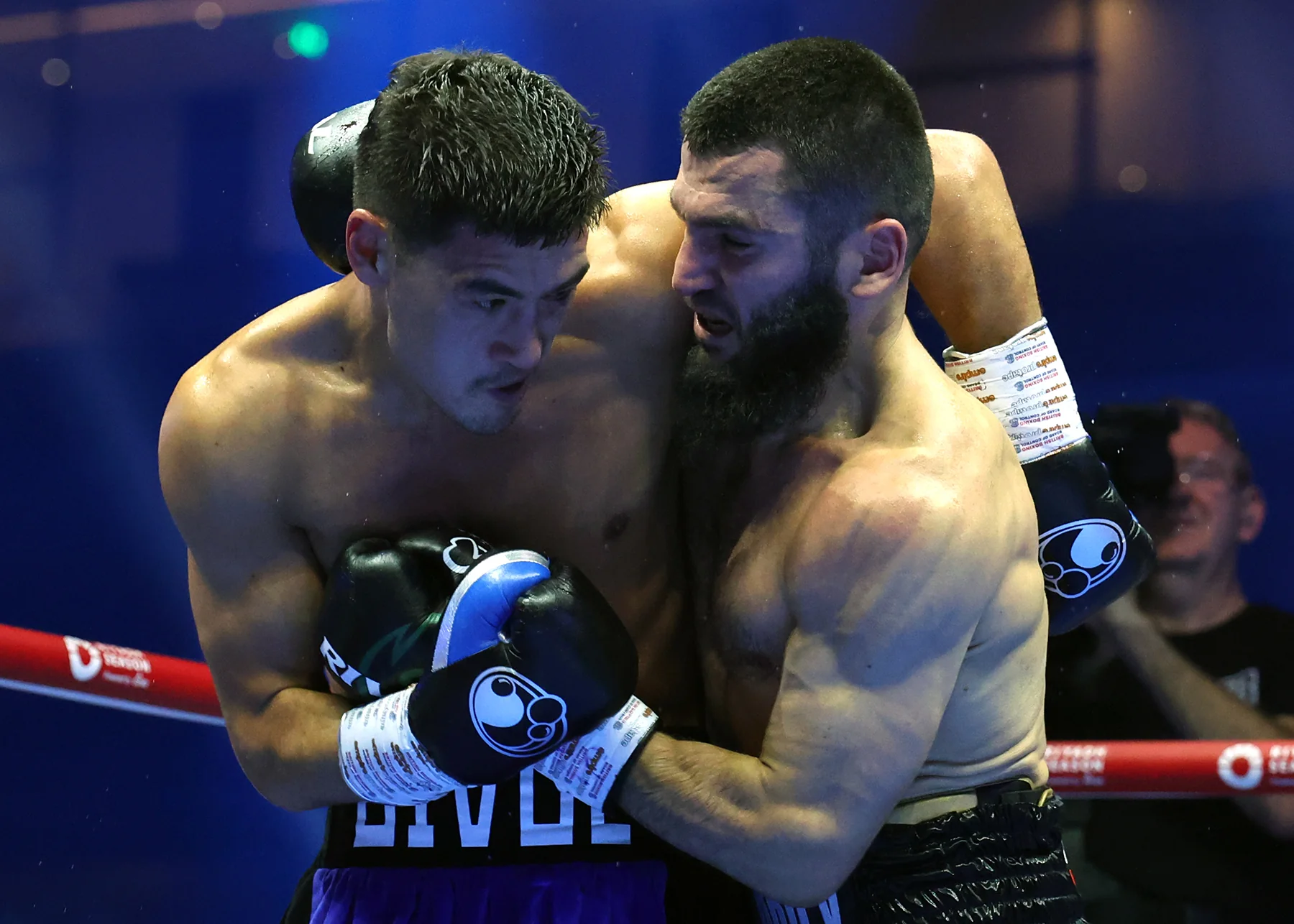
The fourth and seventh explain the spread between judges
Reading the original October master card reveals a remarkably narrow area of disagreement. All three judges gave Bivol rounds one, two, eight and nine. All three gave Beterbiev rounds three, five, six and the last three. Only rounds four and seven split their opinions.

In the fourth, Palomo and Feldman preferred Bivol; Kardyni preferred Beterbiev. In the seventh, Palomo preferred Bivol; Feldman and Kardyni preferred Beterbiev. Palomo therefore found six rounds for each man, Feldman seven for Beterbiev and Kardyni eight for Beterbiev. No recorded point deduction or 10–8 round complicates that explanation.
This is why a 116–112 total needs careful language. Here it represents eight ordinary winning rounds against four, with each scored 10–9. It does not say that four rounds were overwhelming, or that the losing boxer was never competitive. A judge must choose a round's winner even when the difference is small; the final addition does not preserve how difficult each choice felt.
A useful counterfactual illustrates the leverage without pretending to correct the officials. Switching one 10–9 round on Feldman's card would change 115–113 into 114–114: the winning boxer loses one point and the other gains one. That is a two-point movement in the margin. Switching one round on Kardyni's wider card would still leave a 115–113 Beterbiev victory.
The practical lesson for a replay is to mark the fourth and seventh separately, then watch the final three as a continuous test of sustained effectiveness. That produces a more specific discussion than calling the whole fight close and jumping directly to a preferred winner. It also makes room for disagreement about a round without treating a coherent official card as mathematically mysterious.
The rematch: Bivol changed the direction of the scorecards
Bivol's February victory was also a majority decision, but the original cards offer a different account of how it developed. Jean Robert Laine scored 114–114, Mike Fitzgerald 116–112 for Bivol and Deon Dwarte 115–113 for Bivol. Those are fresh judgments of another twelve-round contest, rather than a mathematical cancellation of the first result.
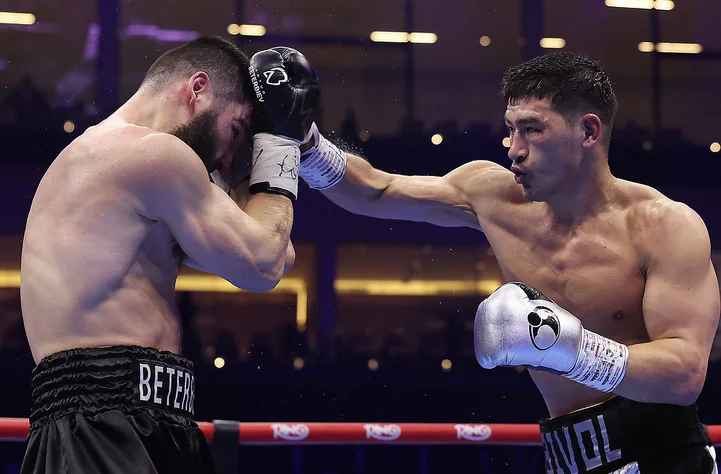
What the official cards actually agree on
In the original rematch master card, all three judges favored Bivol in rounds one, two, seven, eight, nine and eleven. All three favored Beterbiev in rounds four, five and twelve. The disputed rounds were three, six and ten. Six agreed Bivol rounds already explain why he could secure at least an even share on every card.
Fitzgerald preferred Bivol in the third and tenth where the other two judges preferred Beterbiev. In the sixth, Fitzgerald and Laine preferred Beterbiev while Dwarte preferred Bivol. Those differences turn the same shared core into eight rounds for Bivol on Fitzgerald's card, seven on Dwarte's and six on Laine's.
This is also a useful check against an overly tidy account of the finish. Beterbiev won the twelfth on all three cards. Bivol won the eleventh on all three, while the tenth divided them. The rematch was not the mirror image of the first fight's unanimous three-round Beterbiev sweep. Bivol established a different scoring foundation, particularly through the run of agreed rounds seven to nine.
The same final numbers do not describe the same fight
Compare the two sets of agreement. In October, ten rounds had the same winner on every card and two divided the judges. In February, nine rounds had the same winner on every card and three divided them. Agreement alone did not make either result unanimous: what mattered was which boxer received those rounds and how the remaining choices were distributed.
The February cards therefore support a specific statement: more of the shared judgments belonged to Bivol. They do not prove that every agreed round was easy to score, or that a disputed round contained fewer clean punches. A scorecard records each judge's decision; it is not a round-by-round measurement of certainty, entertainment or damage.
The matching totals can tempt a viewer to describe the series as perfectly balanced. It is balanced in official wins, one apiece. The actual exchanges and the way each contest accumulated points remain distinct. Nor does adding both fights into one twenty-four-round unofficial score overturn either separate result. Each bout began at zero and had its own winner.
For a replay, compare the seventh rounds first. October's seventh divided the officials, whereas February's seventh was unanimously Bivol's. Then compare the tenth: unanimously Beterbiev's in the first meeting, divided in the second. Those are practical places to test an interpretation about Bivol's ability to keep scoring while managing pressure, without assuming that the final totals alone demonstrate how his tactics worked.
Pressure, clean punches and the meaning of a close round
The rivalry works as a judging study because the most obvious movement does not always identify the most effective boxer. Beterbiev coming forward can create scoring opportunities, force a hurried exit or make Bivol work when he would rather reset. Bivol changing distance can create his own opportunities, interrupt an attack or allow him to strike before the next advance. Neither movement, viewed by itself, completes the scoring argument.
As general boxing education, the ABC boxing judge manual distinguishes effective pressure from aggression that produces little. It also recognizes the importance of clean punching and body work without supplying a fixed conversion between a harder punch and several lighter ones. This is a framework for watching boxing, rather than a claim that a United States training document explains each Saudi ringside official's individual judgment.
For this particular matchup, start with the entry. Does Beterbiev close the space behind a scoring punch, or does Bivol meet him cleanly before stepping away? Then watch the exchange itself. Are Bivol's combinations landing on scoring areas or being absorbed by a compact guard? Is Beterbiev's response connecting to the body or merely creating a louder collision with gloves and arms? Finally, examine the exit: who is able to score again, and who must spend the next phase recovering position?
Those questions make the familiar contrast between pressure and movement more useful. If an advancing boxer repeatedly arrives without landing, advancing is insufficient evidence. If a moving boxer repeatedly concedes clean punches while escaping, attractive footwork is insufficient evidence. A successful sequence can also change character halfway through: one man may win the opening exchange and the other land the meaningful response. The whole round must be evaluated.
The WBA's contemporary rematch report emphasized Bivol's speed, accuracy and distance management. The cards independently show a larger agreed base of Bivol rounds. Together they support investigating how he sustained scoring opportunities under pressure; they do not establish a precise causal formula. It would be too strong to claim that one adjustment, isolated from everything else, automatically changed every close round.
Sound and presentation can further complicate a television judgment. A glove impact can be audible without being a clean scoring blow. A camera angle can conceal the body or make a glancing contact appear flush. Replays help inspect an exchange, but they can also magnify one dramatic moment beyond its share of the round. Returning to the entire three minutes is a useful discipline.
The strongest disagreement therefore identifies an actual round and explains the balance of effective work within it. “I preferred Bivol's fourth because of the clean entries and exits I saw” is an argument that another viewer can examine. “Beterbiev always comes forward” leaves the essential question unanswered. Fans who want the broader scoring framework can use our boxing rules guide alongside the original cards.
What the rivalry settled and what a third fight would need to prove
The completed series stands at one official win each. Both results are decisions over twelve rounds, and neither boxer has an official stoppage victory over the other. That leaves considerable room for a third sporting chapter, but it does not leave the first two entries blank. Their dates, winners and scores are already settled parts of the record.
Each man took the other's unbeaten professional record
Beterbiev handed Bivol his first professional defeat in October 2024. Bivol returned the distinction in February 2025, handing Beterbiev his first. Top Rank's rematch report recorded the immediate postfight positions as Bivol 24–1 and Beterbiev 21–1. Those historical snapshots explain the stakes of the exchange without turning this scorecard comparison into a constantly changing career ledger.
The rematch victory did not erase Bivol's October loss, just as the first victory did not protect Beterbiev from February's loss. A rivalry can change the public assessment of a boxer while leaving both official results intact. This is particularly relevant when “revenge” becomes shorthand for proving the first verdict impossible. Winning the second contest establishes that Bivol won the second contest; the first remains a separate scoring question.
What the pair of fights demonstrates is adaptability at the highest level of this matchup. Each man has won when the other remained standing through the final bell. That asks more specific questions than a simple forecast of whose signature strength should prevail. It asks who can repeatedly produce effective work against an opponent who already understands the central threats.
A possible trilogy is separate from a confirmed result
This comparison covers the two completed official meetings verified on October 14, 2026. Discussion of another meeting should be read separately from a promoter's confirmed event announcement and separately again from a completed result. A wish for a trilogy, a proposed month and an actual fight outcome are different kinds of information. No hypothetical third score is part of the series record here.
If they meet again, the revealing tactical question would be whether Beterbiev can build productive pressure without conceding the sustained scoring sequences reflected in February's shared Bivol rounds. For Bivol, the question would be whether he can retain that scoring base while responding to adjustments in the entry and the body attack. These are conditional viewing questions, not predictions that either fighter must follow one fixed plan.
A third bout would not need identical score totals to be competitive, and a different result method would not retroactively change these two decisions. Start any future preview with the actual new circumstances, then use this series as evidence rather than destiny. Check the weekend boxing schedule for upcoming cards and the boxing results page for fights that have actually finished.
Keep reading
Related boxing articles
Results & Analysis
Shakur Stevenson and Zuffa Boxing: Release, Timeline and What Comes Next
By Boxing Schedule Editorial TeamResults & Analysis
Why Moses Itauma Lost to Filip Hrgovic and What a Rematch Would Require
By Boxing Schedule Editorial TeamResults & Analysis
Join the conversation
Comments
Comments are reviewed before publication. Keep the discussion useful and focused on boxing.
Sign in with Google to comment
Your public comment shows your account name. Your email address is not displayed.
Commenting as
Loading comments…