Why Moses Itauma Lost to Filip Hrgovic and What a Rematch Would Require
Itauma's first defeat examined through official results, reported pacing problems, Hrgovic's contribution, development needs and the limits on an immediate rematch.
The result that changed Itauma's heavyweight trajectory
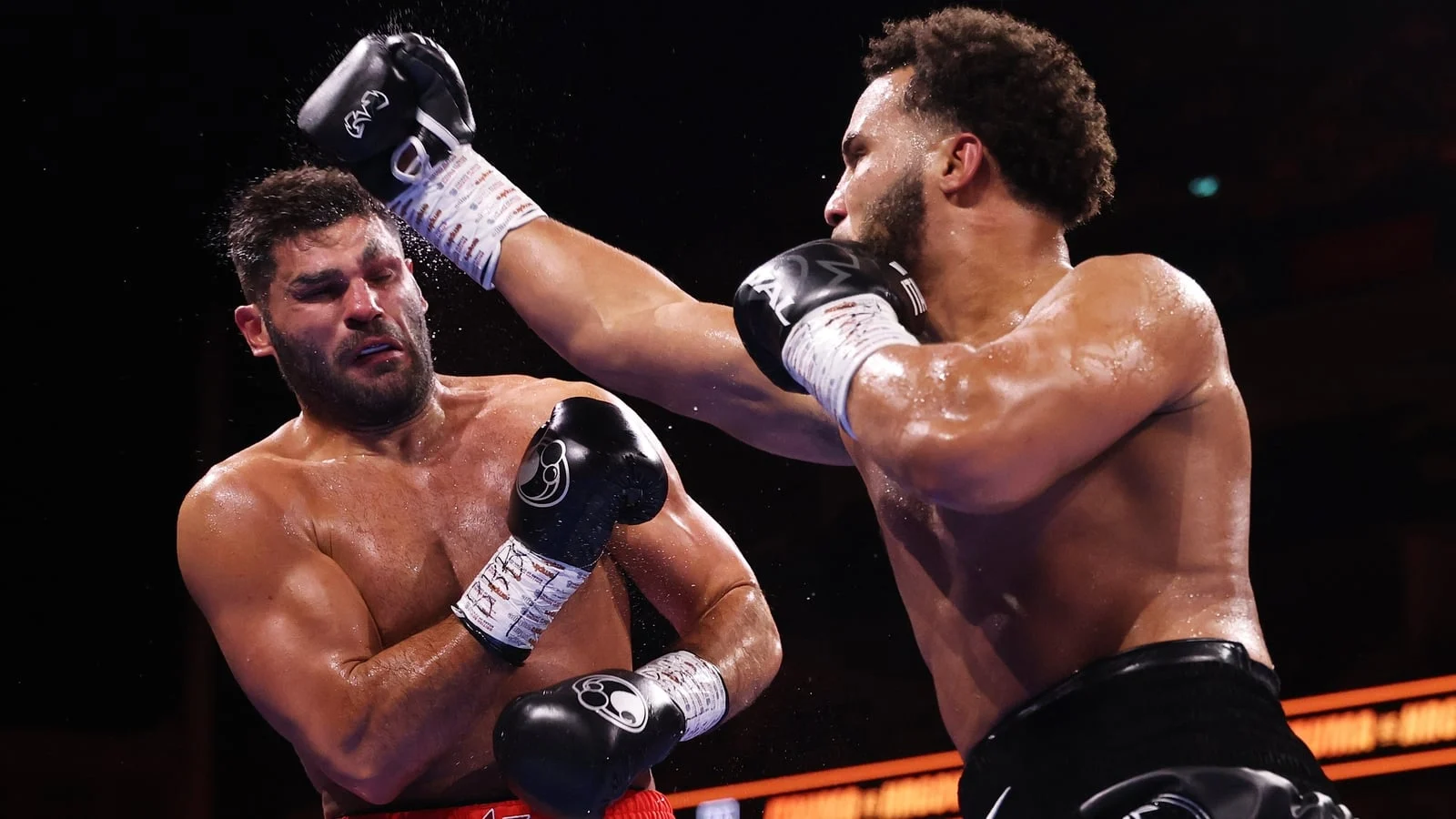
Moses Itauma lost to Filip Hrgovic because his early success did not become a sustainable winning performance. He hurt and outboxed an experienced opponent, but the fight continued, his output became harder to maintain, and Hrgovic took over late. That is the broad pattern supported by the available reports. It explains the sporting reversal without pretending that one label, such as stamina or inexperience, describes every cause of the ending.
The official result is clear. Queensberry's fight history records a ninth-round TKO victory for Hrgovic at The O2 in London on August 29, 2026. The IBF champions page names Hrgovic as its heavyweight champion and gives August 29 as the title-winning date. This was the vacant IBF world championship, rather than a contest for all four major heavyweight belts.
As checked on October 1, Queensberry's current statistics list Hrgovic at 21 wins, one defeat and 16 knockouts, while Itauma's profile lists 14 wins, one defeat and 12 knockouts. The loss changed Itauma's professional record and removed the immediate title celebration his supporters expected. It did not erase the speed and offensive quality that made his challenge competitive.
There are two questions worth keeping separate. The first is what the first fight revealed: the difference between scoring effectively and maintaining control when a durable opponent survives. The second is what should happen next: recovery, development and a potential rematch. A wish to reverse the result does not settle whether the same opponent is immediately available or whether the same approach would work better.
This assessment uses official records, reported ringside accounts and attributed fighter comments. It is not a new round-by-round film study, and it does not present unofficial scoring impressions as the judges' cards. Nor does it infer a medical diagnosis from Itauma's difficult final moments. Those boundaries leave plenty of concrete boxing to examine, especially how a successful attack became an expensive one.
Winning rounds is different from controlling the pace
Itauma's early success is essential to understanding the defeat. This was not a case in which a young challenger could find no way to reach an experienced opponent. His speed and combinations were repeatedly effective, and reports agree that he scored an early knockdown. The problem emerged when those advantages failed to end the contest and he had to keep producing them against a man who remained dangerous.
Sky Sports' fight report describes a sustained eighth-round attack followed by a sharp decline in Itauma's ability to continue. That account supports a discussion of pacing. It does not establish an exact punch budget, a physiological threshold or the amount of effort that would have guaranteed a different result.
The danger of treating every opening as a finishing chance
When a heavyweight lands cleanly, the next few seconds can look like an invitation to finish. The opponent's guard may become untidy, his feet may stop moving, or a previous combination may have drawn a visible reaction. Increasing the attack can be the correct choice. The difficult decision is when the opponent survives and the attacker must distinguish a genuine finishing opportunity from another exchange he is merely winning.
A combination has more than one cost. Throwing it requires effort, and recovering position afterward requires another decision. If the attacker stays planted to add more punches, the opponent may find the return that changes the exchange. If he moves away without regaining his stance, he may surrender ground while still doing expensive work. Efficient pressure therefore includes a way to end the attack safely, not just a way to begin it quickly.
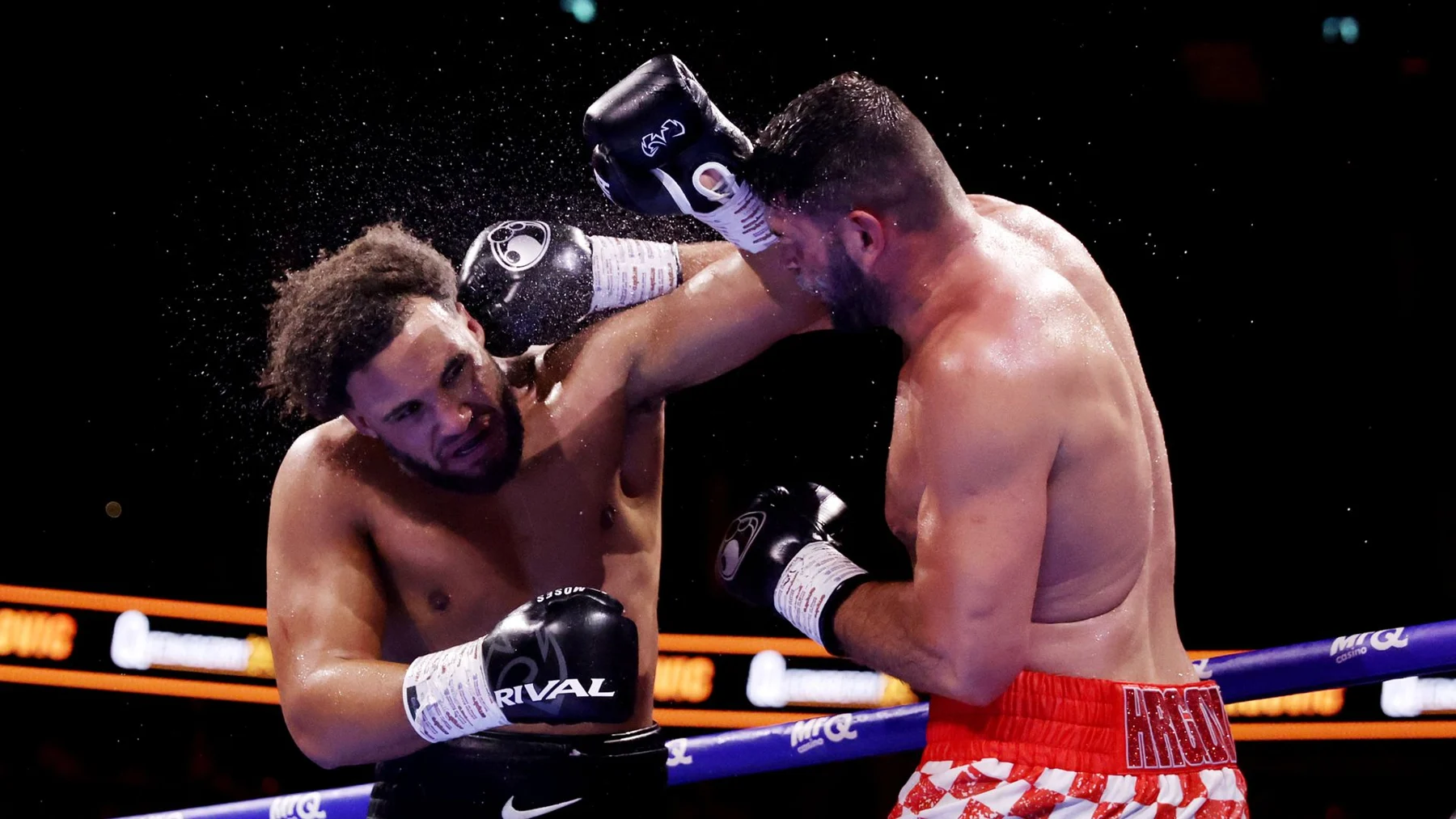
For Itauma, the prospective adjustment is not to abandon the speed that created his advantage. It is to make that speed useful at more than one tempo. A shorter combination followed by a balanced exit can preserve an opening for later. A jab that scores and makes the opponent reset can be valuable even when it produces no dramatic reaction. Neither approach looks as spectacular as an extended assault, but a title fight does not award extra credit for using every opening at maximum intensity.
The central lesson is that a points lead and command of the fight are related, but different. A boxer can accumulate scoring success while spending resources faster than his opponent. Once he cannot maintain his defense or position, the earlier rounds cannot protect him from a stoppage. Itauma's next challenge is to keep those advantages available when the first attempt to finish has failed.
Hrgovic's durability was part of a winning performance
Giving Hrgovic credit does not require rewriting the early fight. Itauma's attacks were successful, and Hrgovic had to overcome a difficult position. His victory came from remaining capable of changing that position, rather than from convincing the judges that the earlier exchanges had gone his way. A stoppage is a distinct route to victory, and he kept that route available.
In his postfight assessment reported by Sky Sports, Hrgovic praised Itauma's speed while describing his belief that the younger fighter's pace would become difficult to sustain. That is the winner's explanation, with the benefit of the result. It deserves attention without becoming proof that every punch he absorbed was planned or harmless.
There was a practical experience difference behind his confidence. Hrgovic's official history includes ten-round decision wins over Joe Joyce in April 2025 and David Adeleye in August 2025. Those fights are evidence of recent professional work over a longer distance. They do not guarantee that he would survive Itauma, but they give context to his willingness to continue when the early exchanges were unfavorable.
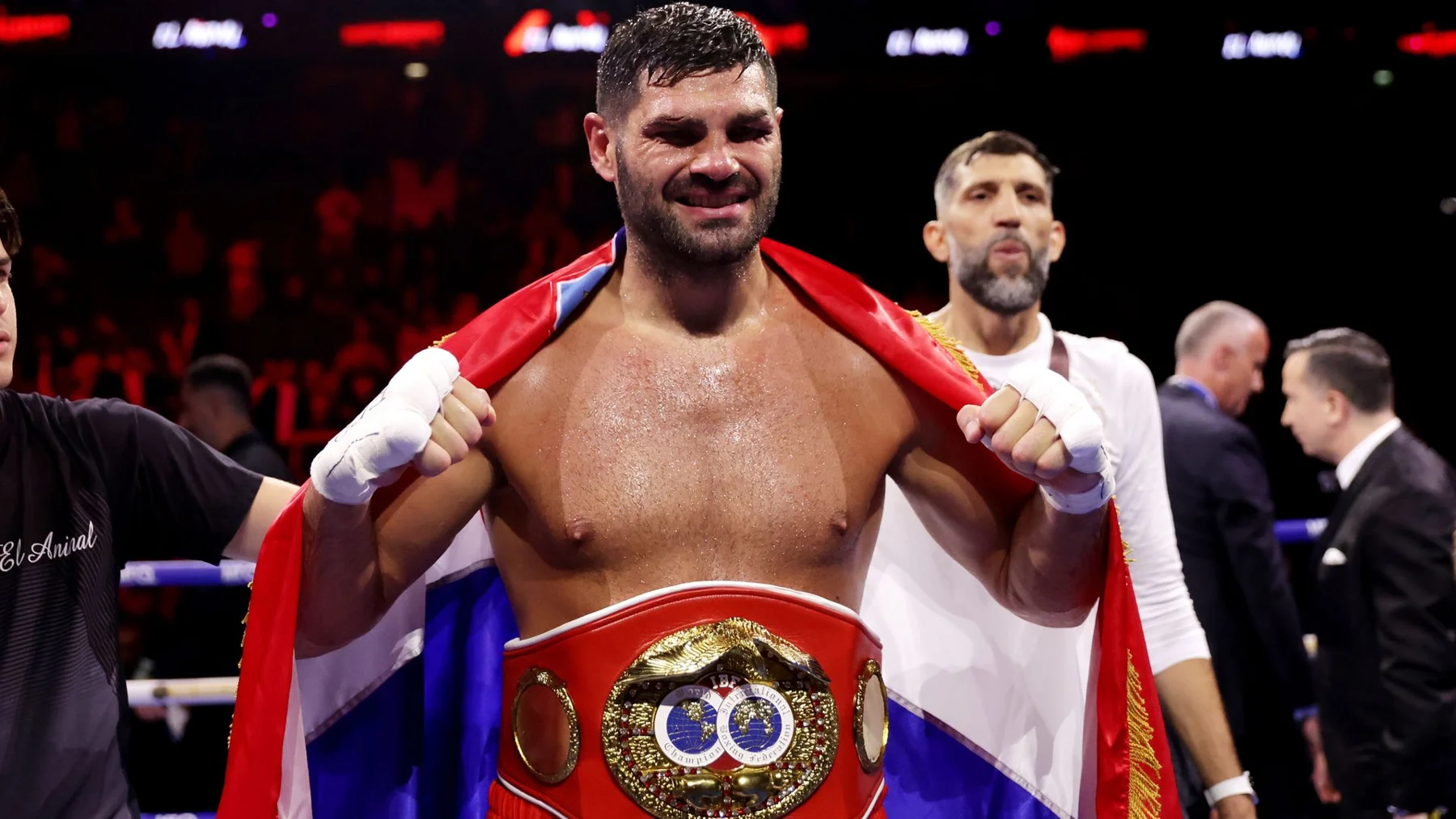
Survival alone would not have been enough. If he had simply absorbed punishment until the final bell, the early scoring deficit could have remained decisive. The winning performance needed a second part: recognizing that Itauma was vulnerable and applying an attack that the challenger could no longer manage. Reports describe Hrgovic forcing him backward and overwhelming him in the ninth. The opportunity still had to be used.
Calling the result only a failure of Itauma's stamina consequently gives the winner too little agency. Calling it a display of complete Hrgovic superiority goes too far in the other direction. The more useful assessment holds both parts together: Itauma created the early problems, Hrgovic endured them, and the veteran finished when the balance changed. Any second meeting would test whether either man can alter that sequence. It would not begin with a guarantee that the same resilience or the same early speed produces the same outcome.
The experience gap that early knockouts could not fill
Itauma's previous results created a legitimate excitement and an incomplete picture. Twelve knockouts in his first fourteen wins showed how frequently he could finish opponents. They offered fewer answers about handling a contest that remained competitive after the halfway point. Sky's account identifies the seventh as the first round of his professional career beyond six. That missing experience became relevant in a world-title fight against an opponent who would not disappear.
His official history includes the first-round stoppage of Dillian Whyte on August 16, 2025. Such a recognizable victory can raise confidence without providing a lengthy examination. The name and the duration answer different questions. Defeating an experienced boxer quickly does not reproduce the decisions required when another experienced boxer survives repeated clean attacks.
A longer fight must test decisions as well as endurance
The useful development target is not simply a larger number on the round counter. A fighter can spend a long contest comfortably controlling an opponent who asks little of him. That produces duration, but it may leave the same uncertainties about recovering from a hard exchange, responding to a changing tempo or maintaining position when an opponent starts landing back.
A meaningful intermediate assignment would ask some of those questions while still being appropriate to Itauma's readiness. Can he win an exchange without immediately trying to turn it into a stoppage? Can he recognize when an opponent has recovered? Can he return to straightforward scoring after a dramatic attack has failed? Fans should look for those decisions as well as the final method of victory. They are the parts of experience that a highlight reel is least likely to show.
The defeat makes criticism of the accelerated title route understandable. It does not establish that accepting the opportunity was irrational, or that every young heavyweight should follow one prescribed timetable. Itauma showed enough offensive quality to create a winning position. The more precise criticism is that his preparation left an important championship question unresolved: whether he could manage that position through prolonged resistance.
A successful return should address that question with competitive evidence. Deliberately prolonging a fight against an overmatched opponent would be a poor substitute. The aim is to demonstrate an adaptable performance, not merely to make the record look more experienced. A later knockout can still be useful development if the rounds before it contain choices that the earlier short wins never required.
Fatigue, damage and the limits of a ringside diagnosis
The ending generated an argument that extends beyond conditioning. In the r/Boxing discussion of the final round, some viewers emphasized exhaustion while others pointed to the punches Itauma had absorbed. That disagreement identifies a reasonable question. It does not supply a clinical answer, even when a comment presents its explanation with certainty.
What was reported about Itauma's condition
Sky Sports reported on August 30 that Itauma had been taken to hospital after the stoppage and quoted a Queensberry spokesperson confirming that he had left hospital the previous night and returned home to his family. The same coverage reported Frank Warren's reference to a leg problem. Those statements establish what the team said at that time. They do not identify a precise injury or establish his readiness for another fight on October 1.
The date is important. A reassuring update after a hospital visit is different from an announcement that a boxer has completed the process required to resume competition. No current clearance document or fixed return date was identified for this article. A rematch discussion should therefore remain a discussion about future possibilities, rather than a conclusion that recovery has already reached a particular stage.
Why a difficult ending should not become a medical conclusion
Itauma's loss of control late in the fight is relevant to the boxing assessment: he could no longer manage Hrgovic's attack effectively, and the contest ended. It cannot, by itself, establish the relative contribution of fatigue, a reported leg problem or the effects of punches. Nor can a viewer confidently rule out damage because the fighter had previously appeared to be winning.
The tactical lesson remains useful without that diagnosis. Sustained attacking effort can leave fewer options for defense and movement, while return punches can make those tasks harder still. Recognizing both concerns is more responsible than forcing the ending into a single explanation. It also keeps the argument about pacing from becoming an excuse to minimize the punishment that accompanied the defeat.
For fans considering Itauma's next move, the information that matters is concrete: a dated team update, an appropriate return announcement and evidence of a revised approach once he does box again. A confident prediction that he will win the rematch, or never recover his previous level, supplies none of those things. The first fight showed a limitation under demanding conditions. His future performance will determine how well that limitation is addressed.
Why rematch interest does not establish the next fight
The September discussion of a second meeting is understandable. Itauma has reasons to believe the first contest contained a winning route, while Hrgovic has reasons to believe he can improve on a performance that eventually won him the championship. Those competing interpretations create a sporting case for a rematch. They do not supply an event date.
Both fighters can want a second meeting
Boxing News reported on September 30 that Itauma had requested another meeting and that Hrgovic was interested after watching their fight back. The champion's account was not simply a celebration of his durability. He said he could have thrown more, worked faster and been more aggressive, while acknowledging the difficulty created by Itauma's counters and speed.
That makes the possible second contest more interesting than a simple demand for Itauma to improve his conditioning. Hrgovic would also be trying to change the early pattern. If he commits more readily to offense, he may offer additional countering opportunities; if Itauma responds by repeating the same expensive attacks, the original pacing question returns. Both sides can identify adjustments without either having proved that those adjustments will succeed.
The champion's prediction of a more dominant result is a fighter's forecast. It should not be converted into an objective assessment of the next fight. Equally, Itauma's early lead is a reason to investigate his options, not evidence that a rematch must end in his favor.
The Sanchez position still needs an authoritative resolution
The championship route has another participant. In its August 5 announcement, Queensberry stated that Frank Sanchez had made way for Itauma-Hrgovic to become an IBF title fight and would await the winner. That was the promoter's published position before the contest, rather than a new arrangement created by the September rematch comments.
On August 30, Sky Sports quoted Sanchez's manager Mike Borao as saying that the IBF permitted no intervening bout, including unification, before Sanchez's mandatory opportunity was satisfied. That is an attributed statement from the contender's representative. This article has not independently inspected an updated formal IBF order resolving the next opponent or assigning a fight date.
The practical conclusion is limited but useful. Any plan for an immediate Itauma rematch needs to account for the published Sanchez position, as well as recovery and negotiations. As of October 1, no confirmed rematch date or venue was identified in the sources examined. Fans should wait for a current authoritative announcement before treating enthusiasm from either fighter as a scheduled championship contest.
What Itauma would need to change before another title attempt
The next phase should be judged by what Itauma does differently when an opponent survives, rather than by how quickly he can restore excitement around his name. His speed remains an asset. The development question is how he uses it when a clean combination wins an exchange without ending the fight.
There is now a reported outline for the return, although no fixed event has been identified. Boxing News reported on September 19 that Warren expected Itauma to fight very early in 2027 and wanted changes made following a review with the team. That is a dated promotional expectation. It supplies a broader plan without confirming the opponent, the exact date or the medical requirements for competition.
On the sporting side, a useful change would be a clearer decision after the first successful attack. If the opponent is recovering, Itauma should be able to return to scoring without treating that recovery as a reason to force another prolonged exchange. If the opponent is genuinely vulnerable, he should still attack decisively. The improvement lies in distinguishing those situations, rather than becoming passive to avoid another expensive round.
Fans can watch the exits as closely as the combinations. Does he finish in a position where he can defend? Does he keep the jab available after a reset? When an opponent answers back, does he immediately chase another dramatic moment, or choose a simpler exchange that restores control? Those details would provide evidence of adaptation even if the eventual result is another knockout.
A second title attempt would also benefit from an opponent who can make those decisions matter. A familiar name and a short stoppage may generate attention while leaving the central question unanswered. Competitive resistance, handled efficiently, is the more useful signal. It would give Itauma a chance to show that the lesson has become part of his boxing, rather than something he can describe after a difficult night.
For confirmed developments, the boxing results page provides the completed-fight record, while boxing TV listings help once a future event has official viewing details. Hrgovic's victory remains the result that must be addressed. Itauma's early success remains evidence of his potential. The route back depends on combining that potential with a performance that stays effective when the knockout does not come on demand.
Keep reading
Related boxing articles
Results & Analysis
Shakur Stevenson and Zuffa Boxing: Release, Timeline and What Comes Next
By Boxing Schedule Editorial TeamResults & Analysis
Bivol vs Beterbiev Results and Scorecards: Why the Two Decisions Went Different Ways
By Boxing Schedule Editorial TeamResults & Analysis
Join the conversation
Comments
Comments are reviewed before publication. Keep the discussion useful and focused on boxing.
Sign in with Google to comment
Your public comment shows your account name. Your email address is not displayed.
Commenting as
Loading comments…