Beginner Boxing Classes in Omaha: Gyms, Costs and Your First Month
Compare Omaha beginner boxing options, youth eligibility, published costs and adult availability, then plan a first month around instruction you can actually attend.

Choose the kind of boxing you want to learn
For beginner boxing classes in Omaha, start with a specific question: do you want to learn boxing technique, attend a boxing workout, or eventually prepare for a bout? Mick Doyle’s explicitly describes beginner instruction; Davis Boxing Club publishes adult options but currently has a waitlist; youth programs have separate eligibility rules. Those differences matter more than a search result promising the city’s “best” gym.
This guide compares published information checked on October 20, 2026, with questions that help you choose a workable first class. It is a starting shortlist, rather than a review based on visits. Contact the gym before traveling: an opening-hours listing does not establish that a beginner coach or a place in class will be available.
Technique classes, fitness sessions and competition teams
A technique class should give you a chance to learn a stance, move without losing balance, throw a controlled jab and recover your guard. A boxing fitness session may emphasize continuous work on a bag, conditioning intervals or following combinations as a group. Either can match a beginner’s goal, but ask how the coach teaches someone who does not yet understand the commands. “All levels” is helpful only when there is a practical way for a newcomer to follow the session.
A competition team has a different purpose: preparing boxers for an opponent who moves, defends and punches back. Its practice times, eligibility and expectations can differ from recreational classes in the same building. You do not need to choose that route simply because you enjoy watching fights. Mick Doyle’s program, for example, explicitly says sparring and competition are optional.
Write one sentence before contacting a gym: “I am an adult with no experience, I want coached boxing fundamentals, and I do not want contact.” Or replace that final clause with a request to understand the competition pathway. This produces a clearer answer than asking whether the gym is beginner friendly. Our broader beginner boxing class guide covers general preparation; the next step here is finding an Omaha option whose actual enrollment and timetable match your needs.
Omaha options worth contacting first
These options make a useful shortlist because their official pages reveal different entry routes. They are not interchangeable recommendations. Begin with the one that fits your goal, then keep a second possibility in case the preferred time is full. Ask for the name of the actual class you should book, rather than arriving during general opening hours.
Mick Doyle’s for a defined beginner pathway
At 10801 Blondo Street, Mick Doyle’s distinguishes beginner and intermediate instruction. Its beginner description includes stance, footwork, punching and defense. That is a clear starting point for someone seeking the sport’s fundamentals. Contact the gym for the current beginner timetable, available places and membership quote; the public program page is not a confirmed reservation.
Ask how a newcomer joins an established group. Will the coach demonstrate the stance separately? Can you start with a shorter combination? What tells the coach you are ready to move into intermediate work? A named beginner pathway is useful, but the answers to those questions explain how it works on the floor.
Davis Boxing Club: useful pricing, limited adult availability
Davis Boxing Club lists 3015 S. 83rd Plaza and an adult program for ages eighteen and older. Its standard Fighter plan is advertised at $99 monthly, with a $25 drop-in also listed. However, the same page says adult classes are at capacity, the waitlist is open and there is no opening timeline. A published drop-in price does not override that capacity notice.
If Davis interests you, ask whether there is any beginner assessment or future intake you can join. Keep training plans flexible until the club confirms a place. Do not pay on the assumption that a publicly displayed plan means every session is currently bookable.
South Omaha and Genesis: ask different questions
South Omaha Boxing Club lists its current address as 8706 S. 9th Street in Bellevue. Confirm adult beginner intake, teaching times and fees directly. Its name is not a reliable guide to the present commute, and a tournament list does not tell you when a newcomer can train.
Genesis at 132nd and Center, 2275 S. 132nd Street, lists All American Boxing within a broader fitness timetable. Ask whether your intended session teaches punch mechanics individually, uses bags or partner work, and is included in the membership being quoted. It may suit someone seeking boxing within a full-service fitness routine; confirm the format before treating it as a route into amateur competition.
Finding the right youth program
Parents need a separate shortlist from adult beginners. An adult class that accepts newcomers may not have the age grouping, supervision or enrollment process intended for children. Likewise, a youth development program connected to a successful professional boxer does not automatically offer a casual adult workout. Start with the child’s age, your available travel times and whether you want a noncontact introduction.
Davis and B&B have different entry requirements
Davis’s homepage advertises free youth training for ages six through seventeen, with registration and a guardian waiver. Another indexed Davis program page gives a different age band, eight through eighteen. Because the club’s public pages differ, confirm eligibility for your child directly, particularly at the ends of those ranges. The adult capacity notice should not be used to infer whether a youth place is available.
The B&B Sports Academy FAQ describes a youth program for ages eight through eighteen, founded by Terence Crawford and Brian McIntyre. Its expectations include school progress information and positive behavior. Ask about current enrollment, coaching assignments and the attendance commitment. Crawford’s association with the academy is not a promise that he will personally teach a particular session.
Separate enrollment from permission to compete
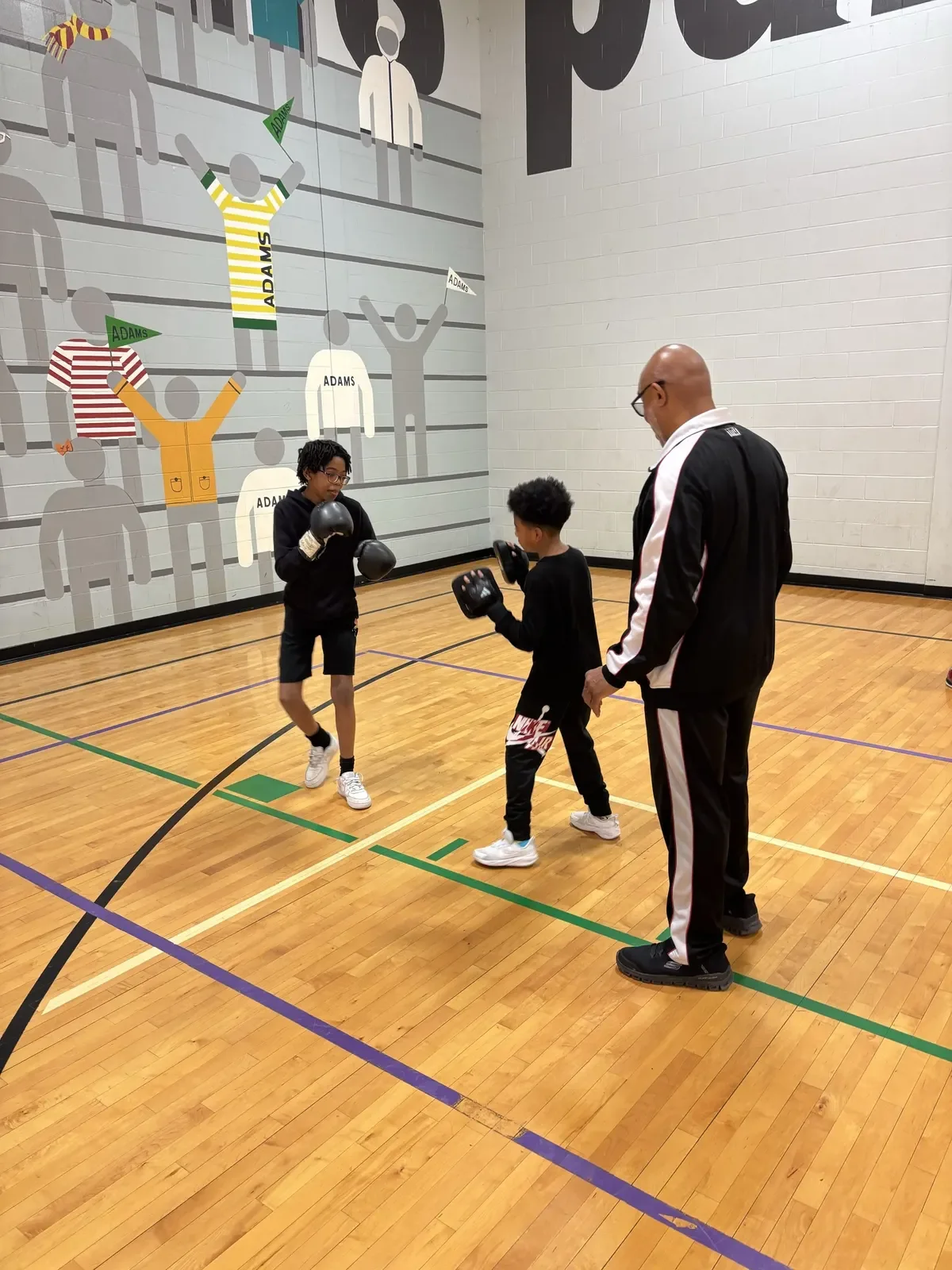
A first lesson, a supervised partner exercise and an amateur bout are different commitments. Before registering, ask what children actually do during the entry session: movement practice, shadowboxing, bag work, mitt work or any drill where punches travel toward another person. Ask how the coach stops a drill, whether a parent may observe and how any later contact decision is discussed.
Davis identifies its competition team as a separate approval-based route requiring USA Boxing registration. That distinction is useful to preserve when speaking with any club: paying for lessons does not mean a child is ready for competition, while enjoying beginner lessons does not require deciding about a bout now. Our boxing for kids guide offers further questions for parents.
Include your child in the practical choice. Can they hear the instructions, ask a question and explain one thing they learned afterward? A quieter child may need a different introduction from an outgoing teammate. Those observations are more useful than choosing a program solely because the photographs show medals or because its social account features a famous fighter.
Compare the full cost before joining
The useful price is the cost of the training you can actually attend. An unlimited membership has little value if your only free evening coincides with an intermediate session or a full class. Ask the club to identify suitable beginner sessions first, then compare payment options against that timetable. Keep the written quote with the date, plan name and billing period.
Davis provides a transparent example: its advertised five-class pack is $100, valid for sixty days, making the face cost $20 per class when all five are used. The $99 standard monthly plan would work out at approximately $12.38 for each of eight visits. Those are illustrative calculations before any additional costs, not a guarantee of access: the adult waitlist remains the first issue to resolve.
For other providers, a precise-looking number may conceal missing context. South Omaha’s published membership form includes fees but does not clearly establish the billing period beside them. Ask for the current terms rather than assuming a figure means per month. Mick Doyle’s contact FAQ describes a Combat Sports Package spanning several adult disciplines; confirm which boxing sessions a new member can attend.
Request an itemized answer to these questions before choosing a recurring plan:
- What is due at enrollment, and when is the next payment collected?
- Is there a minimum commitment, renewal term or notice period for cancellation?
- Are wraps, gloves, an assessment or private introductory lesson extra?
- Does a missed class disappear, roll over or require a cancellation fee?
- Are boxing sessions included, or is a separate program fee required?
- If you eventually pursue sanctioned competition, which additional registration and travel costs apply?
Then calculate a conservative month. Count the classes you expect to attend after work, school, transport and other commitments, rather than dividing an unlimited fee by every day the gym opens. Add the cost of the gear the coach actually requests. A cheaper monthly rate can become a poor choice when an inconvenient route leads to repeated missed sessions.
Private coaching deserves its own comparison. Ask for session length, the intended beginner content and whether a package expires. One focused introduction may help you understand a group class, but there is no reason to buy a large private package simply because you have never boxed. Choose the smallest commitment that lets you evaluate the teaching and your schedule with real attendance.
What to look for in your first class
Once a gym confirms a suitable session, ask what to bring and how early to arrive for the introduction. Mick Doyle’s lists athletic clothing, wraps and boxing gloves on its program page. Confirm whether your chosen provider lends equipment and will show you how it should fit. Buying a large equipment bundle before meeting the coach can leave you with items the class does not require.
Tell the instructor you are new before the group starts. Explain whether you want noncontact learning, a workout or an eventual route toward competition. Ask where to stand and what to do when a combination moves too quickly. A useful introduction gives you a way to participate without pretending you already understand the vocabulary.
Watch the coaching, not the loudest punches
During a trial, look for feedback you can understand and apply. If you reach for the bag and lose your position, does someone help you adjust the distance? If your rear hand drops while you jab, is there a reminder to recover the guard? Does a footwork instruction explain where you should finish, rather than simply telling you to move faster?
These questions are an observation framework, not a remote judgment on any Omaha coach. You do not need to diagnose every technical detail yourself. You need to discover whether the instructor notices you, gives a manageable correction and lets you practice it. A busy room can still teach well when beginners receive clear direction; an impressive ring alone cannot provide that attention.
Judge the session against your stated goal. A fast conditioning class may be enjoyable without providing the individual feedback you wanted on a jab. A technical introduction may feel slower while giving you something specific to practice. Neither experience requires a claim about calories burned or a promise of rapid competitive progress.
Ask about contact before any partner drill
Partner work can mean many things: holding a target, mirroring movement, rehearsing a prescribed action or exchanging punches. Ask exactly what is intended and tell the coach your boundaries before joining. “Light” and “beginner” do not explain the drill by themselves. You should understand whether punches are directed at another person, what the roles are and how the exercise is stopped.
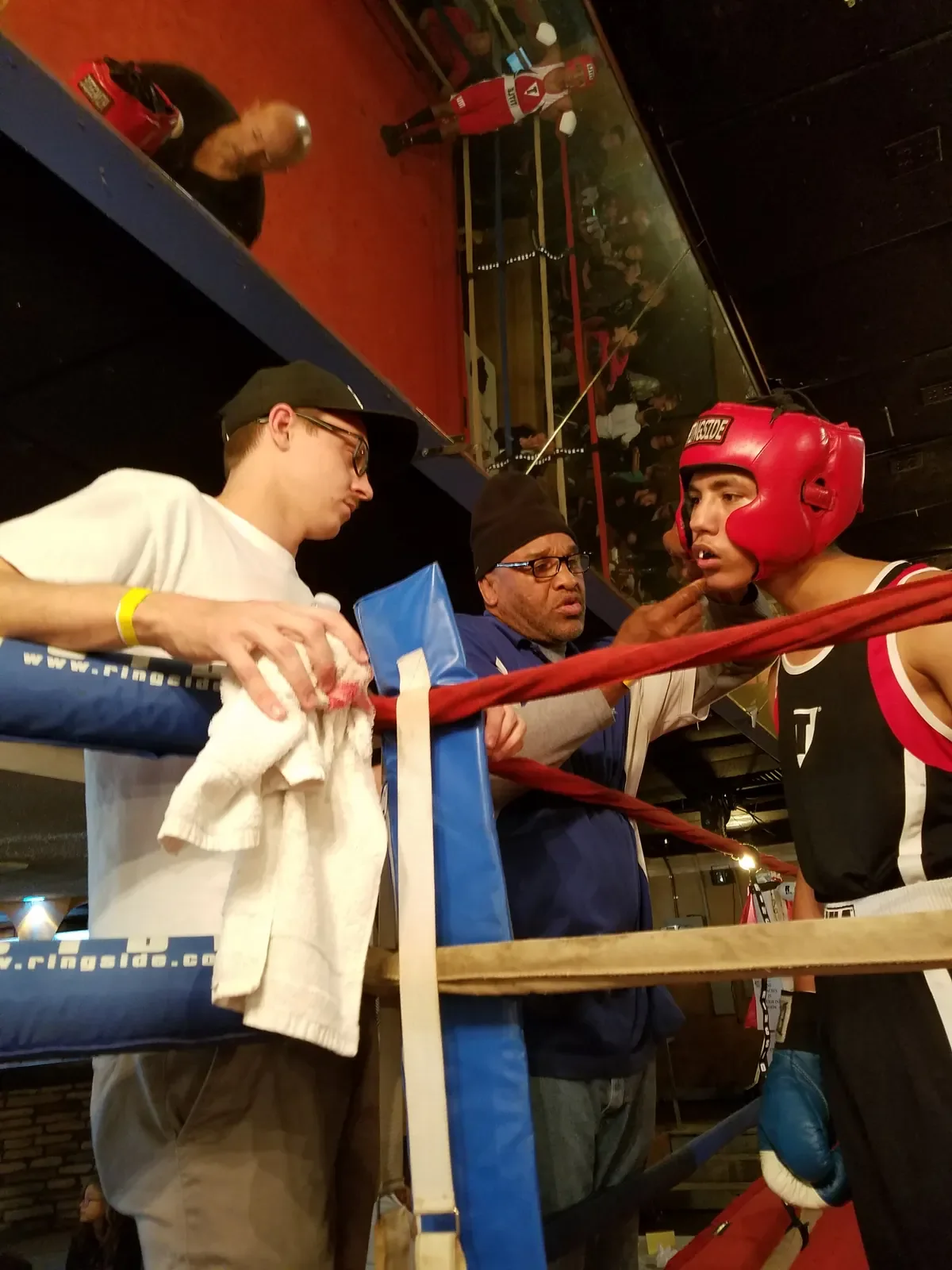
Do not interpret a competition photograph as the plan for your first visit. If an exercise is unclear or exceeds what you agreed to, stop and ask for an explanation or an alternative. The relevant question is whether the class respects the training you enrolled for. You can value boxing as a sport while choosing a recreational pathway that never includes sparring.
Build a realistic first month in Omaha
The strongest shortlist becomes a useful choice only when it survives your ordinary week. Put the confirmed beginner sessions into your calendar alongside work, school pickups and transport. Include time to change and speak with the instructor. The relevant journey may begin at your workplace rather than your home, so check the route you will actually use.
For a gym on Blondo Street, a club near 83rd Plaza, a West Omaha health club and a Bellevue boxing program, the best route will vary by household. Avoid choosing on a citywide distance ranking. Try the trip near the proposed class time and establish where you enter and park, or how the final part of a public-transport journey works. An extra transfer matters more than a small difference in the advertised monthly fee.
Choose a repeatable route and review your progress
Use the first week to confirm the basics: enrollment, class format, costs and a realistic arrival time. If your preferred club is waitlisted, ask whether you can stay on that list while trying an available alternative. There is no benefit in inventing a start date. A current provider timetable is the right source for booking; Davis says its enrolled members receive their schedule privately, while Genesis publishes a weekly class calendar.
During the next few visits, keep a small record of what you were asked to practice. Write down one correction in ordinary language, such as recovering the lead hand after a jab or finishing a step with your feet under you. At the following lesson, ask the coach to check the same point. This makes progress easier to discuss than a vague impression that you worked harder.
At the end of the month, evaluate the service against the reason you joined. Can you follow the instructions more comfortably? Do you understand the difference between the punches being taught? Can you describe the coach’s feedback? Are suitable sessions available at times you can keep attending? Those questions support a practical membership decision without setting an arbitrary deadline for sparring or competing.
Also review the obstacles. If you missed most sessions, decide whether travel, booking availability or the class format caused the problem. Moving to a more convenient beginner group may solve more than buying a larger package. If you attended consistently but rarely received the guidance you wanted, discuss a different class or introductory lesson before renewing.
For parents, add a conversation with the child and coach: what was enjoyable, what was confusing and what does the next stage involve? For adults, revisit whether your original goal still fits. You may discover that you enjoy a technical recreational class without wanting competition, or that you would like to ask about a longer development pathway. The right Omaha starting point is the one that offers a confirmed place, clear instruction and a routine you can sustain.
Keep reading
Related boxing articles
Fight Guides
Why UNLV Moved a Football Game for Canelo–Crawford at Allegiant Stadium
By Boxing Schedule Editorial TeamFight Guides
Boxing Ringwalks and NFL Kickoffs: A Sports Viewing Guide
By Boxing Schedule Editorial TeamFight Guides
Join the conversation
Comments
Comments are reviewed before publication. Keep the discussion useful and focused on boxing.
Sign in with Google to comment
Your public comment shows your account name. Your email address is not displayed.
Commenting as
Loading comments…