Why Boxing Fans Are Frustrated in 2026: PPV Prices, Late Starts, Bad Cards and Early Stoppages
A fan-first look at boxing's 2026 frustrations, from PPV costs and overnight ringwalks to thin cards, disputes and controversial stoppages.
The Complaint Is Really About Trust
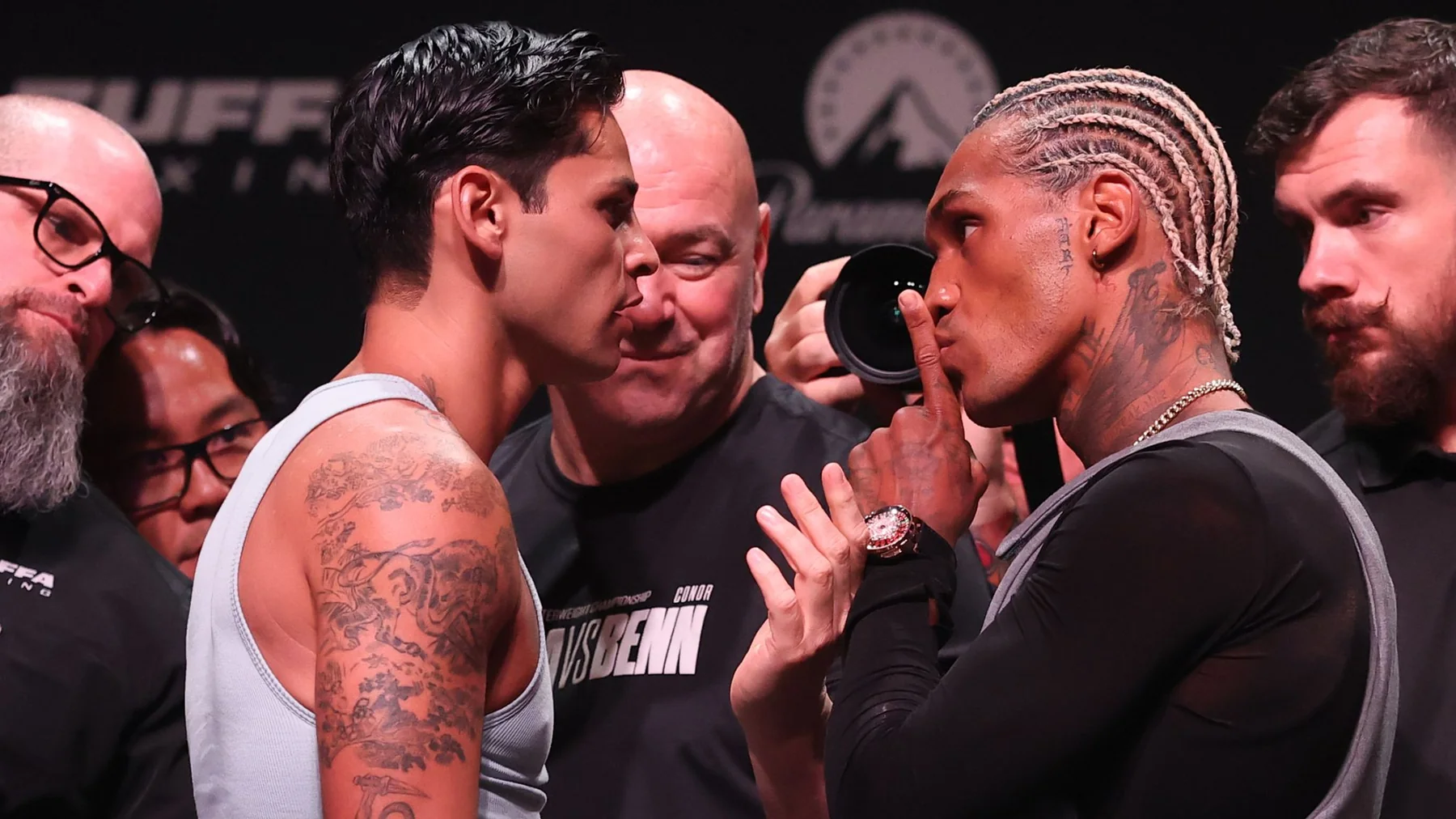
Boxing fans are not angry simply because every fight fails to deliver a knockout. Most serious followers understand that an elite contest can be tactical, that an underdog may spoil, and that a referee sometimes has to make an unpopular decision in a fraction of a second. The deeper frustration in 2026 is the widening gap between what a fan must commit in advance and what the sport can reliably deliver. The buyer may need a subscription and an event fee, the ticket holder may need a hotel and a 3 a.m. journey, and neither knows exactly when the main event will begin or whether the advertised card will survive intact.
Fans Pay Before They Know the Full Experience
A boxing purchase is a bundle of uncertainties. The headline bout attracts the money, but the experience also includes regional access, stream reliability, the undercard, broadcast pacing and a plausible ringwalk window. Unlike a league match with a fixed kickoff, the main event moves with the fights before it. A series of quick stoppages can bring it forward; several distance bouts can push it late. An injury can remove the best support fight after a viewer has paid.
None of that proves bad faith. Injuries happen, bout lengths cannot be scripted and live production is complicated. The trust problem begins when uncertainty is presented as certainty before the sale, then treated as unavoidable only after something changes. Fans can accept risk more readily when a broadcaster labels a ringwalk as an estimate, a promoter updates the card promptly, and the checkout page states the complete cost for that market.
Four Frictions Compound One Another
Price, time, card quality and officiating do not arrive as separate accounting lines in a fan's memory. They multiply. A disputed early stoppage is easier to absorb on an included midweek show than after an expensive PPV that ended at 1 a.m. A thin undercard is less irritating when the main event starts within the advertised window. A premium price can feel defensible when three meaningful, competitive bouts precede the headliner.
The 2026 trust equation
Fans are not demanding guaranteed drama. They are asking for honest price disclosure, a realistic time window, a card with value beyond one name, and officiating that can be explained through recognizable safety standards.
That is also why “boxing is dead” is the wrong conclusion. The same viewers who complain still study matchups, debate stoppages and rearrange weekends for major fights. Their anger is evidence of attachment, not indifference. The useful question is whether boxing can reduce the avoidable friction around an inherently unpredictable sport. Each of the next four complaints points to a practical place to start.
PPV Pricing Has Become a Math Problem
The price argument is no longer a clean choice between buying one event and skipping it. A fan may first choose a monthly or annual platform plan, then discover that a particular main event carries a separate pay-per-view charge. An “all-in” tier can reverse that calculation, but only for viewers who watch enough eligible events. The result is not one boxing price. It is a decision tree.
Subscription Plus Event Fee Is the Flashpoint
DAZN's US help pages illustrate the issue. On September 16, 2026, the standard plan page displayed a flexible monthly price of $34.99, an annual commitment billed at $24.99 per month, or $249.99 paid upfront. Its PPV support page also said a subscription is required to purchase a DAZN pay-per-view and that premium events can be priced separately. For a casual viewer interested in one headliner, the relevant number is therefore the checkout total, not the large library advertised with the base plan.
Those are US prices on one date. Taxes, offers, terms and event availability can differ by country and can change. That regional caveat is essential: quoting a US dollar price to a British fan, or assuming one purchase unlocks the same card everywhere, creates exactly the confusion the sport needs to remove.
Included Plans Help Heavy Viewers More Than Casual Fans
DAZN Ultimate offers the opposite model. Its US page listed $49.99 per month on an annual instalment agreement or $449.99 upfront, with at least 12 PPV events included per year. Compared with the $249.99 standard upfront plan, the annual difference was $200 before any separately purchased PPVs.
| US option shown | Displayed cost | PPV treatment | Best fit |
|---|---|---|---|
| Standard monthly | $34.99 monthly | Eligible PPVs cost extra | Short-term or occasional use |
| Standard annual upfront | $249.99 yearly | Eligible PPVs cost extra | Regular non-PPV viewing |
| Ultimate annual upfront | $449.99 yearly | At least 12 PPVs included | Frequent eligible-PPV buyer |
Prices and terms above are the DAZN US figures displayed on September 16, 2026; they are not a quote for another region or a promise that every desired fight is included.
DAZN advertised a much larger saving by comparing Ultimate with 12 months of its flexible plan plus 12 individual PPVs. That is the platform's stated scenario, not a universal household saving. A fan who would buy two events should not value ten unwanted events at their sticker price. The honest break-even test is personal: subtract the annual plan difference, list the PPVs you would actually purchase, and verify that each is included.
Fragmentation Is a Hidden Cost
DAZN has aggregated major promoters, including Matchroom, Queensberry and Top Rank, yet it is not a universal boxing pass. Paramount announced Zuffa Boxing rights for Paramount+ in the US, Canada and Latin America, while UK and Irish arrangements differ. One fan may already want Paramount+ for other programming; another may see it as an extra bill for a handful of fights. The hidden cost is the time spent checking which platform, which territory and whether a card is included or PPV.
The sensible response is not to subscribe to everything. It is to decide card by card and verify the regional broadcaster first. Our boxing on TV and streaming guide is designed for that check. Fragmentation becomes most aggravating when a viewer discovers it at checkout or after the prelims have begun.
Late Main Events Punish the Local Audience
Boxing has always stretched the night, but a deliberately targeted 2 a.m. main event changes the complaint. That is not an undercard unexpectedly running long. It is a global broadcast choosing which audience receives prime time and which audience supplies the atmosphere after midnight.
Why Broadcasters Want Prime Time Somewhere Else
A 2 a.m. start in Britain lands at 9 p.m. Eastern and 6 p.m. Pacific on the previous evening. Those are highly accessible North American viewing hours. For a global heavyweight event, the commercial logic is plain: a later local bell can expand the live television audience and make one stream feel like a Saturday-night occasion across the Atlantic.
The trade is less fair to the ticket buyer. A 12-round main event that begins at 2 a.m. can finish near 3 a.m. before the crowd exits. Security, road closures, station queues, hotel availability and winter weather then become part of the event. “Possible for the building” is not the same as “reasonable for everyone inside it.”
Fury–Joshua's 2 A.M. Proposal Became the Symbol
Sky Sports reported on July 10 that organisers wanted Tyson Fury versus Anthony Joshua to begin as late as 2 a.m. in the UK to maximize international viewing. Wembley Stadium normally faces an 11 p.m. event curfew, while the Welsh Rugby Union told Sky that a late start should not prevent Principality Stadium from hosting. Cardiff also has precedent: Joe Calzaghe's 2007 unification fight with Mikkel Kessler took place there deep into the night.
The boundary matters: the 2 a.m. time was a reported proposal, not a confirmed public ringwalk. At the point covered by that report, the venue was not fixed. Later speculation should not be converted into an event listing without a promoter, broadcaster and venue announcement.
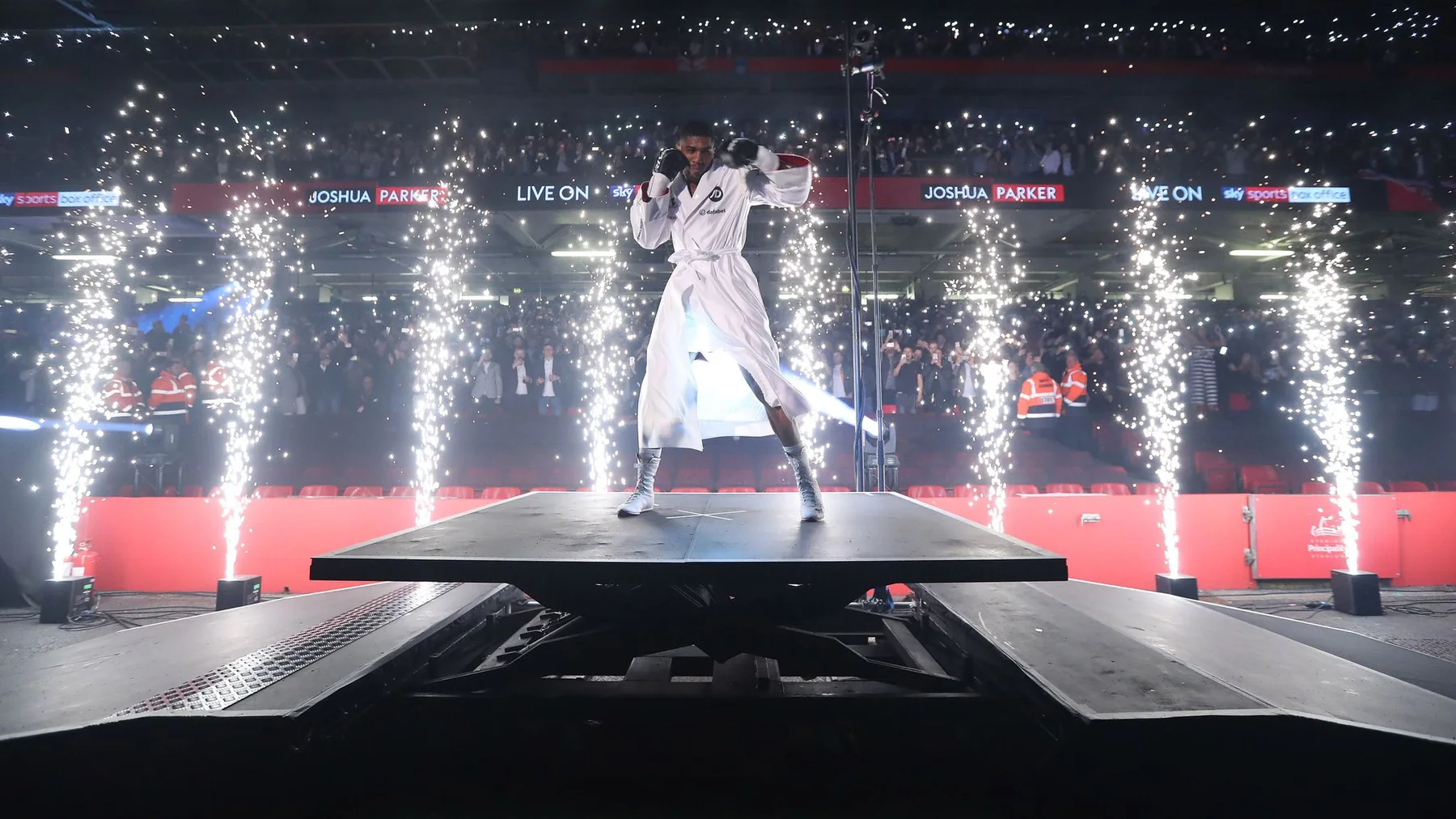
The venue's own guidance makes the practical concern concrete. Cardiff Central is close, but post-event queueing normally operates; roads around the stadium can close; and there is no dedicated spectator parking immediately beside the ground. Those systems work for major events, yet a finish in the early morning requires specially confirmed transport rather than an assumption that the normal timetable will cope.
Ringwalk Estimates Are Not Appointments
Even a sensible target can slide. Four undercard bouts scheduled for 10 or 12 rounds have radically different total lengths if they all reach the scorecards versus if two end early. Broadcasters may insert analysis after quick finishes so the headliner does not begin before the promised window. Long fights, medical checks, ring repairs or an extended entrance can push it the other way.
A better planning rule
- Treat “main card starts” and “ringwalk expected” as different information.
- Check the official broadcaster and venue on fight day, then watch the co-main event's progress.
- For stadium tickets, do not book the last routine train unless a dedicated late service is confirmed.
Our boxing calendar can confirm whether an event and card are listed, but transport decisions still belong with the venue and operator. The reform fans need is not an impossible guarantee to the minute. It is a realistic window, clearly labeled uncertainty and a plan built for the crowd that stays until the final bell.
When a Fight Card Feels Too Thin
“Bad card” is often used as if it were a fact, but the label hides two different complaints. One is commercial: the announced product does not feel deep enough for the price. The other is sporting: too many bouts appear designed to protect a favored boxer rather than test one. A fair review should make those judgments explicit instead of counting recognizable names.
A Famous Main Event Cannot Carry Every Price
A superstar headliner consumes much of an event budget, and boxers deserve to be paid for the danger and audience they bring. Production, venue and promotion also cost money. None of that automatically answers the buyer's question. When a card is sold at a premium, the fan is purchasing an evening, not merely the legal right to watch the last bout.
The higher the total cost, the more reasonable it is to expect a co-main event that matters and at least one supporting bout whose outcome is uncertain. This does not require three additional stars. A regional contender in a genuine step-up can offer more value than a former champion facing a much smaller, older or inactive opponent.
Competitive Matchmaking Matters More Than Belt Count
Promotional copy often lists every available belt, but a sanctioning label is only one clue. In 2026, Matchroom's announcement for the Zayas–Ennis card presented different kinds of support: Emiliano Vargas against Bryce Mills as the co-main event, Ben Whittaker against Richard Rivera, and Jahi Tucker against unbeaten Euri Cedeno over 10 rounds. The useful questions were not how many acronyms appeared. They were whether each opponent represented a step up, whether the styles could create tactical pressure, and what a win changed.
| Card signal | What to examine | Warning sign |
|---|---|---|
| Competitive level | Recent opposition, activity and form | A glossy record built far below this level |
| Real stakes | Eliminator, mandatory position, domestic title or genuine step-up | A minor belt used as the whole sales pitch |
| Style tension | Pressure versus movement, body attack versus range control | A matchup built only to flatter one style |
| Depth | Two or three bouts worth following independently | Every value claim depends on the headliner |
Records need context, too. A 12-0 prospect against a 17-1 contender may be an excellent test—or a mismatch—depending on who those wins came against, when the loss occurred and whether both are natural at the weight. Card quality is an argument supported by matchup evidence, not a poster's undefeated zeros.
Late Replacements Need Honest Marketing
No promoter can guarantee that every announced boxer reaches fight night. Cuts, illness, failed medicals, missed weight and visa trouble are part of boxing. Matchroom's published terms, for example, state that running order and times are approximate and distinguish ordinary changes from a cancellation, postponement or material alteration that may create refund rights through the ticket agent.
The better trust standard goes beyond the legal minimum. Put the change where the original matchup was advertised, identify the replacement, update the bout order and explain the purchase options in plain language. If the co-main disappears, continuing to sell an old “stacked card” graphic may be technically convenient but commercially corrosive. Fans can tolerate changed circumstances; they resent learning that the product changed only after opening the stream or reaching the arena.
Early Stoppages Create a No-Win Argument
A late stoppage can leave a boxer with preventable damage. An early one can erase a comeback, a title or the ending fans paid to see. That asymmetry explains why referees must favor safety—and why viewers still react so strongly when the decisive intervention looks disconnected from the boxer in front of them.
Usyk–Verhoeven and Mason–Bell Fed the Backlash
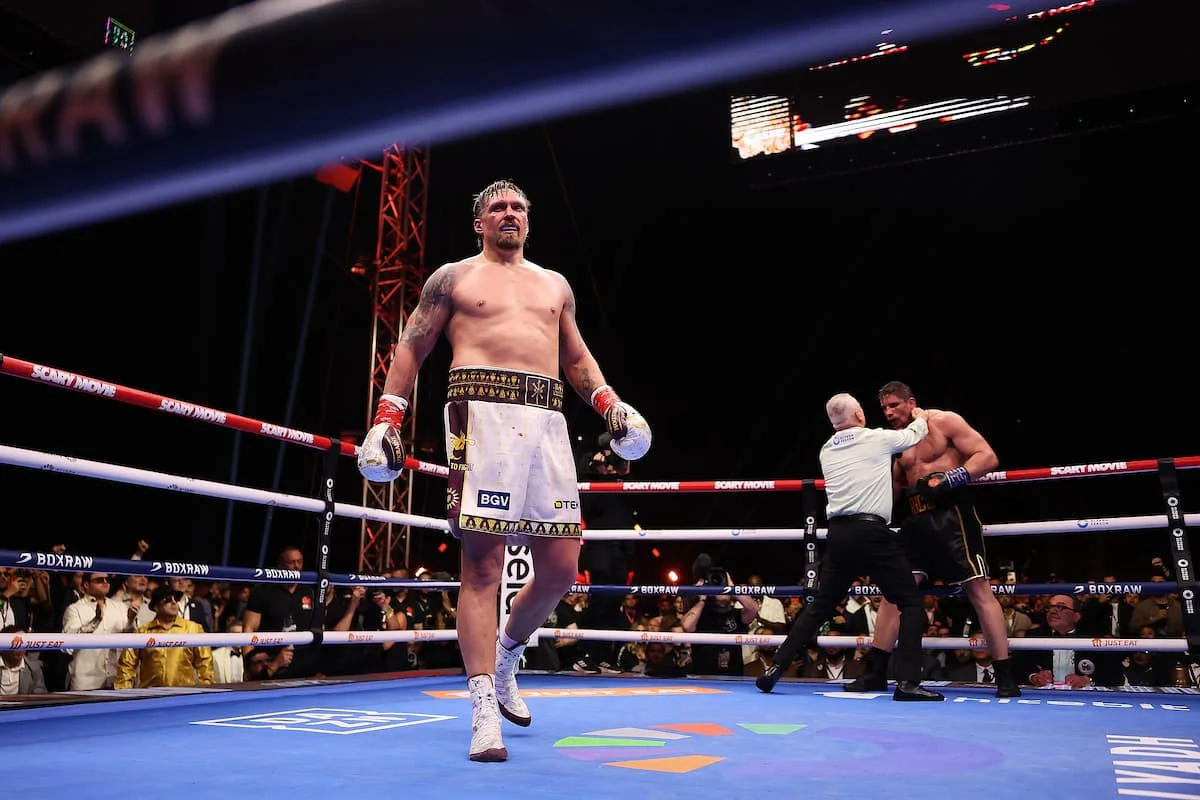
Oleksandr Usyk's May defense against Rico Verhoeven produced the year's clearest timing controversy. Usyk dropped Verhoeven with an uppercut late in round 11. After the mouthpiece was restored, Usyk attacked again and the referee stopped the bout at an official 2:59. CBS Sports reported that the intervention came one or two seconds after the bell. After 10 rounds, two official cards had Verhoeven ahead 96-94 and the third was 95-95; the knockdown would have changed the arithmetic, but fans never saw round 12 resolve it.
Those scores make the sporting consequence enormous, not the safety decision easier. A referee should not allow a hurt boxer to continue because he may be ahead. The legitimate questions are whether Verhoeven was responding, defending and oriented when the barrage ended, and whether the official correctly heard and processed the bell.
Abdullah Mason's July stoppage of Albert Bell created a different visual problem. Bell had been down twice in round 12; during the second sequence, he appeared to be returning to a knee when the referee waved it off. Some viewers saw exhaustion and an attempt to take a count, not incapacity. Others saw a boxer whose legs and posture had deteriorated after sustained pressure. The transition happened too quickly for a frozen replay frame to contain the whole answer.
Garcia–Benn Shows Why Safety Evidence Matters
Ryan Garcia's September title defense against Conor Benn looked abrupt in another way. Garcia dropped Benn early in round two, then trapped him near the ropes under a fast follow-up. The referee stepped between them before Benn fell again. Paramount+ commentator Max Kellerman called it “a tad premature,” arguing that Garcia may have lost the chance for a conclusive finish.
Yet the safety case was not imaginary. Benn had absorbed a knockdown and several more punches while his return fire and escape options were shrinking. Fox Sports reported that he went to hospital after the bout. That report should not be stretched into a diagnosis or proof that the exact second was perfect—post-fight observation can be precautionary—but it is a reminder that broadcast disappointment is not the referee's only evidence.
What Referees Actually Have to Judge
The Association of Boxing Commissions' referee manual describes the official as the sole arbiter responsible for boxer safety, fair enforcement and control. Its guidelines also allow a referee to end a count whenever the downed boxer's safety is at risk. “He was still standing” is therefore not a complete test.
- Posture and legs: Can the boxer hold stance and move deliberately, or are the ropes doing the work?
- Eyes and response: Does the boxer track the referee, answer commands and understand the situation?
- Intelligent defense: Is the guard blocking or redirecting punches, or merely covering a stationary target?
- Damage trajectory: Is recovery occurring, or are clean punches and loss of coordination accumulating?
Fans are entitled to question consistency, positioning and timing. The disciplined way to do it is to reconstruct the knockdown, count, commands, defense and final punches before alleging corruption. First confirm the official method, round and time in the latest boxing results; then separate that record from an argument about whether the official used good judgment. Safety gives referees authority, not immunity from careful review.
What Would Win Fans Back
Boxing cannot promise a classic fight, a full 12 rounds or a universally popular stoppage. It can promise better information before a fan spends money or travels. The most credible reforms are ordinary: disclose the complete price, keep the card current, give a realistic time window and build multiple bouts whose stakes are worth explaining.
Publish Price, Start Windows and Card Changes Clearly
An event page should show the price in the viewer's territory, whether a subscription is required, whether the event is included in an existing tier, and whether taxes or device restrictions apply. List prelims, main-card start and estimated ringwalk as three separate labels. If the co-main changes, date-stamp the update beside the current card rather than quietly replacing the old graphic.
This is not an impossible ideal. DAZN's Romero–Lopez FAQ listed an event broadcast start of 5 p.m. Pacific, a 9 p.m. Pacific ringwalk target, the US PPV price of $74.99, and the distinction between its Ultimate and other plans. Those specifics can still change, but they let a buyer make a reasoned choice. Matchroom's ticket terms acknowledge approximate timings and material changes; plain-language customer notices could connect those legal terms to the actual event more effectively.
Build Cards With Stakes Beyond the Main Event
Promoters do not need to put four established PPV headliners on one bill. They do need to explain why the supporting fights matter. A contender eliminator can put a boxer in line for a title shot. A domestic rivalry can reveal whether a prospect handles pressure at home. A younger boxer facing an active veteran with an awkward jab or persistent body attack is a genuine test, not merely another record-building appearance.
There is room for a development bout on a major card. The problem is when nearly every supporting matchup feels designed to produce a highlight for the favorite. Matchmaking with credible uncertainty does two things at once: it gives the buyer value now and creates a reason to follow those boxers when they headline later. That is healthier than selling their first serious challenge behind an unfamiliar, expensive checkout.
Give Fans More Included Access and Less Guesswork
The industry already has contrasting examples. DAZN Ultimate includes eligible PPVs within an annual tier aimed at frequent viewers. Paramount said the September Garcia–Benn card was available to subscribers without an additional event fee in its covered markets. Neither model is automatically right for every household: one asks for a substantial annual commitment, while the other covers a particular rights package. Both show that boxing access need not mean the same subscription-plus-extra-fee calculation every Saturday.
For an occasional fan, an honest single-event path, timely official highlights, accessible replays and clearly identified included cards can build a habit. For a regular fan, a stable calendar with accurate platform labels matters almost as much as a discount. The aim is not to make every fight free; it is to stop making a viewer solve a new puzzle every time a promising matchup is announced.
Before you buy or travel, check five things
- Is the fight officially announced, and what country are you watching from?
- What is the full checkout price and subscription commitment?
- Which support bouts would you still watch if the main event ended in one round?
- Is the listed time a broadcast start or only an estimated ringwalk?
- Have the lineup and late transport options changed since you planned?
Check boxing tonight for the latest listed cards, then confirm the event-specific terms with the official broadcaster or venue. Boxing's uncertainty is what makes its great nights memorable. The avoidable uncertainty around buying and reaching those nights is what the sport needs to fix.
Keep reading
Related boxing articles
Results & Analysis
Shakur Stevenson and Zuffa Boxing: Release, Timeline and What Comes Next
By Boxing Schedule Editorial TeamResults & Analysis
Bivol vs Beterbiev Results and Scorecards: Why the Two Decisions Went Different Ways
By Boxing Schedule Editorial TeamResults & Analysis
Join the conversation
Comments
Comments are reviewed before publication. Keep the discussion useful and focused on boxing.
Sign in with Google to comment
Your public comment shows your account name. Your email address is not displayed.
Commenting as
Loading comments…