What Is a Slugfest in Boxing? Meaning, Tactics and Famous Examples
Learn what slugfest means in boxing, how it differs from one wild exchange, which tactics still matter in a brawl and what famous fights demonstrate.
Slugfest Meaning: The Short Answer
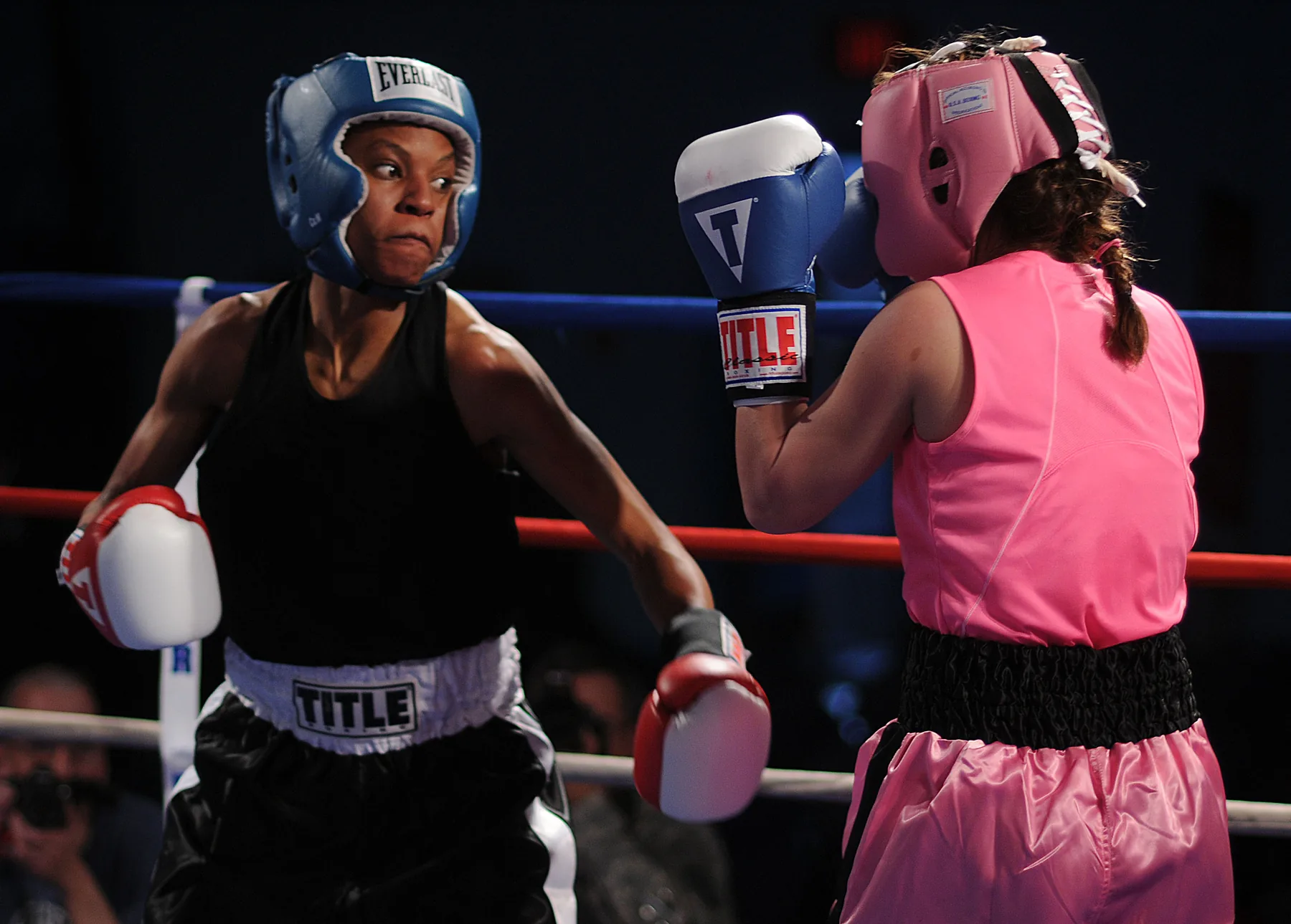
A slugfest is a boxing match—or a sustained part of one—in which both fighters repeatedly trade hard punches at close or mid-range, accepting unusual defensive risk instead of one boxer consistently controlling distance. It is informal commentary, not an official result or scoring category. The word tells you how the action feels: mutual, damaging and difficult to contain.
Dictionary definitions emphasize opponents exchanging heavy blows. In boxing usage, however, the useful detail is mutual commitment. A one-sided beating may contain many power punches, but it is not the classic slugfest because only one fighter is conducting the exchange. A competitive brawl keeps reversing the threat: each boxer can hurt the other, and neither is willing or able to make the fight orderly for long.
Slugfest, Slugger and Brawler Are Related but Different
A slugger—also called a brawler or puncher in common style taxonomies—is a fighter archetype. The World Boxing Council's broad style explainer associates that archetype with planted power, knockout intent and less reliance on mobile outside boxing. A slugfest describes what happens in a particular contest. One is a tendency; the other is a fight state.
That distinction matters because labels can hide skill. A habitual slugger may use a jab, feints and patient pressure to create one clean finish without entering a brawl. Two versatile boxer-punchers may abandon long range after being hurt and produce a furious slugfest. A fighter can also choose to trade for one round, then return to lateral movement. Styles are shorthand, not permanent instructions wired into a boxer.
A Wild Exchange Is Not Always a Slugfest
Every action fight contains exchanges, but duration and pattern matter. A six-punch collision followed by eight rounds of measured jabbing is a dramatic moment, not necessarily a slugfest. The label becomes useful when repeated exchanges shape the tactical problem: both boxers stay in range, hard shots keep changing momentum, and attempts to reset repeatedly collapse into another trade.
Nor does a slugfest require sloppy windmills. Short hooks under a guard, compact uppercuts, shoulder position and body work can be highly technical even when the pace looks chaotic. Conversely, high punch volume alone is insufficient if most shots are light, blocked or thrown from a safe distance. The essence is sustained mutual danger from meaningful punches. That is why fans use the term admiringly, while coaches still ask a colder question: who is landing cleanly, from the better position, and paying the lower price?
What Turns a Boxing Match Into a Slugfest
A slugfest rarely begins because both corners wrote “forget defense” on the game plan. It develops when distance, fatigue and competitive pressure make repeated exchanges available—and both fighters keep accepting them. The trigger can arrive in the first minute or after eight tactical rounds.
Range Collapses and Neither Boxer Gives Ground
Long-range boxing provides time to read a shoulder, move after a jab and reset the feet. At mid-range, both fighters can land hooks and straight rights without taking a full step. Along the ropes or in a corner, the boxer under pressure loses exits; if the attacker also stands close enough to be countered, each punch invites an immediate answer.
The critical choice is what happens after contact. One fighter can pivot out, clinch, frame the opponent or take a small step that ruins the return. A slugfest grows when neither consistently does so. They finish combinations in front of one another, their feet remain inside the same pocket, and the next exchange begins before either boxer rebuilds a safe shape. Crowds hear the punches; coaches first see the missing exit.
Body Work, Fatigue and Hurt Pride Change the Choices
Body shots are often the hidden cause of a later brawl. They punish movement, pull elbows down and make a fighter reluctant to take the deep breath required for another long reset. Fatigue then narrows the menu. Feet that circled early begin to plant, reactions arrive later and holding the center can feel cheaper than escaping repeatedly.
Being hurt creates another fork. A boxer may clinch and buy recovery time, but some punch back immediately to discourage pursuit. That response can be tactically effective if it catches an attacker overcommitting. It can also convert a recoverable moment into a prolonged trade. Pride is real in elite competition, yet viewers should resist treating every refusal to retreat as wisdom. Score pressure, corner instructions and the remaining time in the round also shape the decision.
Styles Make the Opportunity, Temperament Accepts It
A pressure fighter naturally compresses the ring; a puncher welcomes a planted target; an out-boxer tries to preserve lanes and punish entries. Those tendencies can create the conditions for a slugfest, but they do not predetermine one. An out-boxer with enough power may hold ground when the opponent crosses the jab. A supposed brawler may discover that disciplined distance is the safer route to a knockout.
Physical dimensions matter too. Similar reach and speed can make both athletes believe the same range belongs to them. Contrasting dimensions can force the shorter boxer inside, where the taller boxer must either tie up or learn to work. Then temperament decides whether each fighter accepts another exchange. The most revealing sign is repetition: after a punishing trade, both step back into the same lane. At that point the slugfest is no longer a burst of emotion. It has become the fight's operating system.
The Technique Hidden Inside a Great Brawl
“They are just throwing” is usually a failure of viewing speed. Slow a skilled exchange and it separates into position, punch, defense and recovery. The action is still dangerous, and mistakes still multiply under fatigue, but the best brawls are not empty of craft. They compress craft into smaller spaces and shorter decisions.
Position Before Power
A boxer needs the feet underneath the body before a hard punch and after it. Boxing Canada's coaching material treats balance as the base of both offense and defense: lose it, and the boxer cannot attack or respond reliably. In a slugfest, that principle separates productive aggression from lunging. The fighter whose head is off the opponent's center line and whose stance can absorb a return owns a better exchange before either punch lands.
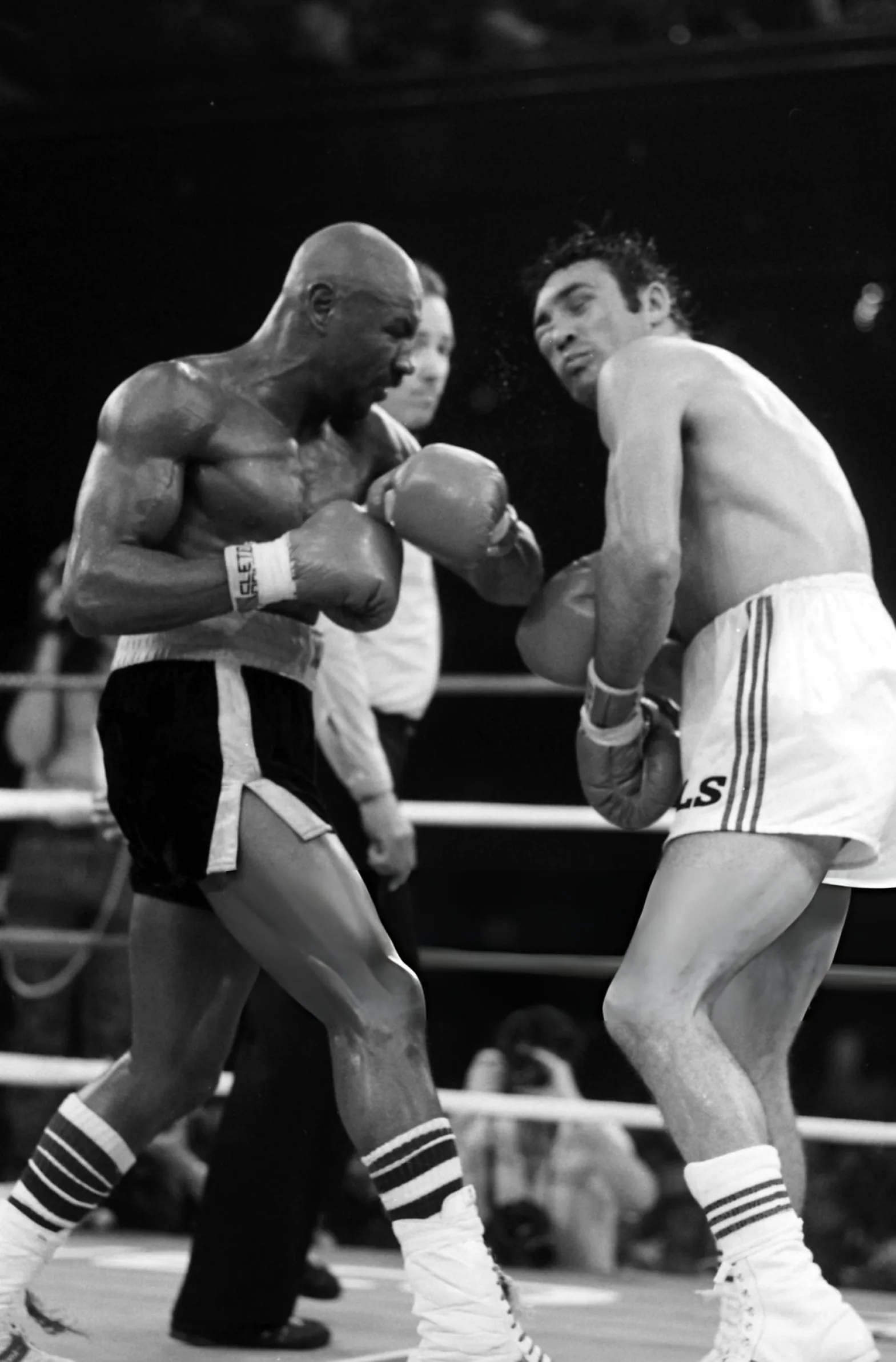
Inside, position becomes physical. A shoulder can obstruct a hook; a forehead beside the opponent's head can remove the clean uppercut lane; a small pivot can square the opponent while preserving the puncher's base. None looks as dramatic as the final right hand, yet these details decide whose power travels cleanly and whose shot is smothered. Planting is useful only when it creates leverage without turning the boxer into a stationary target.
Short Punches, Body Shots and Responsible Exits
At close range, long punches run out of runway. Compact hooks and uppercuts driven by the legs and torso reach the target sooner and return to guard faster. A boxer who swings the arm wide gives the opponent both time and a clear counter lane. Short combinations also preserve room: one hand works while the other protects, then the roles reverse.
Body shots make the exchange three-dimensional. A hook below the elbow can pull the guard down; an uppercut through the middle can make the elbows pinch inward; the next punch travels upstairs. But combination design is only half the sequence. After punching, a boxer can step around a lead foot, frame and turn, clinch, or take a short angle away. Backing straight out with the chin high simply extends the opponent's punching lane. A responsible exit is defense built into offense.
Why Defense Still Decides a Slugfest
Defense in a brawl is rarely the untouched elegance of a distant stylist. It may be one glove catching a hook, an elbow protecting the ribs, a roll that takes force off the right hand or a clinch that denies the third punch. Those small reductions accumulate. If two fighters land 20 hard shots, the boxer who saw more of them, braced correctly and removed part of their force has not participated in the same damage equation.
Watch the eyes and the return to stance. A composed fighter stays visually engaged, brings the hands home and remains ready to answer without crossing the feet. A deteriorating fighter reaches, turns away, finishes combinations square or stops reacting after punching. The crowd may reward both for courage, but the tactical advantage is moving quickly. Great slugfests feel balanced because each boxer repeatedly repairs those failures just long enough to threaten again. Eventually, one can no longer complete the cycle—and that is often when the fight ends.
A better replay question
Do not count only the punches thrown. Track who begins balanced, whose free hand is defending, who finishes at an angle and who remains in the line after the combination. The apparent chaos becomes a sequence of advantages.
How Judges, Referees and Corners Read the Damage
A slugfest gives three groups different jobs. Judges decide who won each round. The referee enforces the rules and decides whether the contest can safely continue. Corners advise their boxer and can ask for a stoppage when the competitive benefit no longer justifies the punishment. Crowd volume belongs to none of those tests.
Activity Is Not the Same as Effective Punching
Association of Boxing Commissions guidance lists clean punching, effective aggressiveness, ring generalship and defense among professional scoring criteria. The first word in “effective aggressiveness” does heavy work. Marching forward while eating the cleaner punches does not automatically win a round. Nor does a 12-punch flurry beat a shorter combination if most of the flurry hits gloves and the return lands cleanly.
Judges score from different physical angles, which makes dense inside action difficult. One may see the hook around a guard while another sees only the boxer's back. Fans should therefore track reactions carefully but not treat every head movement as proof of a scoring blow; a boxer can roll with a punch or be moved by a blocked impact. Body punches can also disappear behind elbows and ropes even when they are decisive.
Knockdowns clarify part of the picture because the referee formally calls them and they normally widen the round. Still, the full three minutes matter. A fighter can dominate most of a round, suffer a late knockdown and create a difficult score rather than an automatic story about the entire fight. The official method on the boxing results page may ultimately read decision, KO or TKO; “slugfest” never appears as the method.
When Courage Stops Being a Competitive Argument
The referee's threshold is not “Is this entertaining?” It is whether the boxer can continue under the applicable rules and defend intelligently. ABC unified rules identify the referee as the sole arbiter authorized to stop a professional contest, while regulatory guidance allows consultation with the ringside physician. A corner can make the humane decision first by retiring its fighter between rounds or signaling that the bout should end.
Viewers should watch for a change in function, not attempt a remote diagnosis: repeated unanswered clean punches, failing reactions, inability to follow commands, or a boxer returning to the same vulnerable position without an effective response. A fighter may remain upright and courageous while no longer making a competitive case to continue. The absence of a knockdown does not prove safety.
Three separate questions
Judges: who won the round? Referee: can both boxers continue safely under the rules? Corner: does continuing still serve this fighter? A responsible slugfest analysis never collapses all three into “let them fight.”
Famous Slugfests and What Made Each One Different
The following fights are not interchangeable monuments to toughness. One burned for less than eight minutes, one swung across ten rounds, and one turned elite inside fighting into a final-round reversal. Together they show why “slugfest” describes a pattern of mutual danger rather than a single pace or result.
Hagler vs Hearns: Three Rounds at an Impossible Pace
On April 15, 1985, undisputed middleweight champion Marvin Hagler met Thomas Hearns outdoors at Caesars Palace. Hearns had the longer frame and a right hand capable of ending a fight instantly. Hagler's solution was not a patient fencing match. He crossed distance aggressively, made Hearns work at a pace that denied him comfortable long-range setup, and accepted the counters required to keep that pressure alive.
The celebrated first round was not simply two men standing square. Hagler changed stance, cut exits and attacked the body as well as the head; Hearns tried to create punching room and landed dangerous rights while moving. A cut on Hagler increased the urgency because a medical stoppage could take the decision away from his pressure. Hagler hurt Hearns in the third and forced the stoppage at 1:52. The bout is the short-form slugfest: position and consequence compressed the action until no quiet phase survived.
Gatti vs Ward I: Momentum Swings Across Ten Rounds
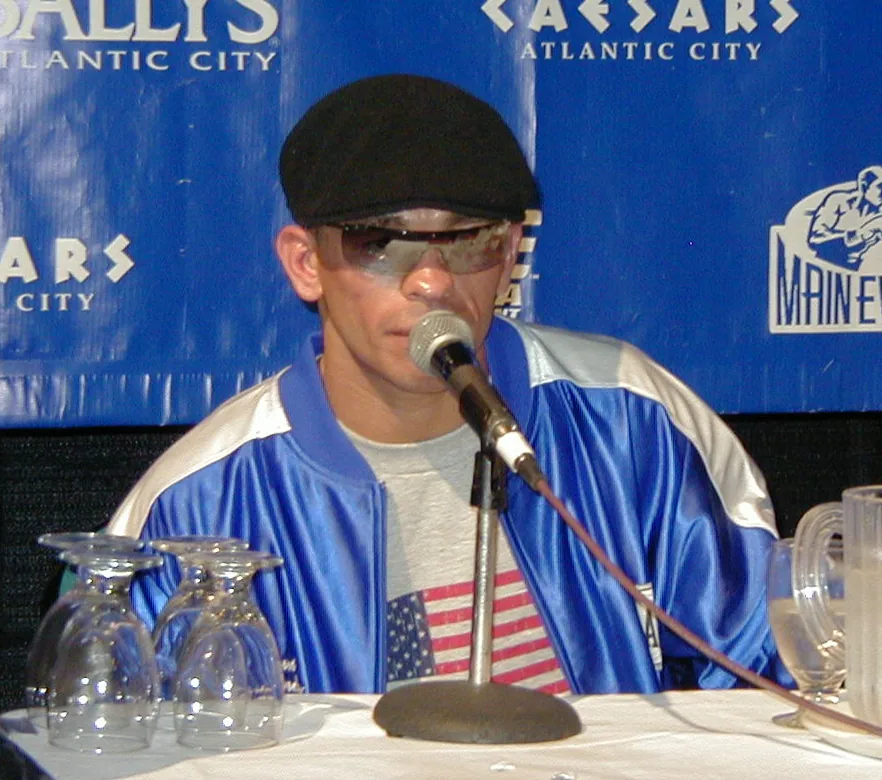
Arturo Gatti and Micky Ward produced a different shape on May 18, 2002. Gatti could box at range and win minutes with combinations; Ward kept advancing, invested in the body and remained dangerous after losing stretches. Their first fight therefore breathed. It alternated between Gatti's cleaner movement and exchanges in which Ward's pressure turned every reset into another decision.
Round nine became the enduring image. Ward's left hook to the body dropped Gatti, who rose into a long survival test and then punched back hard enough to keep the contest alive. The drama can obscure the scoring details: Ward won a majority decision after ten rounds, with cards of 94-93 and 95-93 for Ward and 94-94. It was a slugfest with tactical contrast, not ten identical rounds. Body work, recovery and changes in who controlled the range produced the momentum swings.
Corrales vs Castillo I: Inside Fighting With a Historic Finish
Diego Corrales and José Luis Castillo met on May 7, 2005 to unify major lightweight claims. Corrales was taller, yet much of the fight occurred at Castillo's preferred close range. That choice made the bout a master class in compact offense: shoulders touched, hands worked around elbows, and short uppercuts and hooks travelled without the dramatic wind-up casual viewers associate with power.
The tenth round transformed a great inside fight into a legend. Castillo knocked Corrales down twice. Corrales lost a point connected to spitting out his mouthpiece, gained recovery time, then hurt Castillo with a left hook and right hand before unleashing unanswered punches along the ropes. Referee Tony Weeks stopped it at 2:06, giving Corrales the TKO. The mouthpiece sequence remains controversial, but it does not erase the tactical lesson: a fatigued exchange can reverse in seconds when one boxer finds the cleaner line and the other can no longer answer.
How to Spot the Next Slugfest Live
Watch ring position before punch totals. Are both boxers finishing within countering range? Is the retreating fighter reaching the ropes without turning out? Are body shots slowing the feet? Does each athlete respond to being hurt by punching rather than clinching? When those cues repeat, an exciting exchange is becoming the structure of the fight.
Then watch the safety boundary. Who still sees the return, repairs the guard and follows instructions? A slugfest should be remembered for decisions and resilience, not because intervention arrived late. Use our boxing TV guide to find the next card, confirm the recorded outcome through official boxing results, and explore the boxing guide library for the tactics behind the highlights.
Keep reading
Related boxing articles
Results & Analysis
Shakur Stevenson and Zuffa Boxing: Release, Timeline and What Comes Next
By Boxing Schedule Editorial TeamResults & Analysis
Bivol vs Beterbiev Results and Scorecards: Why the Two Decisions Went Different Ways
By Boxing Schedule Editorial TeamResults & Analysis
Join the conversation
Comments
Comments are reviewed before publication. Keep the discussion useful and focused on boxing.
Sign in with Google to comment
Your public comment shows your account name. Your email address is not displayed.
Commenting as
Loading comments…