Tyson Fury Losses: Both Usyk Decisions and Scorecards
Both of Tyson Fury’s professional losses came against Oleksandr Usyk in 2024. Compare the official decisions, scorecards and result categories.
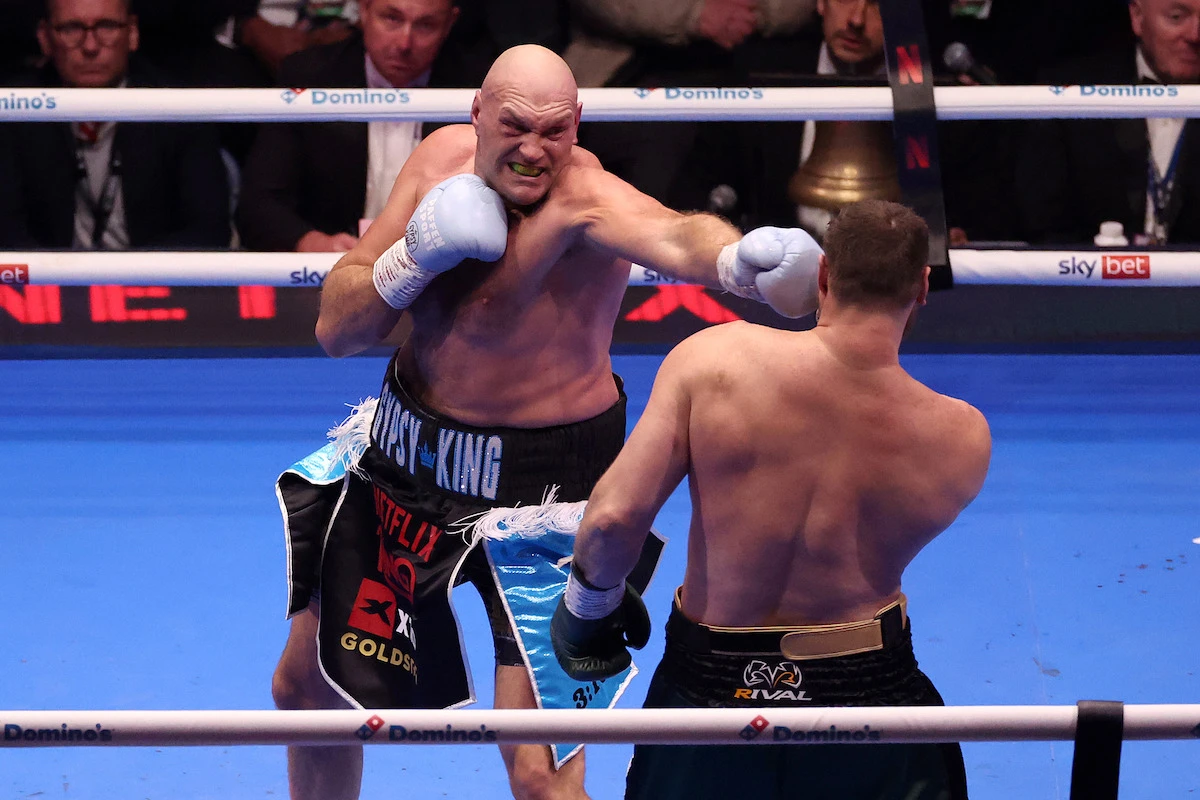
Tyson Fury Has Two Verified Professional Losses
Tyson Fury’s two verified professional defeats both came against Oleksandr Usyk in 2024: a split decision on May 18 and a unanimous decision on December 21. Both heavyweight bouts took place at the Kingdom Arena in Riyadh, Saudi Arabia, and both lasted the scheduled twelve rounds. Neither result was a knockout or a technical knockout. This loss summary was checked on October 1, 2026.
| Bout date | Opponent | Official result for Fury | Distance |
|---|---|---|---|
| May 18, 2024 | Oleksandr Usyk | Loss by split decision | 12 rounds |
| December 21, 2024 | Oleksandr Usyk | Loss by unanimous decision | 12 rounds |
The WBA’s first-fight report confirms the split decision that ended Fury’s unbeaten professional run. Its year-end review confirms the December rematch and second defeat. A report dated the following morning should not be mistaken for a fight held that morning: the first bout’s date is May 18, even when the article describing it was published May 19.
The important comparison is between two ways of losing on points. In the first fight, two judges chose Usyk and one chose Fury. In the rematch, all three chose Usyk. That changes how the decision is described, but each fight contributes exactly one loss. It does not create a category of partial defeat, and the judges do not vote on the boxer’s career as a whole.
For readers returning after a newer Fury appearance, this is a dated account of his losses rather than a claim that his entire career ended in December 2024. Netflix’s April 11, 2026 results, for example, record a decision victory over Arslanbek Makhmudov. A win does not erase either Usyk defeat. Equally, a career total printed beside an older event is a snapshot from that event, so it should not automatically be presented as today’s complete record.
Three questions help keep a discussion accurate: who received the official decision, what happened during the rounds, and what a viewer thinks should have happened. Those questions can produce different answers without changing the recorded result. Fury can win particular rounds in a defeat, be knocked down in a victory, or be involved in a draw that fans argue about. Each describes a different part of the evidence.
Use the latest boxing results to check newly completed bouts. The sections below explain the two Usyk losses, then deal with the Wilder draw, Ngannou knockdown and amateur results that often complicate a quick search.
The First Usyk Loss: May 18, 2024
The first defeat ended Fury’s unbeaten professional record and decided the four-belt heavyweight championship. Usyk entered with the WBA, IBF and WBO titles; Fury held the WBC title. Usyk’s victory brought those four major belts together. That championship achievement belongs to this fight’s context, while the result itself is a twelve-round split decision.
The Official Split Decision
The judges’ totals were Manuel Oliver Palomo: 115–112 for Usyk; Mike Fitzgerald: 114–113 for Usyk; and Craig Metcalfe: 114–113 for Fury. Always attach a boxer’s name to a score. A bare “114–113” could describe either Fitzgerald’s Usyk card or Metcalfe’s Fury card and can therefore obscure the deciding disagreement.
BoxRec’s bout entry provides the individual round allocations. All three judges gave Fury rounds five, six, seven and twelve. They also agreed on Usyk winning rounds one, eight, nine and ten. The remaining rounds explain why the judges arrived at different totals rather than a single shared account of the contest.
A split decision means the three final cards selected different winners, with two selecting the eventual victor. It does not mean Usyk and Fury each received half a victory. It also does not automatically prove that the judges disagreed about every important exchange. Here, the shared middle-round and late-round judgments give a useful outline even though the final verdict was split.
Why Round Nine Mattered
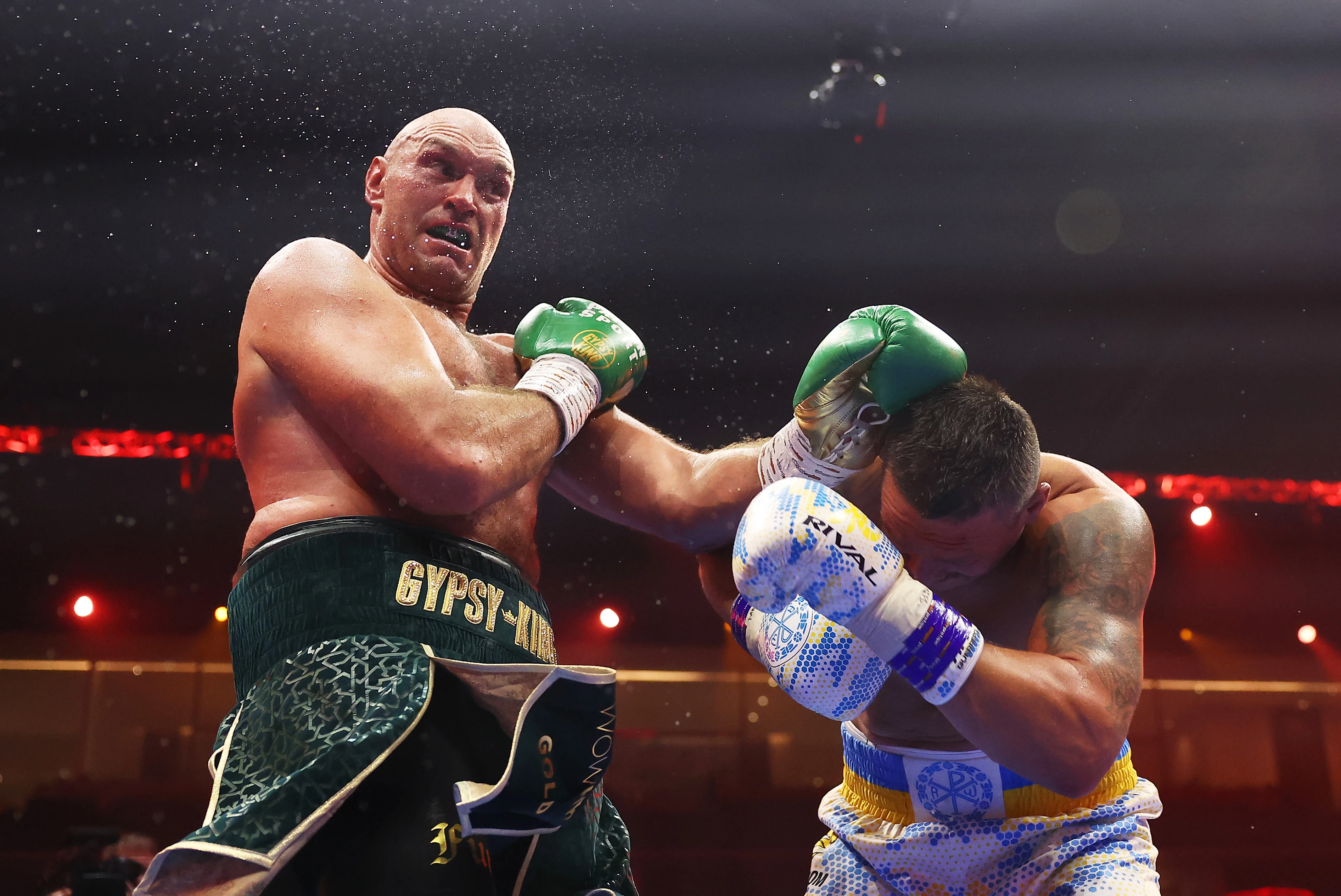
The contemporaneous scorecard report describes referee Mark Nelson ruling that the ropes were holding Fury up during Usyk’s ninth-round attack. Nelson administered a knockdown count. Fury remained in the contest, and all three judges scored that round 10–8 to Usyk. This was a rope-supported knockdown, rather than a general standing-eight intervention.
The extra point mattered in a fight with narrow totals. A 10–8 round creates a two-point difference on that round’s card, compared with the one-point difference of a 10–9 round. But that arithmetic should not become a claim about what would have happened in an entirely different fight. Remove an attack, change a referee’s decision or alter a boxer’s response, and the later tactical circumstances may change too. The actual fight included the knockdown and ended with the scores above.
Fury reaching the final bell is another essential detail. Surviving a dangerous passage and losing the bout are compatible outcomes. Calling this a knockout loss would erase the distinction between a stoppage and a decision; calling it a victory because Fury recovered would erase the judges’ twelve-round assessment.
For a useful rewatch, separate Fury’s successful middle rounds from the adjustment that followed. Ask how often his jab and uppercut prevented Usyk from reaching punching distance, then watch whether that control survives when Usyk closes space. This is a viewing framework, rather than a substitute scorecard. The official round map supplies the places to examine; the film supplies the exchanges to judge.
The Rematch Loss: December 21, 2024
Usyk won the rematch by unanimous decision after twelve rounds at the Kingdom Arena. The WBA, WBC and WBO heavyweight titles were at stake. The IBF belt was not part of this December contest: Daniel Dubois held it at the time. Describing both meetings as identical four-belt championship events would miss a material change between May and December.
Sporting News’s rematch report states that there were no knockdowns. This is the simplest way to separate the two defeats when recalling them: May included the ninth-round knockdown and split cards; December produced three winning Usyk cards without a knockdown. A hard exchange in the second fight should not be confused with the formally counted event in the first.
Three Judges Returned 116–112
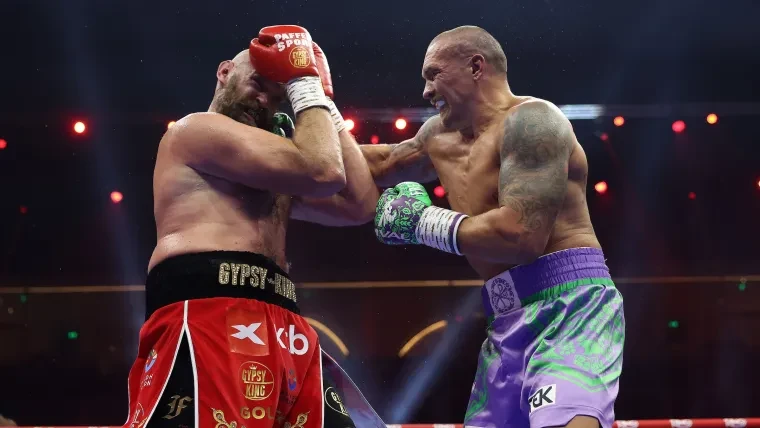
Gerardo Martinez, Patrick Morley and Ignacio Robles each scored the rematch 116–112 for Usyk. That is a unanimous decision because all three selected the same winner. With the ordinary 10–9 allocations shown for this bout, the total represents eight rounds for Usyk and four for Fury on each card: Usyk’s eight tens and four nines add to 116, while Fury’s corresponding points add to 112.
The identical totals do not mean the judges chose the same winner in every round. The WBA’s round-agreement analysis shows all three awarding Usyk rounds six, seven, eight, ten and eleven, and Fury rounds four and five. Their allocations differed in rounds one, two, three, nine and twelve. Each judge could reach eight rounds to four through a different combination of those disputed rounds.
That distinction explains an apparent contradiction on the WBA page. Its theoretical score is 117–111, calculated from agreement or a majority of judges in each round. The actual judges’ scores remained 116–112. A round-by-round majority calculation blends different cards into a new composite; it is an analytical illustration, not a fourth official judge and not a replacement result.
This is also a useful boundary when reading live reports. A reporter can give Fury a particular round that the official judges award Usyk, then still conclude that Usyk won overall. The reporter’s running card answers how that observer saw the action. The official announcement answers how the appointed judges decided the contest. Neither number should be copied without its label.
The boxing question is how a fighter wins enough individual rounds without producing a knockdown. For a rewatch, look at whether Usyk’s entries end with clean punches or merely forward movement, whether Fury’s jab interrupts those entries, and who completes an exchange with useful position for the next one. Consider work to the body alongside head shots rather than watching only for a dramatic uppercut. These are questions to test against the film, not claims that size or constant movement automatically earns points.
Comparing the losses therefore requires more than calling one close and the other clear. The first had a decisive scoring event within a split verdict. The second had agreement on the winner and total, alongside substantial disagreement about individual rounds. Both patterns are compatible with Fury having successful moments and Usyk doing enough to receive the official decision.
Read the Scorecards Without Confusing Opinion with Result
A useful scorecard starts with rounds, rather than an overall impression of who looked bigger, took fewer risks or landed the most memorable punch. The Association of Boxing Commissions’ scoring guidance describes the ten-point must system and considers clean punching, effective aggressiveness, ring generalship and defense. These are general professional judging principles; citing that guidance does not imply that every American administrative rule governed the Riyadh events.
Think of clean punching as the quality of the contact rather than the appearance of activity. A flurry that meets gloves does not have the same evidential value as a punch that lands cleanly. Effective aggression asks whether advancing achieves something useful. Ring generalship concerns controlling the contest’s terms, while defense concerns avoiding or limiting the opponent’s successful work. Walking forward and walking backward can both accompany effective boxing; direction alone is a poor shortcut.
The numerical system creates an important distinction between rounds and moments. A narrow 10–9 win and a more convincing 10–9 win add the same difference to the total. In a hypothetical three-round sequence, a boxer winning twice by 10–9 and losing once by 10–8 would finish those rounds at 28–28. That is simple arithmetic illustrating the weight of a larger-margin round, not a reconstruction of either Fury–Usyk bout.
Do not assume every 10–8 requires a knockdown. The ABC guidance also allows that score for a clearly dominant round without one. Conversely, the referee’s knockdown ruling matters: a viewer cannot simply add a knockdown because a stumble looked dramatic. For May, the relevant evidence is the recorded ninth-round knockdown and the three actual 10–8 allocations, not an abstract rule applied to a replay without the official decision.
Three separate totals determine a decision. Adding every point awarded across all three judges would produce an interesting aggregate but would not reproduce the official method. Two judges selecting Usyk and one selecting Fury gave Usyk the May split decision. Three selecting Usyk gave him the December unanimous decision. An unofficial television card is useful for comparison when its observer and status are clear; it is not another vote in the official verdict.
If you want to test a controversial round, write a short explanation before looking at its announced allocation. Name the clean scoring work that separated the fighters, then note whether pressure, positioning or defense made that work possible. “Fury looked confident” and “Usyk was busier” are starting impressions. An explanation becomes more useful when it identifies the exchanges those impressions refer to.
A practical comparison sheet should keep one row per round and a separate column for each judge. That prevents an easy mistake: remembering the round chosen by one judge while quoting the total of another. It also makes the December pattern visible, where identical totals concealed different allocations. Mark a disputed round as disputed rather than borrowing another observer’s confidence to conceal your own uncertainty.
The aim of this approach is a better argument about the boxing. A fan can reasonably discuss whether a particular round should have gone the other way, then state the official result accurately. Those two tasks support each other: the recorded cards give a stable reference, and an exchange-by-exchange explanation makes disagreement specific enough for another reader to evaluate.
Wilder, Ngannou and Amateur Defeats Are Different Cases
A search for Fury’s losses often brings up other difficult nights in his career. Those nights can be valuable when discussing his boxing, but they should be grouped by their official outcomes. A knockdown is an event within a bout. A draw is a completed result without a winner. An amateur defeat belongs to a separate competitive record. Treating all three as professional losses would produce a misleading list.
The Wilder Draw and Ngannou Win
Fury’s first meeting with Deontay Wilder ended in a twelve-round split draw on December 1, 2018, at the Staples Center in Los Angeles. PBC’s event recap gives Alejandro Rochin’s card as 115–111 for Wilder, Robert Tapper’s as 114–112 for Fury, and Phil Edwards’s as 113–113. One judge selected each boxer, while the third returned an even total.
Wilder knocked Fury down in rounds nine and twelve. Those knockdowns contributed to the scoring and made the fight memorable, but the final result was a draw. The distinction is especially important in a comparison with May 2024: Fury was knocked down in both bouts, yet one produced a draw and the other a loss. The whole set of official round scores determines the decision.
Francis Ngannou also knocked Fury down, in round three of their October 28, 2023 fight in Riyadh. However, Fury won that ten-round professional boxing bout by split decision. The cards were 96–93 and 95–94 for Fury, with the remaining judge scoring 95–94 for Ngannou, as recorded in the contemporaneous fight report.
Ngannou’s background in MMA does not make that result an exhibition. Nor does the argument over the judging turn it into a Fury defeat. It is entirely possible to consider Ngannou’s performance impressive, question a close card and still describe the official outcome as a Fury victory. Performance evaluation and result classification are separate responsibilities for an accurate account.
Keep Amateur Boxing Separate
Fury’s amateur history includes defeats, which is why some searches produce names other than Usyk. BoxRec’s biography records an amateur loss to David Price in 2006 and another to Maxim Babanin in the 2007 European junior competition. Those entries should be described with their amateur context rather than added to a professional loss count.
An early amateur result can help explain a boxer’s development or identify an opponent from his youth. It cannot establish that the same opponent defeated him as a professional. The date, competition type and fighter’s full name matter, particularly with a boxing family whose members share a surname. A result involving Tommy Fury or Hughie Fury is not automatically evidence about Tyson Fury.
The same care applies to training footage. A sparring clip may show an interesting exchange, but it is not a sanctioned professional decision. Without the event identity and official result, it cannot support a new entry in a career loss table. That is a reason to check the bout, rather than a reason to dismiss everything difficult that happens in a gym.
For future appearances, the boxing calendar can help identify an announced contest. A scheduled bout has no completed result yet. Once it takes place, check the dated decision or stoppage report before revising a career summary. For this checked account, the verified professional defeats remain the May 18 and December 21, 2024 decisions against Oleksandr Usyk.
Keep reading
Related boxing articles
Results & Analysis
Shakur Stevenson and Zuffa Boxing: Release, Timeline and What Comes Next
By Boxing Schedule Editorial TeamResults & Analysis
Bivol vs Beterbiev Results and Scorecards: Why the Two Decisions Went Different Ways
By Boxing Schedule Editorial TeamResults & Analysis
Join the conversation
Comments
Comments are reviewed before publication. Keep the discussion useful and focused on boxing.
Sign in with Google to comment
Your public comment shows your account name. Your email address is not displayed.
Commenting as
Loading comments…