Katie Taylor Retires: Farewell Fight Result, Career Record and Boxing Legacy
Katie Taylor's farewell fight result at Croke Park, her career achievements, technical legacy, and what her retirement means for women's boxing.
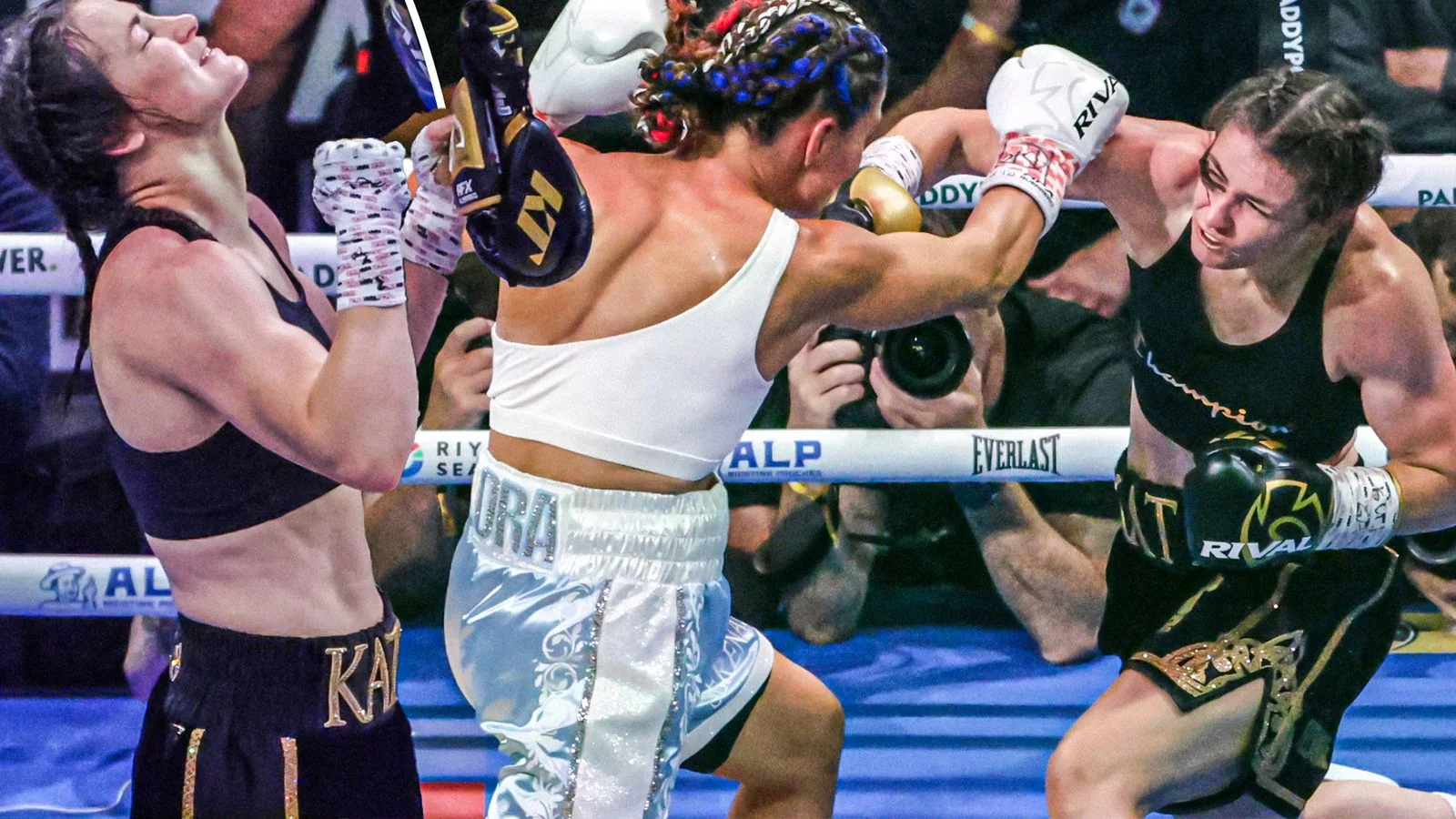
Katie Taylor's Farewell Result at a Glance
Katie Taylor retired with the ending she had named in advance: a victory at Croke Park and every major super-lightweight belt in her possession. On September 5, 2026, she outpointed previously unbeaten Flora Pili across ten rounds, heard a wide unanimous decision and closed a professional career that began in 2016.
Result
Taylor UD 10 Pili
Scorecards
100-90, 100-90, 98-91
Final record
26-1 (6 KOs)
Division
Super-lightweight, 140 lb
Scorecards, Titles and Final Professional Record
Two judges gave Taylor every round, 100-90, and the third submitted 98-91. That third total is unusual for a ten-round fight without a reported knockdown, so it should not be reverse-engineered into a round-by-round card without the judge's sheet. It is nevertheless the corrected score consistently carried by the result reports. Taylor won by decision, not stoppage.
She retained the WBA, IBF and WBO championships and collected the vacant WBC belt. Those are the four organisations used when boxing calls a champion undisputed. The Ring championship accompanied them but is not a fifth sanctioning body. Taylor's final professional ledger is 26 victories, one defeat and six wins by knockout. Her vast amateur career, including Olympic competition, is separate from that number.
For other completed cards and official outcomes, use the latest boxing results. Taylor–Pili belongs there as a genuine championship contest, even if the ceremony and opponent gap made the night feel more like a coronation than her fiercest test.
What “Three-Time Undisputed” Means
The phrase can mislead. Taylor was not undisputed in three divisions. She completed the four-belt set at lightweight in 2019, then moved to 140 pounds and took all four super-lightweight titles from Chantelle Cameron in their November 2023 rematch. After later relinquishing the WBC belt, Taylor still held the other three entering her farewell. Beating Pili for the vacant WBC championship completed the same division's set again.
Her three undisputed achievements therefore span two weight classes: once at lightweight and twice at super-lightweight. That distinction does not reduce the feat. It shows how Taylor rebuilt complete championship status after a loss, an immediate rematch and a later title vacancy—then left with the set intact.
How Taylor Outboxed Flora Pili
The occasion was enormous; the tactical problem was comparatively clean. Pili wanted to advance, draw Taylor into a stationary exchange and counter when the older champion finished punching. Taylor denied her that picture for most of the night. She entered quickly, released compact combinations and changed the angle before Pili could set her feet.
Speed and Angles Controlled the Early Rounds
Pili began behind a tight guard and waited for mistakes. The opening round was cautious, but Taylor's hand and foot speed established the separation in the second and third. She could step into range with the jab or straight right, add hooks with either hand, then leave laterally. Pili's counters frequently fell short because Taylor was no longer on the centre line.
That exit was as important as the combination. Pressure works when the advancing boxer cuts off the ring and makes the opponent retreat along a predictable path. Pili mostly followed. When she opened up, Taylor had the cleaner lane for the right hand; when she waited, Taylor's activity banked another round. Not every punch in the bursts landed flush, but the champion controlled where exchanges began and ended.
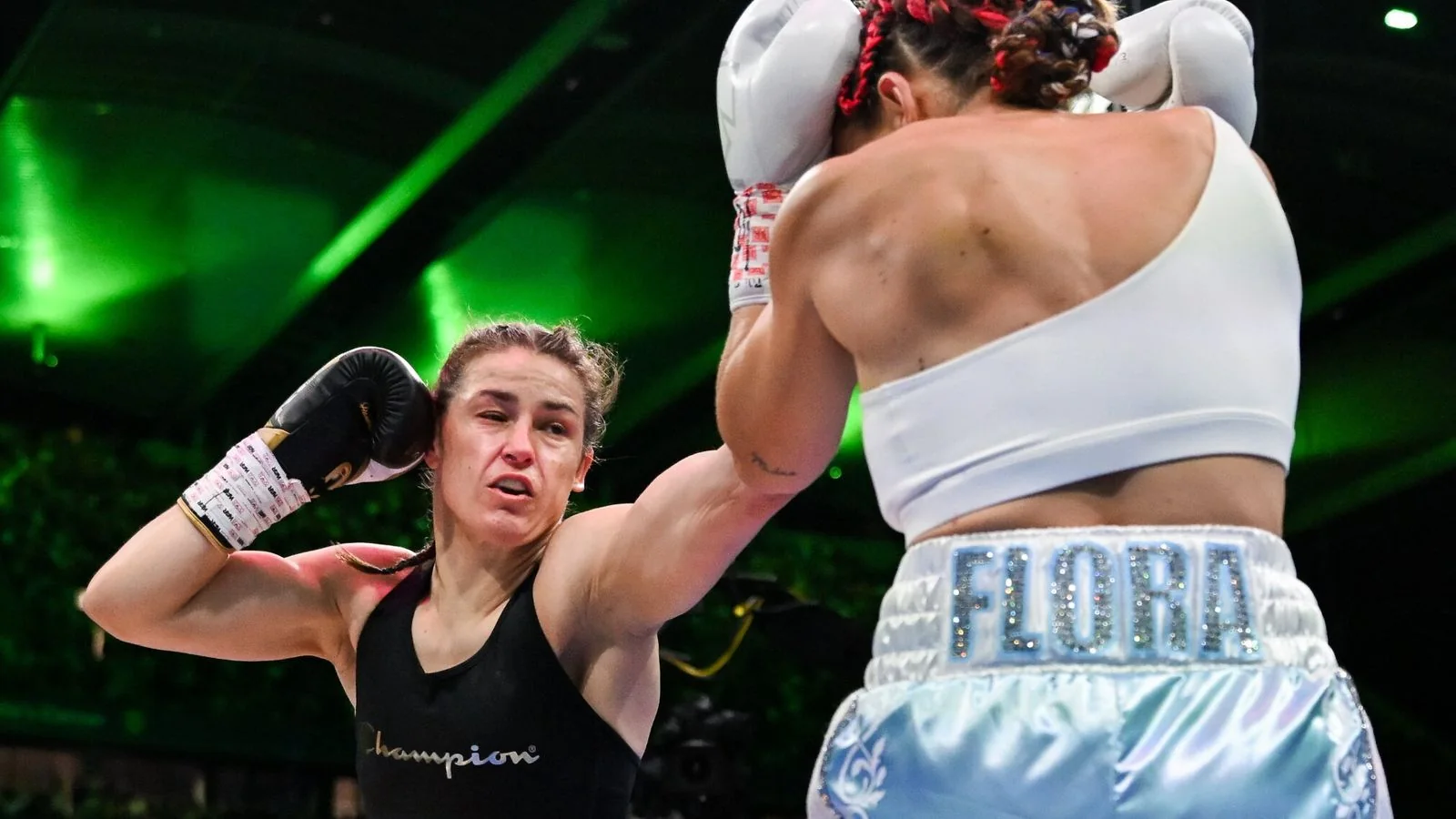
Pili's Pressure Produced One Clear Rally
Taylor's sharpest mid-fight sequence came in round six, when a straight right and follow-up combination drove Pili backward. The challenger finally altered the rhythm in the seventh. She pressed with more conviction, landed a hard head shot and an uppercut, and briefly knocked Taylor off her preferred line. It was the one period that made the contest look less ceremonial.
Taylor did not answer by proving she could brawl longer. She restored space. The Ring's ringside account noted that she returned to her in-and-out pattern almost immediately; in the eighth, straight rights and another fast combination halted Pili's surge. That is veteran ring management: recognise the opponent's best minute, remove the condition that created it, and force her to solve the original problem again.
Taylor Chose to Finish on the Front Foot
With the decision secure, Taylor could have circled through the last seconds. Instead, when the ten-second clapper sounded, she drove Pili toward the ropes and let both hands go. The exchange did not produce a knockdown, and it should not be rewritten as a near-stoppage. It was a deliberate final image: the boxer who built her professional reputation on combination punching ended by throwing until the bell.
Pili survived, embraced her, and left with credit for taking an unbeaten record into the largest occasion of her career. Yet the scorecards reflected the competitive gap. Taylor was faster, more precise and more adaptable. The farewell win was not the greatest victory on her résumé; it was a controlled demonstration of the skills that made the greater victories possible.
Why Croke Park Was More Than a Big Crowd
Croke Park gave Taylor something even Madison Square Garden could not: a final professional fight in Ireland's national stadium, built around her rather than attached to somebody else's attraction. More than 80,000 people attended. Matchroom put the figure above 82,000, while other reports rounded it or used 83,000, so the scale is clearer than the exact count.
The Homecoming Took Years to Deliver
The venue's own history records that Muhammad Ali fought Al “Blue” Lewis there on July 19, 1972, stopping him in round eleven. No boxer had headlined another Croke Park fight night in the 54 years before Taylor–Pili. Taylor therefore did not merely bring a title defence home; she reopened a piece of Irish boxing history and became the first woman to command that stage.
Earlier attempts to deliver a stadium homecoming had run into cost, security and scheduling problems. Meanwhile, Taylor built her professional career in London, Manchester, Boston, Texas and New York. That long wait gave the final walk its weight. The fireworks, Irish songs and extended presentation were not a substitute for a contest—they were public recognition of a career Ireland had often supported from a distance.
The reach extended beyond the turnstiles. Matchroom reported an RTÉ peak of 1.6 million viewers in Ireland, a 973,000 average and 74% audience share, plus about half a million RTÉ Player streams. Those are promoter-released figures, but they show why the broadcast arrangement mattered: RTÉ carried the night free-to-air in Ireland while DAZN streamed it more widely. Fans should always check the boxing TV schedule because access can differ by country.
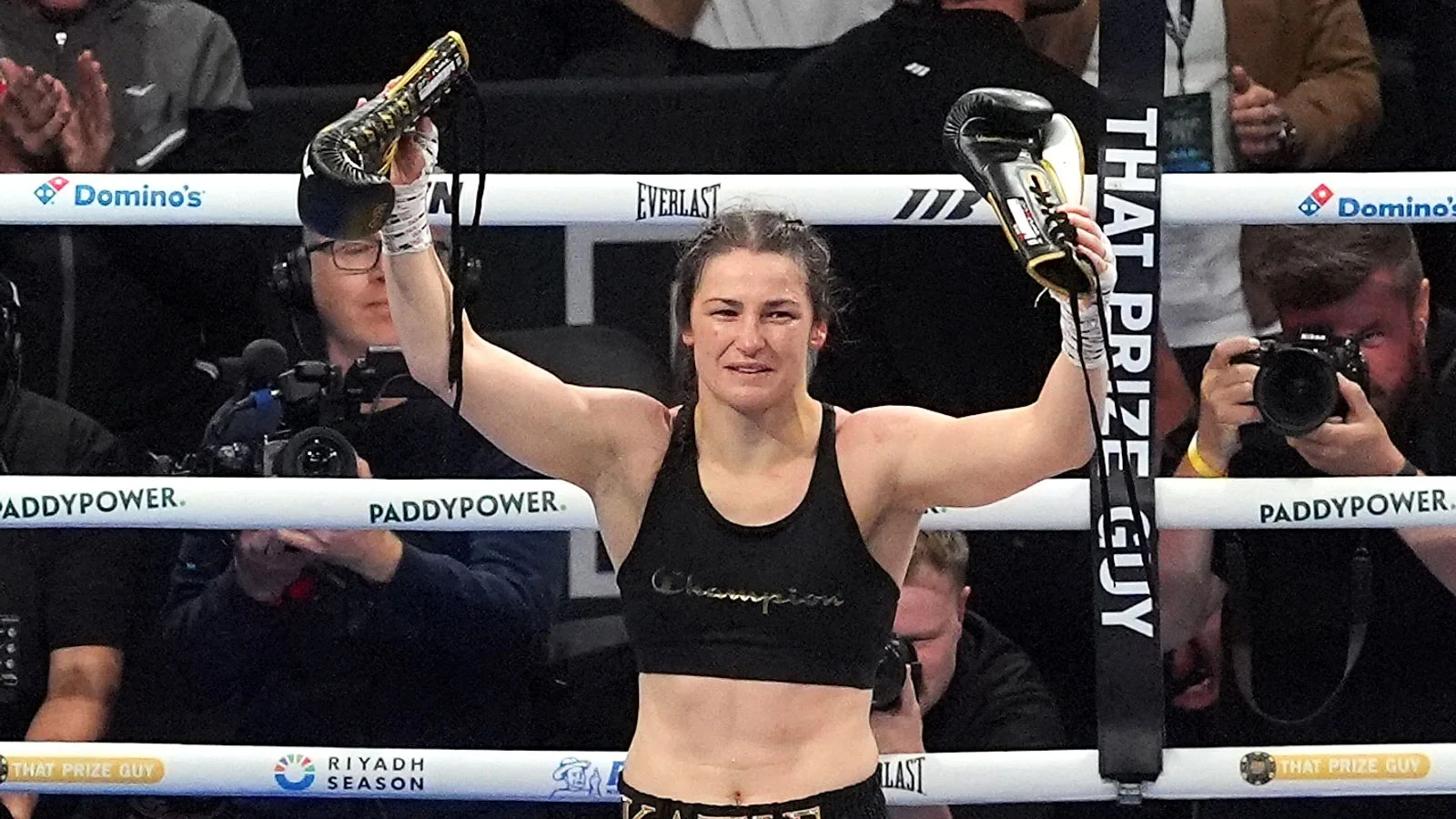
The Gloves on the Canvas Made Retirement Real
After the scores, Taylor thanked the people who had carried the journey with her, walked around the ring and finally placed her gloves in its centre. Her team arranged the championships around them. In boxing, leaving the gloves behind is the visual grammar of retirement: the tools stay where the work was completed.
A ritual alone does not bind a fighter forever. Boxing has seen countless comebacks. What makes this ending credible is Taylor's language before and after the event. She called herself retired, said she had finished on her terms, and spoke about family, travel and freedom from continuous camps. The gloves did not create the decision; they gave more than 80,000 witnesses a picture of it.
The 26-1 Record Needs Competitive Context
Taylor's final 26-1 record, with six knockouts, is impressive but incomplete as an explanation of her career. The revealing part is whom she kept accepting: pressure fighters, naturally larger champions and repeat opponents who had already shown where she could be troubled. A decision-heavy record is not a weakness here. At elite level, her craft was measured through ten hard rounds against opponents who could sustain a pace and force tactical changes.
One Loss to Cameron, Then an Immediate Answer
Chantelle Cameron inflicted Taylor's only professional defeat on May 20, 2023, winning a majority decision at Dublin's 3Arena. Cameron was the naturally established super-lightweight champion, and her strength, steady pressure and compact work crowded Taylor's combinations. The importance of the episode is not that Taylor briefly lost an unbeaten label; it is that she went directly back to the same problem.
Six months later, Taylor changed the terms of the fight. She started exchanges more sharply, moved after combinations and made Cameron reset rather than letting the champion build pressure uninterrupted. Taylor won the rematch by majority decision, with cards of 98-92 and 96-94 in her favor and a 95-95 draw. The wide 98-92 card was not universally persuasive, but the official victory made Taylor undisputed at 140 pounds. The rivalry ended 1-1, which is a more honest description than pretending either meeting erased the other.
Serrano, Persoon and the Fights That Tested Her
Amanda Serrano and Delfine Persoon tested Taylor in different ways. Serrano brought southpaw pressure, damaging power and the ability to turn a technical contest into a sustained exchange. Taylor officially went 3-0 in their series: a split decision at lightweight in 2022, then unanimous and majority decisions at super-lightweight in 2024 and 2025. The first two results were fiercely debated, particularly after clashes of heads and Taylor's point deduction in the second fight. The third was calmer and more tactical, with Taylor winning 97-93 on two cards while the third read 95-95.
Persoon created a different kind of discomfort through raw volume and constant forward motion. Their 2019 majority decision completed Taylor's set of lightweight titles but left many viewers unconvinced. Taylor then produced the cleaner answer in the August 2020 rematch, taking a unanimous decision by 98-93, 96-94 and 96-94. Those rivalries strengthen her résumé precisely because the first solutions were imperfect. She returned to opponents who had made her look vulnerable and found clearer ways to operate.
Two Weight Classes, Different Problems Solved
At lightweight, Taylor's hand speed, short combinations and quick pivots could punish a pursuer before she escaped the pocket. Moving to 140 pounds changed the physical equation. Cameron could lean on her, while Serrano carried pressure and power upward. Taylor increasingly had to manage range, choose shorter bursts and use clinches or turns before a larger opponent could extend an exchange.
That is why “two-weight undisputed” carries more meaning than simply collecting eight belt labels. Taylor held the four major titles together at lightweight and later at super-lightweight, but she did so by solving different competitive problems. Close scoring remains part of the record and should not be edited out of the story. Her strongest claim is not that every round was dominant; it is that the hardest opponents repeatedly received another chance, and Taylor usually adapted.
From “K Taylor” to the Centre of Women's Boxing
Taylor's influence is easiest to understand as a progression of stages that once looked unavailable to women: a sanctioned amateur bout in Ireland, an Olympic final, a major professional arena and finally a stadium farewell. She did not create that progress alone, and equality across boxing remains unfinished. What she supplied was a champion whose performances repeatedly made the next, larger stage harder to dismiss.
Olympic Gold Changed the Starting Point
The origin story sounds impossible beside an 80,000-plus farewell. Taylor began training at ten but had no regular route to fights. She has described being entered as “K Taylor,” pulling her headgear over her hair and being revealed as a girl only after boxing. At 15, she met Alanna Audley, later known as Alanna Nihell, in Ireland's first officially sanctioned women's bout in 2001. The result mattered, but the permission to compete mattered more.
By London 2012, Taylor had become a five-time amateur world champion and a visible advocate for including women in Olympic boxing. The discipline made its Games debut there, and Taylor defeated Sofya Ochigava in the lightweight final on August 9. Gold gave Irish supporters a national sporting figure and gave future professionals something women's boxing had rarely possessed at once: a technically proven champion, mass recognition and an audience already emotionally invested before her paid debut.
Madison Square Garden Proved the Main-Event Market
Taylor's professional titles established excellence, but the first Amanda Serrano fight tested commercial assumptions. On April 30, 2022, they became the first women to headline Madison Square Garden. This was not a ceremonial “women's feature” underneath a men's attraction. Their lightweight championship was the attraction, and the sold-out event delivered a close, violent fight worthy of its placement.
Serrano deserves equal credit for that proof. Her seven-division résumé, Puerto Rican identity, New York base and aggressive southpaw style created the other half of a rivalry people would pay to see. Three years later, their trilogy fight headlined the Garden's first all-women's professional boxing card. The distinction matters: 2022 proved women could carry the main event; 2025 placed elite women throughout the card rather than treating one bout as an exception.
Excellence, Not Trash Talk, Became the Brand
Taylor never promoted herself like a manufactured villain. She spoke softly, treated serious opponents as serious opponents and described quiet confidence as a strength. That did not mean she lacked ego or competitive conviction. It meant her sales pitch was specific to boxing: watch the hand speed, the combinations under pressure, the willingness to accept a rematch and the titles at stake.
Her approach broadened the promoter's toolbox. Personal hostility can still sell, but Taylor and Serrano showed that elite records and credible danger can create demand without a scripted feud. The legacy should not be inflated into a claim that Taylor fixed every pay or opportunity gap. It is more concrete than that. A girl once forced to hide her identity became the name placed at the top of Madison Square Garden posters, and the market followed the quality into the building.
What Taylor Leaves Behind
Taylor left the ring with four major super-lightweight belts, but her retirement closes a reign rather than freezing the division. The clearest way to assess what follows is to separate administrative questions from legacy arguments. Sanctioning bodies will decide titles; fighters and fans will decide which standards endure.
The Belts Move On, but the Standard Remains
At the end of the Pili fight, Taylor held the WBA, WBC, IBF and WBO championships together. Retirement means those belts must eventually move through each organization's procedures, but that process was not complete at this article's September 16, 2026 cutoff. The WBO's own champions page still listed Taylor, acknowledged her retirement and showed her next mandatory as “TBD.” No single, coordinated succession announcement from all four organizations had named one new undisputed champion.
That distinction protects fans from a common mistake. A top contender does not automatically inherit Taylor's status, and separate organizations may order different vacant-title contests on different schedules. The 140-pound division may fragment before anyone can reunify it. What can transfer immediately is the competitive standard Taylor set: face the strongest available rival, accept a return bout when questions remain and make the championship contest important enough to headline.
Where the Greatest-Ever Case Is Strongest
Taylor's greatest-ever case is strongest when several forms of achievement are considered together. She won Olympic gold when women's boxing first entered the Games, became undisputed in two professional divisions, fought deep rivalries with Serrano, Cameron and Persoon, and helped move women's bouts from undercard placement to the top of Madison Square Garden and Croke Park. Few careers connect amateur pedigree, professional opposition and commercial change so completely.
It is still a case, not an objective verdict. Claressa Shields owns two Olympic gold medals, remained unbeaten professionally at this cutoff and has won undisputed championships across three weight classes. Cecilia Brækhus' long championship reign and Serrano's achievements across divisions also belong in serious historical discussion. Taylor's argument is especially powerful on résumé depth and market impact; Shields' is especially powerful on dominance and championship breadth. Weight differences denied boxing a direct answer, so pretending the sport produced one would be false certainty.
How Fans Can Follow the Post-Taylor Era
The useful next question is not whether Taylor will reverse a retirement she stated clearly. It is who fights for the newly available authority at 140 pounds, which champions choose to unify and whether major platforms continue giving elite women full main-event treatment. Check the boxing calendar for confirmed fight dates, then use the Boxing Schedule analysis archive for belt developments, results and tactical context.
Taylor's final image is unusually complete: gloves left on the Croke Park canvas, a victory read out and no rematch demand hanging over the microphone. The belts will acquire new owners. Her harder legacy to replace is the expectation that women's boxing can be technically elite, commercially central and judged by the same demand for meaningful opposition as any other part of the sport.
Keep reading
Related boxing articles
Results & Analysis
Shakur Stevenson and Zuffa Boxing: Release, Timeline and What Comes Next
By Boxing Schedule Editorial TeamResults & Analysis
Bivol vs Beterbiev Results and Scorecards: Why the Two Decisions Went Different Ways
By Boxing Schedule Editorial TeamResults & Analysis
Join the conversation
Comments
Comments are reviewed before publication. Keep the discussion useful and focused on boxing.
Sign in with Google to comment
Your public comment shows your account name. Your email address is not displayed.
Commenting as
Loading comments…