Top 10 Greatest Boxing Knockouts of All Time
A technically informed ranking of ten historic boxing knockouts, explaining the timing, positioning, stakes and decisive punches behind each finish.
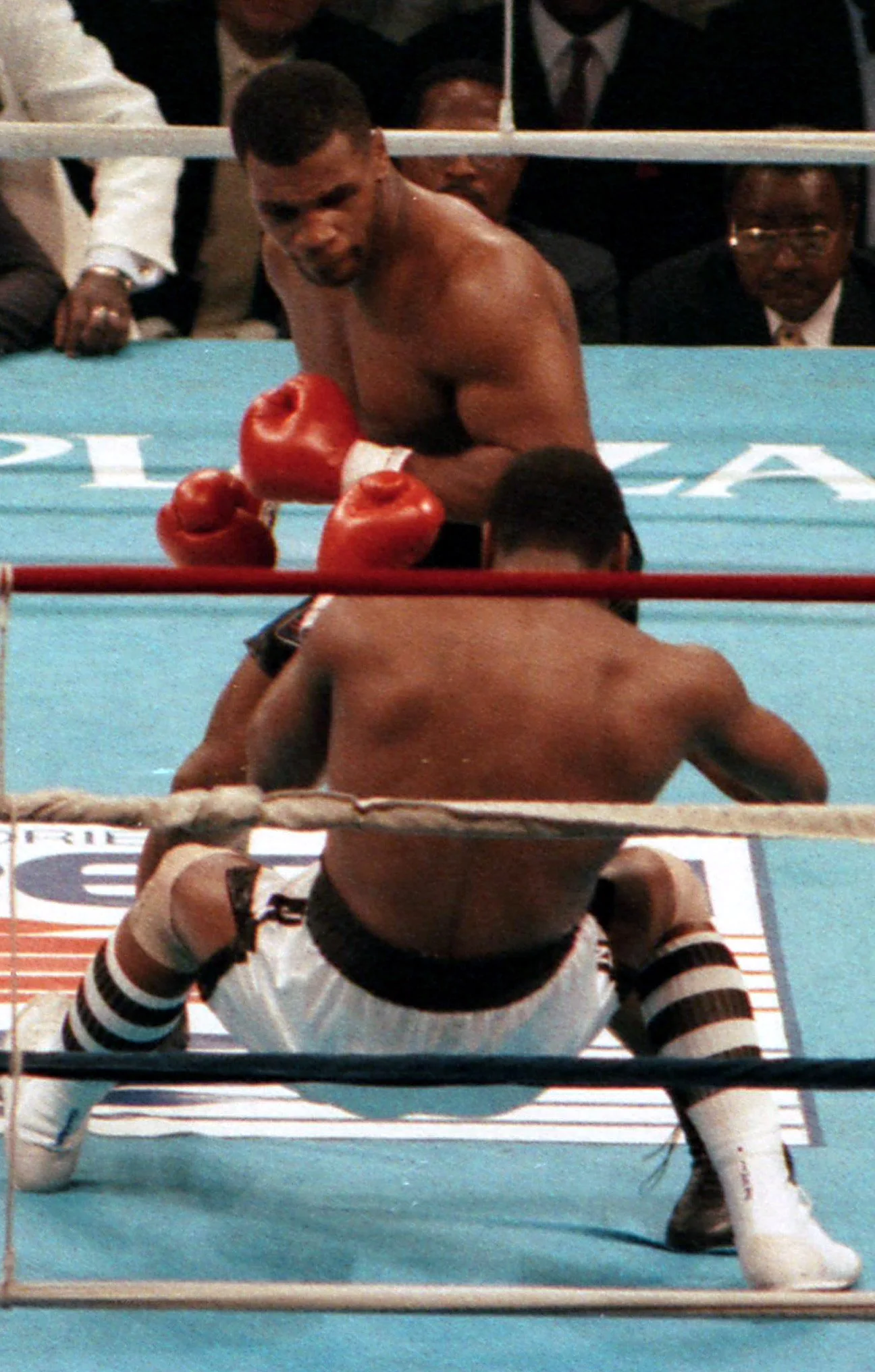
How We Ranked Boxing's Greatest Knockouts
The greatest knockout is not necessarily the loudest collision or the most frightening fall. It is the finish that combines elite opposition, championship consequence, a technically revealing setup and a moment that changed how a fight—or an era—is remembered. Our top ten ranges from a 1950s middleweight masterpiece to modern counterpunching because boxing's essential geometry has survived every change in cameras, gloves and promotion: a fighter must still create a line to the target while denying one in return.
Five factors shape the order. Historical stakes ask what was on the line. Opponent quality prevents a spectacular finish over an overmatched boxer from outranking one against a proven champion. Technical execution rewards the feint, step, angle or read that made the final punch possible. Drama matters when the winner was behind, hurt or confronting a stylistic problem. Legacy measures whether the sequence still teaches fans something after the shock has faded. The order is editorial, not an official commission or magazine award.
A necessary scoring distinction
A KO normally means a boxer could not satisfy the referee's count or was immediately ruled unable to continue. A TKO is a stoppage without that completed count—often because the referee, doctor or corner ends the bout. Record summaries frequently place both under the broad “knockouts” column, but this list preserves the official result for every bout. That is why a highlight can look like a knockout while the ledger says TKO, and why checking the recorded method matters.
This is also a list of professional boxing finishes, not a catalogue of injuries. The best entries reveal timing, positioning and judgment. They are presented with the same result-first discipline used on our boxing results page: who won, how it ended, when it ended and what tactical action produced the result. With that standard set, the countdown begins with three modern punches that arrived through openings measured in fractions of a second.
Nos. 10–8: Modern Precision in a Split Second
Modern high-definition replays make these three finishes look inevitable. They were not. Each winner identified a repeatable opening, occupied exactly the right range and committed before the opponent could recover his defensive shape. Power completed the job, but information created it.
No. 10 — Naoya Inoue KO1 Juan Carlos Payano (2018)
Seventy seconds were enough for Inoue to turn a World Boxing Super Series quarterfinal into a statement about elite efficiency. Payano was no anonymous tune-up: the former titleholder entered with one defeat and understood championship pace. Inoue nevertheless removed the usual feeling-out period. His left jab fixed Payano's attention on the center line, and the straight right travelled immediately behind it. The sequence was compact, balanced and so direct that Payano had no time to rebuild his guard after reading the jab.
The official result was KO at 1:10 of round one in Yokohama on October 7, 2018. What earns it a place here is not merely speed. Inoue kept his feet under him, hid the decisive hand behind a conventional first punch and drove through a target that was still processing the range. It is the kind of finish trainers can pause frame by frame: no looping wind-up, no wasted chase, just alignment and acceleration.
No. 9 — Gervonta Davis KO6 Leo Santa Cruz (2020)
Davis-Santa Cruz was an active, competitive fight at 130 pounds, not six rounds of waiting for a highlight. Santa Cruz's volume and willingness to exchange forced Davis to solve a moving problem. Davis invested downstairs, held his ground and gradually encouraged the taller man to crouch as he came forward. In the sixth, Santa Cruz attacked near a corner and repeated a right-hand entry. Davis stayed inside the arc and launched a short southpaw left uppercut through the opening.
PBC's post-fight account records a sixth-round KO at the Alamodome on October 31, 2020 and notes that Santa Cruz was having his strongest round before the finish. That detail makes the punch more impressive: Davis adapted during danger rather than delivering a ceremonial last blow to an already beaten opponent. The corner narrowed Santa Cruz's escape, his forward bend placed his chin over Davis's striking lane, and the uppercut arrived underneath a punch rather than after it.
No. 8 — Sergio Martinez KO2 Paul Williams II (2010)
Martinez and Williams had already completed 12 difficult rounds in 2009, when Williams won a close majority decision after both men were dropped in the opener. The rematch therefore carried a library of usable information. Williams, a tall southpaw with extraordinary output, liked to step into exchanges and make opponents work at his pace. Martinez, also a southpaw, recognized the moment Williams's head crossed the line as he reached to punch.
At 1:10 of round two, Martinez threw his left over Williams's advancing right side and landed flush. The punch ended the WBC and Ring middleweight title fight immediately and later became The Ring's 2010 Knockout of the Year. Calling it lucky ignores the first fight, the rematch preparation and the geometry: Williams moved toward the shot while Martinez shifted his own head away from the return. One beat contained offense, defense and the accumulated knowledge of a 14-round rivalry.
Nos. 7–5: Destruction Under Championship Pressure
A major title fight magnifies every decision. Hearns, Tyson and Foreman entered the ring with radically different bodies and tempos, yet each refused to let the occasion distort his best weapon. One controlled distance, one compressed it, and one waited until a fading championship chance passed directly through his right hand.
No. 7 — Thomas Hearns TKO2 Roberto Duran (1984)
Duran's reputation was built on solving distance: he could slip a jab, crowd the chest and turn an opponent's clean boxing match into an exhausting argument at close range. Hearns denied him that negotiation. At Caesars Palace on June 15, 1984, the taller champion put straight punches down the channel before Duran could establish his feet. Two knockdowns late in the first round forced Duran to restart under immediate pressure.
The end came at 1:07 of round two. Hearns used his left to measure and detonated the long right, sending Duran forward as referee Carlos Padilla stopped the WBC super-welterweight title fight. Some retrospective lists label it KO2, but the contemporary report records TKO2, so that is the method used here. Its greatness lies in scale and clarity: an elite pressure fighter was given no workable range, and Hearns turned exceptional reach into aggressive control rather than cautious fencing.
No. 6 — Mike Tyson KO1 Michael Spinks (1988)
Tyson-Spinks lasted 91 seconds, but the finish was more layered than the stopwatch suggests. Spinks was unbeaten, had twice defeated Larry Holmes and held the lineal claim. Tyson carried the WBA, WBC and IBF belts. Their June 27, 1988 meeting was designed to settle who truly led the heavyweights, and Tyson attacked the question with disciplined pressure rather than indiscriminate swinging.
A right to the body helped produce the first knockdown. Spinks rose and tried to answer the advancing champion with a right hand, but Tyson's shorter counter right reached the target first. Spinks fell again and was counted out at 1:31. The closing punch receives the replay, while the body threat and Tyson's compact stance explain why it landed. A much-hyped collision of champions became a demonstration of how quickly educated pressure can erase space. That live-event electricity is why modern fans still need reliable boxing TV and streaming listings: boxing history can arrive before a viewer has settled into the first round.
No. 5 — George Foreman KO10 Michael Moorer (1994)
Foreman's second career was built around a constraint. At 45, he could not chase a younger heavyweight around the ring as if he were still the wrecking champion of 1973. He could, however, preserve balance, occupy the center and make every exchange carry the possibility of a straight right. Michael Moorer, the 26-year-old WBA and IBF champion, was ahead on the cards and had the faster hands. He also continued to work within Foreman's punching lane.
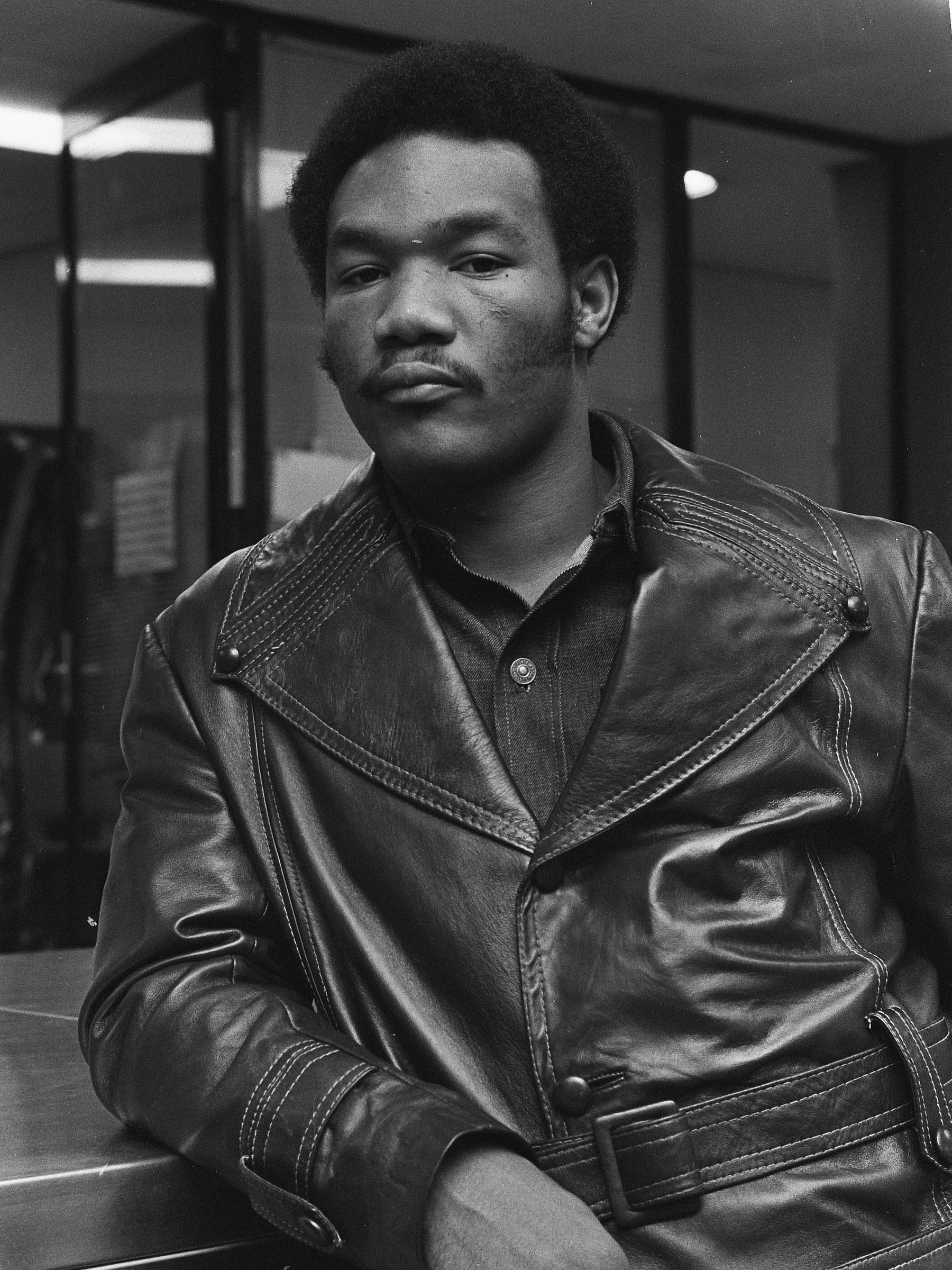
At 2:03 of round ten on November 5, 1994, Foreman finally placed that right on Moorer's chin and completed the count-out. At 45 years and 299 days, he became the oldest heavyweight world champion recorded by Guinness. The punch ranks fifth because it reversed more than one fight: it overturned the scorecards, bridged two heavyweight generations and transformed a comeback once treated as novelty into a championship fact.
Nos. 4–3: Strategy, Memory and the Perfect Read
A knockout can be rehearsed across eight rounds or across four fights. Ali and Marquez did not win because they suddenly abandoned strategy for one heroic swing. They gathered information under pressure, recognized when a familiar action had become vulnerable and committed at the exact moment their opponents believed offense was still safe.
No. 4 — Muhammad Ali KO8 George Foreman (1974)
The shorthand says Ali lay on the ropes until Foreman became tired. The actual performance was richer. In Kinshasa on October 30, 1974, the 32-year-old challenger used the ropes to give ground without surrendering every target, but he also framed Foreman's shoulders, tied up an arm, turned his head in close and fired sharp counters whenever the champion's square stance left a lane. “Rope-a-dope” describes the memorable picture; it does not replace the defensive work inside it.
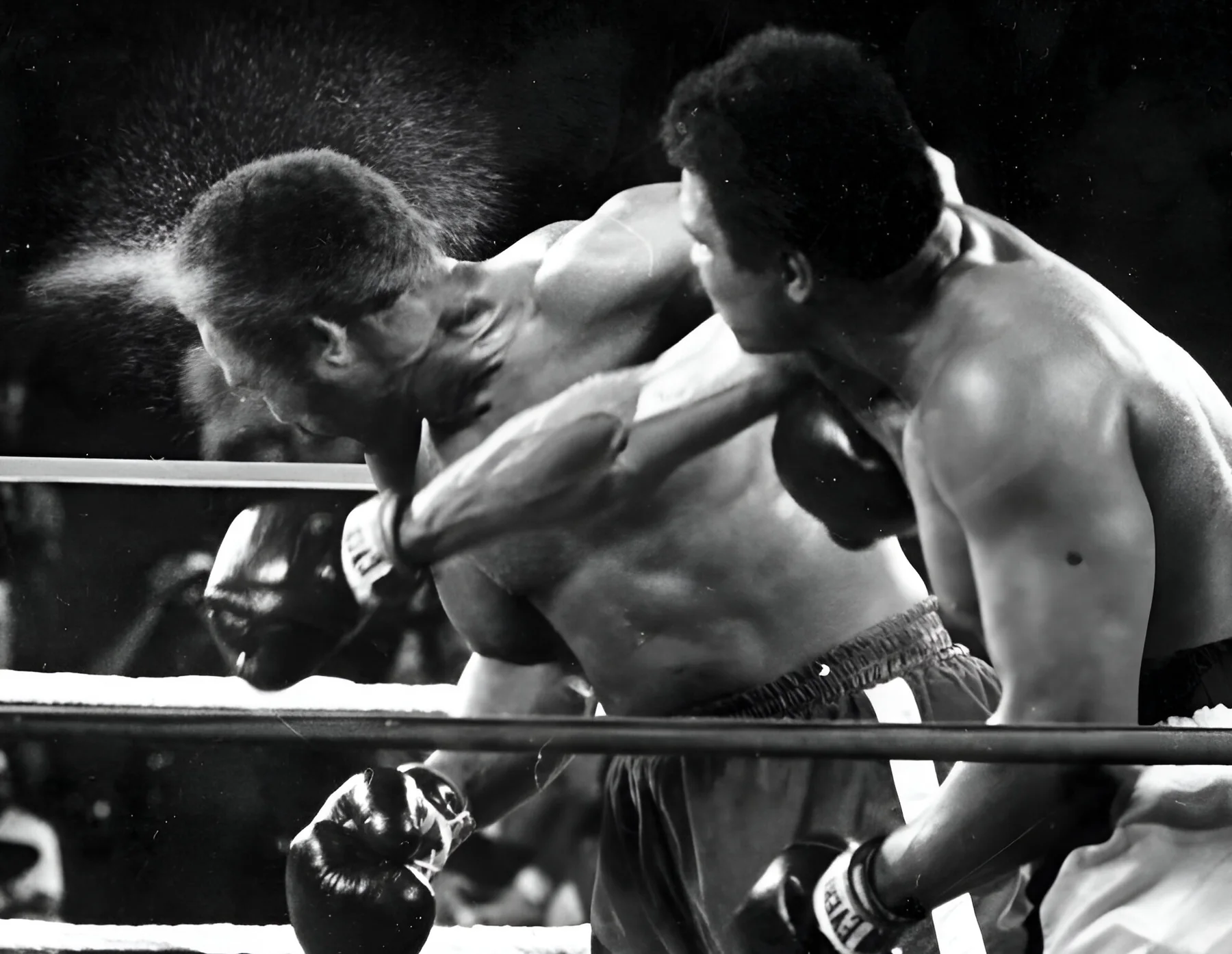
Foreman was 25, unbeaten and widely expected to overwhelm the former champion. By round eight, his punches had widened and his recovery to stance had slowed. Ali escaped the ropes, put straight shots through the opening and finished with the right that sent Foreman down. The official result was KO8, restoring Ali as heavyweight champion. Its rank reflects both tactical nerve and cultural scale: the finish remains part of Congo's sporting memory, yet its boxing lesson is precise—defense must eventually create offense.
No. 3 — Juan Manuel Marquez KO6 Manny Pacquiao IV (2012)
By their fourth meeting, Pacquiao and Marquez had shared 36 official rounds without a conclusive winner. Their styles made the rivalry renewable. Pacquiao's southpaw burst could cross distance before most opponents set their feet; Marquez's orthodox countering sought the space created as Pacquiao stepped through the front door. On December 8, 2012, both men proved they could still alter the equation. Marquez dropped Pacquiao with an overhand right in round three. Pacquiao answered with a fifth-round knockdown and entered the sixth ahead 47-46 on all three scorecards.
The finish came as Pacquiao pressed a visibly hurt rival near the bell. He feinted and sprang forward, expecting his speed to win another exchange. Marquez planted, moved his head off the incoming line and drove a straight right into the path of Pacquiao's advance. The official time was 2:59 of round six: one second remained when the punch produced an immediate KO.
Calling it a lucky punch erases the rivalry. Marquez had spent years studying the cadence of Pacquiao's entries; Pacquiao's momentum increased the force of the collision; and Marquez accepted the danger of holding his ground while already under attack. It ranks third because preparation, courage and technical memory converged in a single counter—and because it supplied the decisive ending that three disputed distance fights never could.
Nos. 2–1: The Punches That Became Boxing History
The final two knockouts survive without modern promotion or multiple camera angles because each punch resolves a complete championship story. Both winners had lost control of the earlier action. Both opponents were proven, durable champions. Both finishes show that leverage is not a synonym for a wide swing: the decisive shot travelled on the shortest useful line at the moment an advancing target could not change course.
No. 2 — Rocky Marciano KO13 Jersey Joe Walcott I (1952)
Walcott controlled much of the September 23, 1952 heavyweight title fight at Philadelphia's Municipal Stadium. He dropped Marciano in round one, disrupted the challenger's pursuit with rhythm changes and carried a lead into the championship rounds. Marciano's unbeaten record did not place the belt in his hands; after 12 rounds, he needed the kind of decisive action that pressure alone had not supplied.
Forty-three seconds into round 13, Walcott backed toward the ropes and began his own right hand. Marciano's right travelled inside it, crossing a much shorter distance and landing before the champion's punch could develop. Walcott collapsed at the ropes and was counted out. Marciano became heavyweight champion, and the fight was later recognized as The Ring's 1952 Fight of the Year.
The “Suzy Q” nickname makes the punch sound like a supernatural weapon. Its real lesson is more useful. Marciano maintained enough balance after 12 losing, physical rounds to exploit an exchange measured in inches. He did not win because every punch was harder; he won because this right hand occupied the better line. The combination of late urgency, championship transfer and compact mechanics places it second.
No. 1 — Sugar Ray Robinson KO5 Gene Fullmer II (1957)
Four months before their rematch, Fullmer had taken Robinson's middleweight championship by clear 15-round decision. His strength, awkward entries and constant pressure denied the older master the graceful space associated with Robinson's best work. On May 1, 1957 at Chicago Stadium, Fullmer again came forward with confidence. Robinson's answer became known as the perfect punch precisely because it made retreat and power coexist.
In round five, Robinson gave ground, set his position and whipped a compact left hook as Fullmer advanced. The champion's forward momentum met Robinson's rotation before he could organize his defense. Fullmer went down and could not beat the count; the official time was 1:27. Robinson regained the middleweight championship by KO and became a four-time champion in the division at that stage of his career.
The footage is old and the camera angle imperfect, which may be why viewers sometimes describe the rising hook as an uppercut. The essential mechanics remain visible: Robinson did not plant early enough to warn Fullmer, did not reach for the target, and did not lose his base while moving backward. The punch used Fullmer's pressure against him while preserving Robinson's defense.
In 1997, The Ring's 75-year recognition named Robinson-Fullmer II its best knockout, with Marciano-Walcott and Foreman-Moorer among the contenders. Awards do not make an editorial ranking objective, but this one reinforces the choice. No. 1 belongs to a finish that reclaimed a championship, solved a rematch and still corrects a common misconception: the cleanest knockout power often comes from timing an opponent's movement, not chasing him with visible force.
What These Knockouts Actually Teach Fight Fans
The countdown crosses seven decades, five weight categories and several rule environments, yet its technical patterns are remarkably stable. Watch the feet before the fists. The eventual winner usually owns a balanced position while the loser is stepping, reaching, squared up or denied an exit. The final punch is memorable because the earlier decisions made it available.
Timing, Position and the Punch an Opponent Cannot See
Punch power is a chain, not an arm-strength contest. Biomechanical studies describe force transfer through coordinated body segments and show that elite boxers combine greater velocity and force with different joint contributions than less experienced fighters. A live bout adds the variables a laboratory target cannot: an opponent moving into range, fatigue changing posture, a feint occupying the eyes and a previous body shot altering the guard.
That framework connects Inoue's straight right, Davis's uppercut, Marquez's counter and Robinson's hook. Each winner remained organized while the target moved into a compromised line. When commentators say a boxer “never saw it,” the useful question is why: Was vision blocked by a jab? Did a repeated entry become predictable? Did the ropes close the exit? Did the punch arrive while the opponent was committed to offense? Those clues let fans appreciate craft without pretending a knockout can be predicted from a puncher's highlight reel alone.
KO, TKO and Why the Distinction Matters
The official label records how the contest ended. A KO follows a count or an immediate ruling that the downed boxer cannot continue. A TKO can follow a referee intervention, a corner retirement or a stoppage for an injury caused by a legal punch. Neither result is automatically “better.” Hearns's TKO of Duran showed total command; Robinson's KO of Fullmer showed single-punch finality. Accurate language respects both the sport and the official charged with protecting the fighters.
The distinction also carries safety consequences. Association of Boxing Commissions guidance specifies minimum medical suspensions after KO and head-blow TKO losses, with physicians able to extend them; exact requirements can vary by jurisdiction. A responsible replay celebrates timing and courage without diagnosing a boxer or treating the aftermath as entertainment.
Use the list as a viewing guide
On the next card, track which fighter controls the lead-foot relationship, who is being pushed toward a corner and what counter appears after a repeated entry. Browse this weekend's boxing schedule, then confirm the official round and method on the latest results page. For deeper explainers, continue through the boxing analysis library.
Keep reading
Related boxing articles
Results & Analysis
Shakur Stevenson and Zuffa Boxing: Release, Timeline and What Comes Next
By Boxing Schedule Editorial TeamResults & Analysis
Bivol vs Beterbiev Results and Scorecards: Why the Two Decisions Went Different Ways
By Boxing Schedule Editorial TeamResults & Analysis
Join the conversation
Comments
Comments are reviewed before publication. Keep the discussion useful and focused on boxing.
Sign in with Google to comment
Your public comment shows your account name. Your email address is not displayed.
Commenting as
Loading comments…