Fury vs Joshua Promoter Dispute: Hearn, Dana White and Cardiff
Why Eddie Hearn and Dana White describe their roles differently, what is confirmed for the Cardiff fight, and which developments matter to boxing fans.

Is Fury vs Joshua still happening?
Yes: as checked on October 1, 2026, Tyson Fury vs Anthony Joshua remains officially scheduled for Friday, December 11, at Principality Stadium in Cardiff, Wales. Netflix's current event announcement and Matchroom's event listing support that date. The promotional dispute is real, but it is not an official cancellation notice.
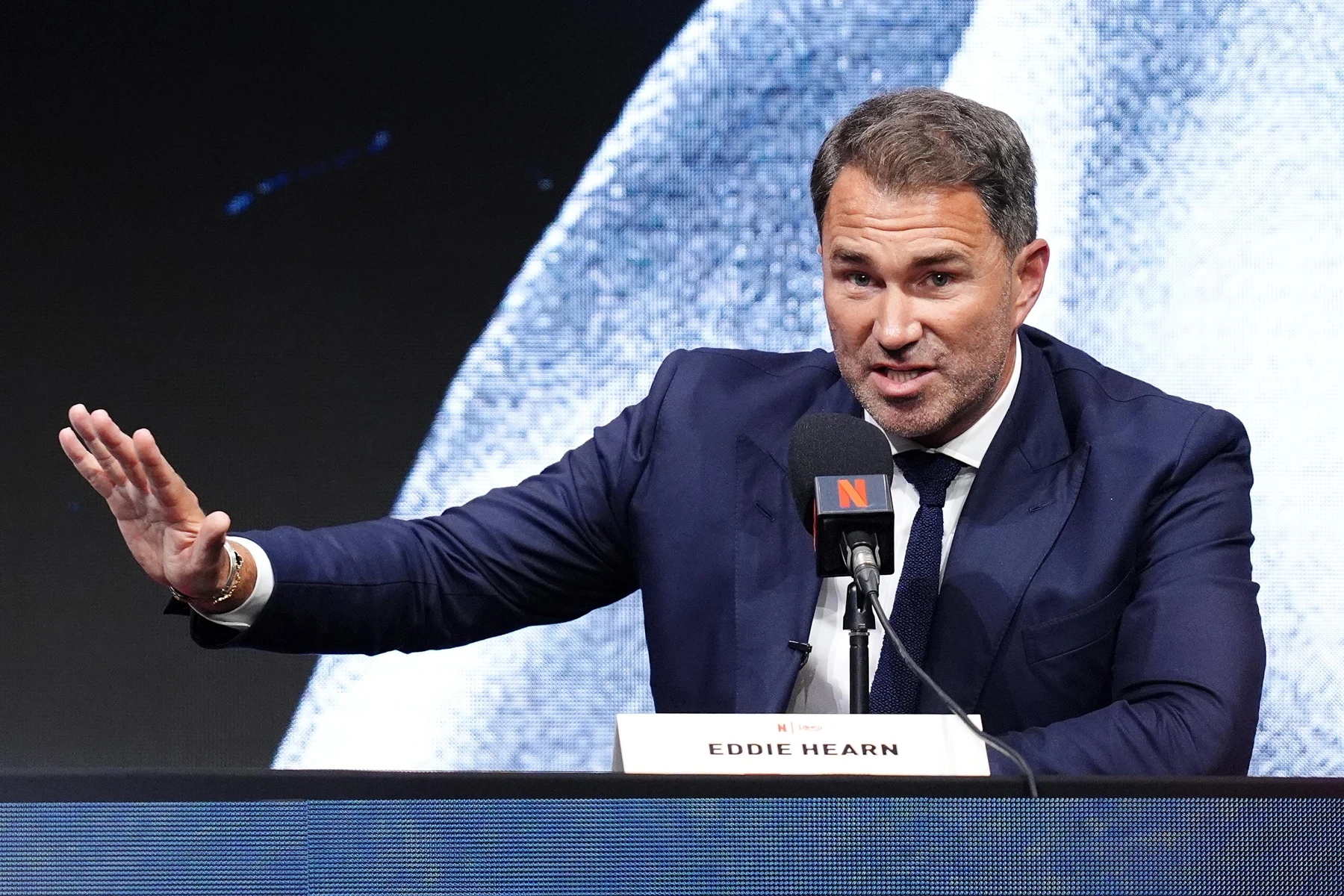
The argument concerns who can promote the event and on what basis. Eddie Hearn says the contractual arrangements restrict Dana White's involvement unless Hearn agrees to it. White has publicly described himself as involved. Those positions cannot be reconciled simply by choosing the most confident interview. A boxer, broadcaster and promoter can all want the same fight to happen while disagreeing over the conditions under which it is delivered.
For fans, the distinction matters. An announcement establishes the public plan; it does not make every subsequent contractual disagreement imaginary. Equally, a promoter saying a rival has misunderstood his role does not automatically mean the headline bout has collapsed. The useful question is whether anyone responsible for the event has changed the date, venue or participants. That is a more reliable test than the temperature of a media exchange.
The immediate viewing picture is clearer than the promotional hierarchy. Netflix says the event will be available globally to members without a separate event charge. Its page also says further card and start-time details will follow. Our Netflix boxing schedule gives readers a place to follow the event alongside other announced broadcasts. Membership access should not be confused with a published final ringwalk schedule.
There is therefore room for both reassurance and scrutiny. Fans can follow a formally announced British heavyweight fight without accepting that every backstage issue has been settled. They can also demand an understandable account of the promotion without treating the rivalry between Hearn and White as the contest they bought into. The central obligation is straightforward: deliver Fury against Joshua under clear arrangements, give the audience accurate information and keep the fighters' preparation at the centre of the build-up.
How the promoter argument developed
The dispute becomes easier to follow when the announcement, broadcast explanation and post-conference comments are kept in sequence. They answer different questions. One confirmed the event, another attempted to define White's involvement, and the latest interviews offered competing explanations for why he was not in London. None supplied the complete contracts.
September 24: an announcement with conflicting accounts
The official announcement put the fight in Cardiff on December 11 while describing The Ring and White as collaborating on promotion. Hearn maintained that the existing agreement restricted White's participation. Boxing News's September 24 report set out that contradiction alongside the earlier disagreement over a proposed American location.
Those are two separate disputes. Agreeing to keep the fight in Britain did not necessarily determine every participant's promotional powers. For an audience relieved that the date was finally public, the combination was confusing: a celebratory announcement arrived with a fresh objection attached. The event could be confirmed while the explanation of who was running it remained contested.
September 26–27: personal assistance or formal promotion?
During the September 26 Zuffa broadcast, Max Kellerman described White's involvement as helping Turki Alalshikh personally rather than acting as promoter. MMA Fighting reported the exchange the next day, including White's rejection of that description and his insistence that promotion was already taking place.
The distinction could matter commercially, but a broadcast explanation is not an agreed amendment to a contract. It also left an obvious practical question: if someone is publicly advertising a fight, does that make him its formally appointed promoter? Everyday speech and defined contractual roles can differ. Fans did not receive a common answer from the people speaking about the arrangement.
September 29–30: White's absence and Hearn's victory claim
After the Contender Series in Las Vegas on September 29, White reiterated that he was involved and said his commitment there explained why he would not attend the following day's London press conference. The report published early on September 30 records his position. Nonattendance was not presented by White as a concession.
Hearn gave a different account after the London event. In an interview reported by MMA Fighting that evening, he said White had not been permitted to attend, claimed success in the disagreement and said any involvement required his approval. Those remain Hearn's assertions. The independently clear development was that Fury and Joshua did appear together to launch the event.
A missing chair cannot resolve the competing accounts. It tells fans who attended one press conference, not who has which rights on fight night. The stronger evidence for the bout's progress is the fighters taking part in the launch and the official date remaining in place. The stronger evidence for unresolved messaging is that White and Hearn still describe his involvement differently.
What being a promoter actually means in this dispute
Much of the confusion comes from using one word for several activities. Someone can promote a fight in the ordinary sense by talking about it to a large audience. That does not, by itself, explain whether he has been appointed to organize it, represent a boxer or exercise particular commercial rights. In this dispute, the difference is the substance of the argument.
Broadcaster, financier and fighter promoter have different jobs
Netflix is the announced broadcaster. Alalshikh is the figure confirming and backing the event, with The Ring named in the promotional announcement. Hearn speaks for Joshua's promotional interests through Matchroom. White's disputed role sits within that wider arrangement. These descriptions identify the public positions; they should not be read as a complete chart of contractual responsibilities.
A broadcaster's practical priority is getting a compelling event to viewers. A boxer's promoter has to consider what the arrangement delivers for that fighter and for the business representing him. An event organizer must turn the proposed show into an actual card with an understandable ticket offer and production plan. Those interests can overlap without being identical. Reaching a bigger audience might be attractive while surrendering control over how a fighter is presented might not be.
The useful way to assess an additional participant is to ask what he contributes. Does his involvement bring distribution, useful publicity, a better undercard or expertise that improves the show? Who approves the choices affecting the headline fighters? Is the contribution compatible with existing commitments? These are practical boxing questions. Saying somebody is famous, wealthy or influential does not answer them.
A public statement does not reveal the contract
Hearn's reported September 30 position leaves a potential route through consent: involvement would need his approval and a reason that benefits Joshua and Matchroom. That is more specific than a general dislike of White, but it remains Hearn's description. The public has not been given the full agreement with which to test his interpretation or White's competing confidence.
It would be premature to say that a Netflix announcement overrides a fighter's contract, or that Hearn's interview invalidates the broadcaster's statement. Both conclusions assume rights and wording that have not been published. The same caution applies to appearances. Sharing a stage can show cooperation; failing to appear can show absence. Neither supplies the clauses governing who may act for whom.
Fans do not need to become contract lawyers to judge the outcome. They need a clear explanation of who is accountable for the event and whether the arrangement helps deliver the promised fight. If the parties settle on an agreed role description and then proceed with the card, the commercial compromise can be assessed on its results. Until then, distinguishing public claims from demonstrated responsibilities is more useful than awarding a rhetorical knockout.
Why keeping the fight in Cardiff matters to British fans
A British venue changes who can realistically be part of the night. Cardiff gives UK supporters an opportunity to attend without making an international journey. That does not make attendance inexpensive or effortless, but it preserves a connection between a domestic rivalry and the people who have followed it at home. Moving the same bout across the Atlantic would be a different proposition for those fans.
Boxing News reported that a push for an American location had delayed confirmation, while Hearn insisted on the UK provision he said was in the agreement. The final announced location is Cardiff. That reported background explains why the venue became part of the dispute; it does not disclose the competing financial offers or prove how much either location would have generated.
The frustration is visible in a limited sample of online discussion. One strand of the September 30 r/Boxing daily thread criticized taking British fights overseas and the proposed American setting. These comments establish an objection worth answering, not a measured majority view. Other supporters will prioritize seeing the bout happen wherever it is staged.
The strongest version of the UK argument is about the character of the event. A rivalry acquires meaning through local coverage, gym conversations and arguments between supporters. Hosting it in Britain can bring those people together in the same building rather than asking them to experience it only through a screen. A worldwide audience can still share that atmosphere through the announced Netflix broadcast.
Keeping the venue does not settle the scheduling question. Television audiences span time zones, while those inside a stadium still have to reach accommodation or travel home. Fans should separate the confirmed venue from reports about a very late ringwalk. Our Cardiff start-time explainer covers that issue; the final broadcaster schedule remains the authority when it is released.
The sensible standard is that local supporters receive clear information early enough to plan. A promoter can celebrate a British venue and still be challenged on the practical experience it offers. The location is an important result for fans who want to attend, but it should be followed by transparent ticket arrangements, useful timing information and a card that makes the journey worthwhile.
The complaints that deserve more attention than the insults
The feud has a ready-made audience, but its usefulness has limits. According to MMA Fighting's September 30 report, White's name drew boos when Alalshikh mentioned him at the press conference. That is a reaction from one gathering, not evidence that every boxing fan shares the same view. Treating it as a referendum would exaggerate what the scene establishes.
The online discussion contains more than executive rivalry. Alongside complaints about the presentation and the people controlling the microphone, fans debated the significance of Fury and Joshua finally meeting. That combination suggests a useful distinction: people can dislike parts of the promotion while remaining interested in the fight. The audience does not have to endorse the organizers' personalities to care about the matchup.
Promotional attention would be better spent explaining what the fighters are preparing to do. How will distance be controlled? What happens when one boxer forces the other to reset? Can the man under pressure regain position without spending the next exchange covering up? Those are the questions that can make a heavyweight rivalry intelligible to casual viewers. This is a standard for useful coverage, rather than a prediction of how December's rounds will unfold.
The undercard must serve the boxing audience
Some September 30 commenters wanted opportunities for current and emerging fighters rather than an undercard built predominantly around older names. Other fans proposed their own preferred bouts. These are audience suggestions, not an announced card, and Netflix's complete line-up remains pending. But the underlying request is sensible: use the headline event's attention to show viewers more worthwhile boxing.
A strong supporting bout does not need two household names. It needs a credible reason to happen. A prospect facing an opponent who can sustain pressure, a contender required to solve a contrasting style, or a competitive domestic pairing can offer more sporting value than a famous name in a predictable assignment. These examples are editorial criteria, not claims about fights already booked for Cardiff.
The card also needs balance. Developing a boxer is different from testing a contender, and the broadcast should tell viewers which purpose a bout serves. There is room for recognizable veterans and emerging talent, provided the matches are defensible and the coverage explains the stakes. A large audience is an opportunity to introduce fighters properly; it should not require commentators to inflate every supporting bout into a championship-level contest.
That is where the promotion can earn trust beyond winning the latest interview exchange. Give fans reasons to watch the supporting fighters, let the headline rivalry carry the show and replace vague promises with identifiable bouts. If the undercard delivers, the organizational compromise will have a tangible benefit. If it disappoints, the audience will have a more substantial complaint than who appeared at a launch.
What would count as a meaningful update before December 11?
The next useful development would change what fans understand about the event. A jointly clear description of the promotional arrangement would do that. Another exchange of insults would not, unless it came with an actual change to participation, scheduling or delivery. The volume of an interview should not be mistaken for the importance of its information.
On the commercial dispute, the clearest progress would be the parties using compatible language about White's role. That would not require publishing every financial term. It would require answering the basic question that their statements have created: what is he authorized to do, and do the people speaking for the fighters accept that arrangement? Until there is that clarity, a claim of victory tells the reader more about its speaker's position than the completed deal.
For the sporting event, named supporting bouts are a more substantial development than a promise of a strong card. Fans should be able to see the opponents, understand why the pairings matter and judge the quality for themselves. A recognizable participant without a confirmed opponent is not the same as a finished bout. The official announcement still leaves room for those details to emerge.
For attendees, the useful next steps concern the ticket offer and schedule. Matchroom's current listing offers event and ticket alerts. Registering interest is different from being given a seat, price or complete purchasing terms. Before committing to travel, supporters should check the actual authorized offer rather than treat an alert form as evidence that every detail is fixed.
Likewise, viewers should wait for the final event timetable rather than convert a reported ringwalk estimate into a guaranteed start. The first televised bout, main-card start and heavyweight ringwalk answer different planning questions. Our boxing calendar helps track the announced date; the event's official schedule should determine the final viewing plan once released.
As of October 1, the strongest conclusion is that Fury vs Joshua has a date and venue, while its public promotional explanation remains contested. Fans have every reason to welcome progress and every reason to ask for better information. The remaining weeks should make the card, viewing arrangements and responsibilities clearer, allowing the sporting question to take over: what happens when Fury and Joshua finally have to solve each other inside the ring?
Keep reading
Related boxing articles
Fight Guides
Why UNLV Moved a Football Game for Canelo–Crawford at Allegiant Stadium
By Boxing Schedule Editorial TeamFight Guides
Boxing Ringwalks and NFL Kickoffs: A Sports Viewing Guide
By Boxing Schedule Editorial TeamFight Guides
Join the conversation
Comments
Comments are reviewed before publication. Keep the discussion useful and focused on boxing.
Sign in with Google to comment
Your public comment shows your account name. Your email address is not displayed.
Commenting as
Loading comments…