Boxing Classes in NYC: Beginner Options in Manhattan and Queens
Compare beginner boxing programs in Manhattan and Queens, with verified gym options, branch-specific membership questions, contact policies and practical booking advice.
Choose a class goal before choosing a borough
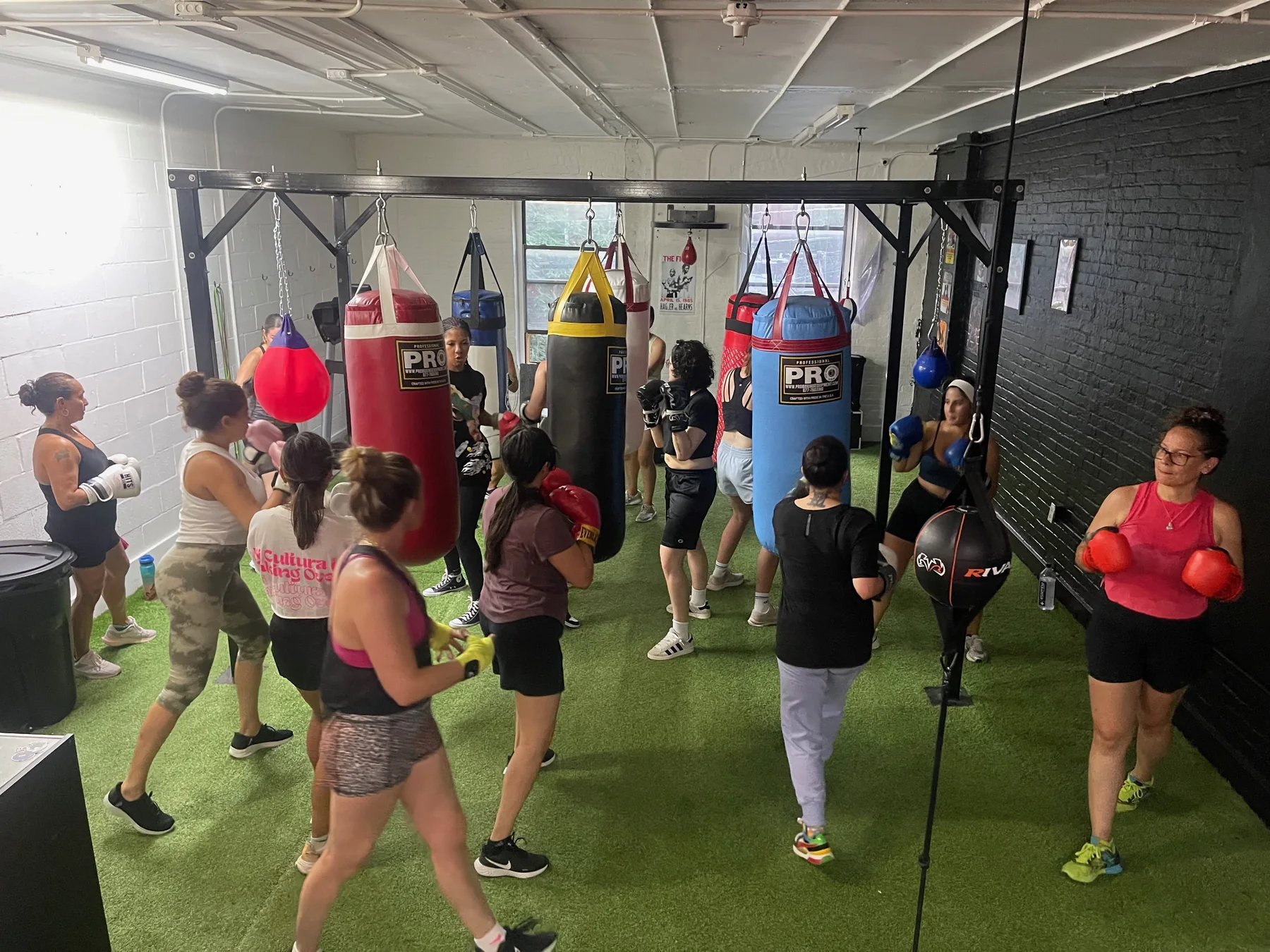
The best starting question for boxing classes in NYC is what you want the lesson to teach. Manhattan has several well-described beginner programs, while Queens offers local clubs that may save you a cross-city trip. Neither borough is a training style. A useful decision starts with the actual session: noncontact fitness, coached boxing technique, individual instruction or a longer-term competitive pathway.
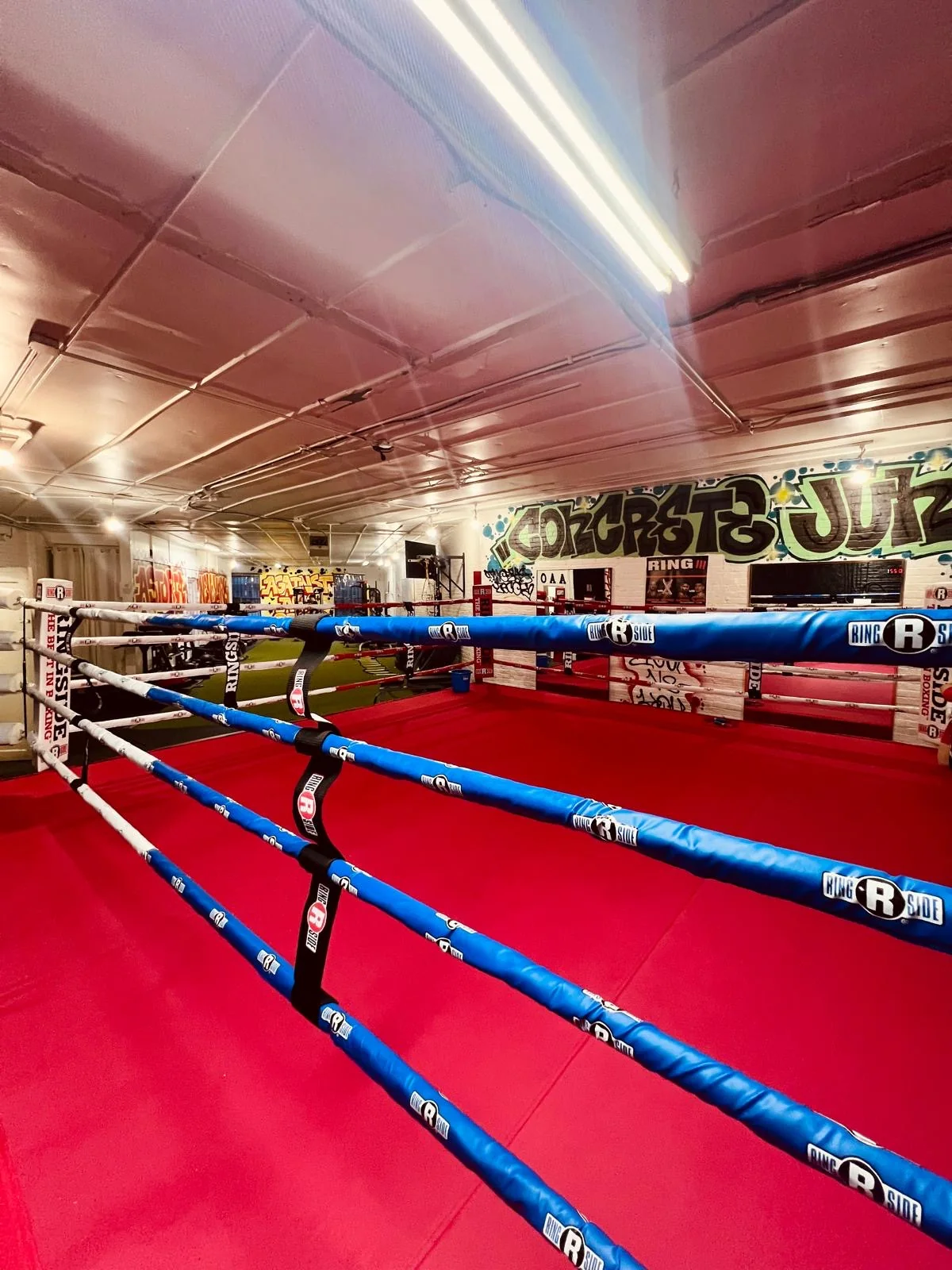
Those distinctions can exist inside one gym. Work Train Fight's class descriptions, for example, separate an all-level noncontact class from more technical work and sparring formats. A photograph of a ring does not tell you which of those you are booking. Nor does the phrase “all levels” tell you whether a coach will adapt a drill for someone who has never learned a stance.
Set one practical goal before searching by neighborhood. You might want a regular conditioning class with some punch instruction, or you may want to understand the jab, distance and defensive positioning more deeply. Someone hoping to compete later should ask about the coach's assessment process, not book the most intimidating-sounding class. Recreational boxers do not need to promise a future bout to deserve clear teaching.
Then choose the route that fits that goal. A gym near the office can work if its suitable class starts when you finish work. A club near home may be easier to repeat on weekends. A membership advertised for a large number of classes can still be a poor match if the relevant sessions fall outside the times you can attend. Count the boxing instruction you can use, rather than every activity on the timetable.
This guide compares selected beginner programs in Manhattan and Queens using public provider information checked on October 14, 2026. It does not claim physical visits, independent coach testing or exhaustive coverage of New York gyms. Our general beginner boxing guide covers first-lesson preparation. Here, the useful additions are actual local programs, branch-specific restrictions, and the booking questions that keep a New York membership aligned with your week.
Manhattan options: match the gym to your actual training hour
Victory and Work Train Fight offer different starting conversations
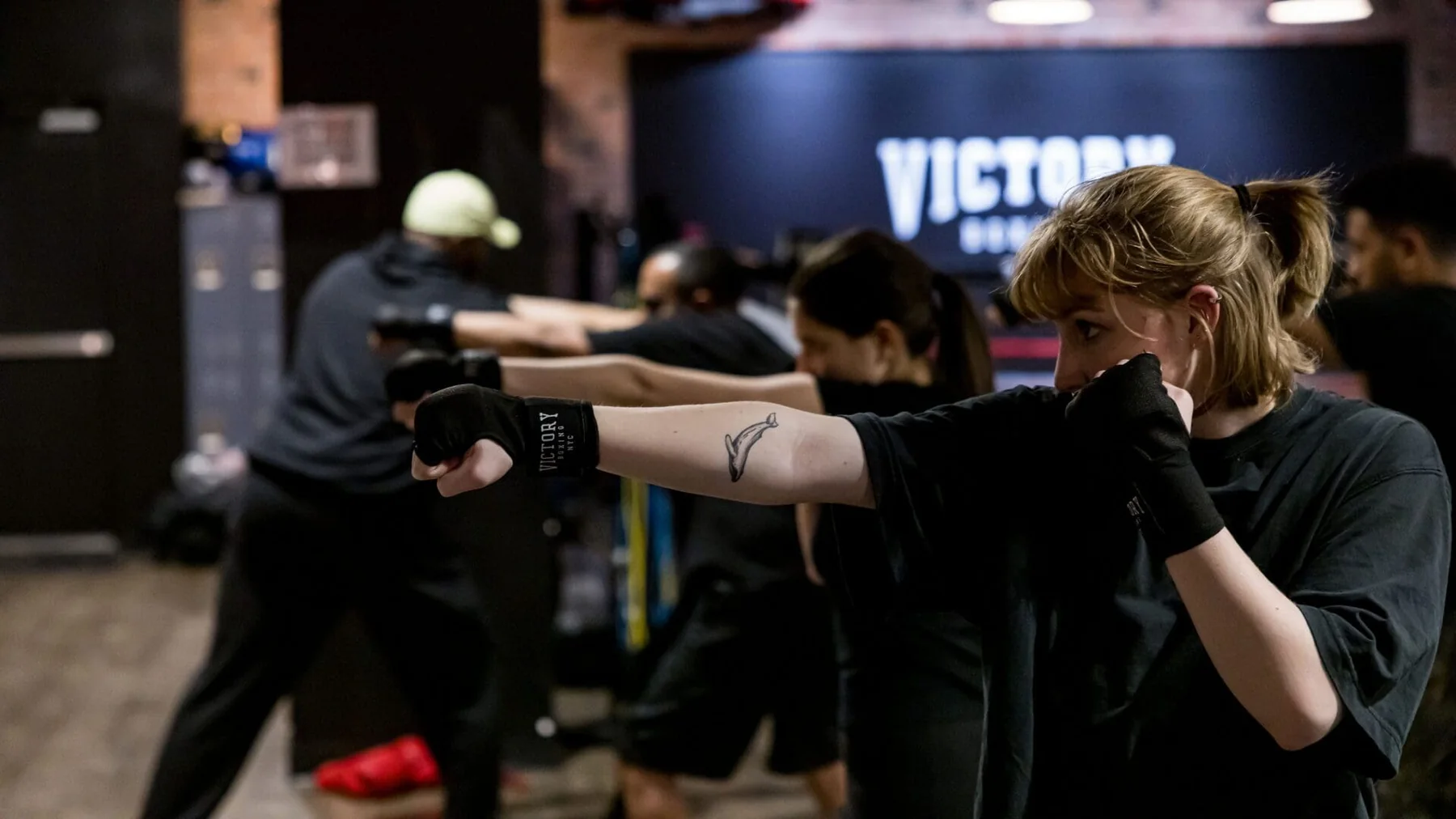
Victory Boxing describes a dedicated beginner class with stance, punches, defense, footwork, bag drills and conditioning. Its listed address is 455 West 37th Street. The public page describes a paid trial whose cost can be credited toward a membership or class pack, with gloves supplied for that trial. Confirm the current terms and the exact session when booking rather than treating a general program description as a reservation.
The useful question at Victory is how that beginner structure works for your starting point. Ask how the instructor introduces stance and how questions are handled during the group. You should be able to leave with a manageable correction, not merely a recollection of punch numbers. If a dedicated beginner slot fits your day, it can remove the uncertainty of joining an intermediate group by mistake.
Work Train Fight lists boxing, strength work, coaching and gym access at 636 Broadway, on the second floor. Its class descriptions distinguish noncontact all-level sessions, more technical work and contact formats. That range is useful if you want to compare a fitness-focused class with a later technical option, but it also makes the precise booking important. Do not assume every item shown in a promotional package means the same amount of individual instruction.
Church Street memberships require a branch and time check
Church Street Boxing's current location selector identifies Park Place at 25 Park Place and West 29th Street at 153 West 29th Street. Start there rather than relying on a years-old meetup or directory reference to another branch. Confirm the location when you ask about a trial, and do not transfer one branch's timetable to another.
The Chelsea membership page illustrates another important distinction: an early-bird option has weekday time restrictions, while other tiers describe different access. An attractive headline monthly price is not useful for weekday evening training if those hours are excluded. The page also distinguishes pass expiry and additional tax. Read the current purchase terms before treating the headline as your complete bill.
For any Manhattan shortlist, count usable boxing lessons rather than all classes in all disciplines. A membership may include Muay Thai or Brazilian jiu-jitsu alongside boxing; those are different sports and different learning goals. Ask which specific beginner boxing sessions fit your hours and whether reservations or class capacity limit access.
Finally, compare the trip home as well as the trip from work. A class that looks convenient at the office may become awkward on a remote-working day. One reliable lesson near home can be more valuable than a large theoretical timetable you rarely use. That is a practical attendance judgment, not a ranking of the coaches.
Queens options: look beyond the Manhattan commute
HellGate Boxing Club in Astoria
HellGate Boxing Club publishes an Astoria address at 12-12 Astoria Boulevard, on the second floor, and welcomes beginners as well as experienced boxers. Its FAQ describes fundamentals, group skill work, bag drills and conditioning. It says coaches assess readiness before sparring. That distinction gives a beginner a useful booking question: which fundamentals session should you attend if you want to learn without contact?
A local club may be the right alternative to traveling into Manhattan for every lesson. Ask how newcomers join an all-level group, who will introduce the basic task and how the session adapts when abilities differ. The word “beginner-friendly” is helpful only when the coach can explain what happens for you on arrival. It should not require you to guess a combination by watching experienced members.
Eastern Queens Boxing Club and the appointment route
Eastern Queens Boxing Club invites prospective members to arrange a meeting with a coach to see whether the program fits. Its public description welcomes different experience levels and ages. That is a different entry route from assuming you can buy a drop-in and join any hour on a timetable. Describe your goal, age and available days in the first inquiry.
The website also points to a new-location notice. Confirm the current training address and appointment instructions directly rather than following an old testimonial, map pin or social post. Boxing clubs can retain years of history online after their practical arrangements change. A fresh confirmation should name the location, coach and kind of session, not merely say that the club is open.
Queens is large enough that “in the borough” is not a complete commuting answer. Compare the journey from your own neighborhood with the real class time. Someone already traveling into Manhattan may prefer a lesson near work; someone working locally may find a Queens club easier to attend consistently. You do not need to treat either choice as a statement about which borough has more authentic boxing.
Parents should ask a further set of questions about age grouping, supervision and what the child will actually practice. An adult fundamentals program and a youth session can share a building while serving different needs. Do not use the existence of one to assume availability in the other. The right local choice is the program that can describe a suitable lesson and a clear way to join it.
Read the complete price and contact agreement
Compare what you pay to begin with what you pay to keep training. A trial can include glove use or a credit toward a later purchase without making the ongoing program free. A promotional month can combine group classes, gym access and coaching appointments, each with different booking conditions. Ask the staff to explain the package in ordinary terms and identify what changes after the introductory offer.
For a class pack, check the expiry date against your actual calendar. Ten lessons at an attractive nominal rate can be poor value if you can only use half before the pass expires. For a membership, ask about renewal, cancellation notice, freezes and class reservation limits. An early-bird restriction can matter more to an evening worker than a small difference in monthly price. Confirm the full charge, including any applicable tax or required equipment, rather than comparing incomplete headlines.
Do the same for coaching access. Open gym can provide a place to practice independently; it does not automatically include someone correcting every round. A group class and a semi-private appointment may both involve mitt work but provide different amounts of attention. Neither is automatically the better purchase. Choose according to what you need to learn and how the program will actually deliver it.
Sparring needs its own conversation
State your contact preference clearly before booking. “I want to learn boxing without sparring” is a complete and useful request. If a gym offers body sparring, recognize that body-only still involves contact; it is not interchangeable with a noncontact bag class. Ask which sessions match your preference and whether remaining in that format is possible over time.
If you hope to spar eventually, ask who assesses readiness, what fundamentals are expected, how partners are chosen and what equipment or memberships are required. HellGate's published FAQ describes coach confirmation before sparring. That is a useful example of a process to ask about, rather than an invitation to decide your own readiness from how hard you hit a bag.
Look for instruction that connects offense with recovery and position. Learning a combination should include understanding where your hands and feet finish, not just how many punches you can throw before the bell. A coach can explain why a short, controlled task is appropriate before more complex exchanges. A fixed promise that everyone spars after a certain number of weeks would tell you less about your individual progress than a clear assessment of what you have learned.
Keep the conversation practical: your session, your contact agreement, your instructor and your complete cost. That clarity gives both you and the coach a better starting point.
Turn the shortlist into a repeatable New York week
Reduce the options to two or three real, usable sessions. Put the address, class name, instructor, start time and total first-visit cost beside each other. Add how you would travel there from your usual starting point and how you would get home. Do not rely on a borough name or a best-case journey from a map. The trial visit is a chance to test the practical arrangement as well as the class.
Send a concise inquiry before paying: “I am a complete beginner interested in boxing technique without contact. I can train on these days. Which session should I book, what do I need to bring, and what would continued attendance cost?” Someone seeking a conditioning class can say that instead; someone considering competition later can ask about progression. Parents should include the child's age and ask how the youth group is supervised.
After trying a class, write down what you learned and what the coach asked you to change. If the answer is only that the workout was exhausting, consider whether that matches your goal. A fitness-focused class can be exactly right, but technical learning should also leave you with a clearer idea of stance, distance, movement or defense. You do not have to master the idea in one visit to recognize whether the instruction made it understandable.
Discuss a realistic first-month pattern with the coach rather than immediately purchasing the maximum access you can afford. Ask what to practice between taught sessions and how to know when to ask for another correction. Repeating a task incorrectly at higher speed is not the same as developing it. Keep the feedback simple enough that you can remember it at the next lesson.
As a fight fan, you can build vocabulary outside the gym. Pick a bout from the weekend boxing schedule and watch one feature for a round: the jab returning, the feet resetting after a combination, or the angle a boxer takes away from the ropes. Ask your instructor about that feature. Watching a professional provides context; it does not mean their advanced habits are appropriate for you to copy.
It can help to keep a backup session in mind. Ask whether the same program has another appropriate class if work runs late, and whether your purchase permits that change. A second suitable option is more useful than unlimited access to sessions that do not match your experience or contact preference. You can also ask how a missed lesson affects your place in a beginner sequence. The answer helps you return with a clear task rather than feel that one interruption has ended the whole plan.
Reassess the practical side after several visits. Are the relevant classes still available? Does the renewal date fit travel or work changes? Is the route manageable on a normal week? A sustainable choice gives you room to learn without turning every lesson into a logistical problem. Manhattan and Queens both offer starting points; the useful decision is a specific program, clear coaching and an arrangement you can repeat.
Keep reading
Related boxing articles
Fight Guides
Why UNLV Moved a Football Game for Canelo–Crawford at Allegiant Stadium
By Boxing Schedule Editorial TeamFight Guides
Boxing Ringwalks and NFL Kickoffs: A Sports Viewing Guide
By Boxing Schedule Editorial TeamFight Guides
Join the conversation
Comments
Comments are reviewed before publication. Keep the discussion useful and focused on boxing.
Sign in with Google to comment
Your public comment shows your account name. Your email address is not displayed.
Commenting as
Loading comments…