What Time Does Boxing Start? Broadcast Time, Main Card and Ringwalks Explained
Learn the difference between doors, first bell, prelims, main-card start and main-event ringwalk estimates, with a reliable way to convert fight times.
Why One Boxing Event Has Several Start Times
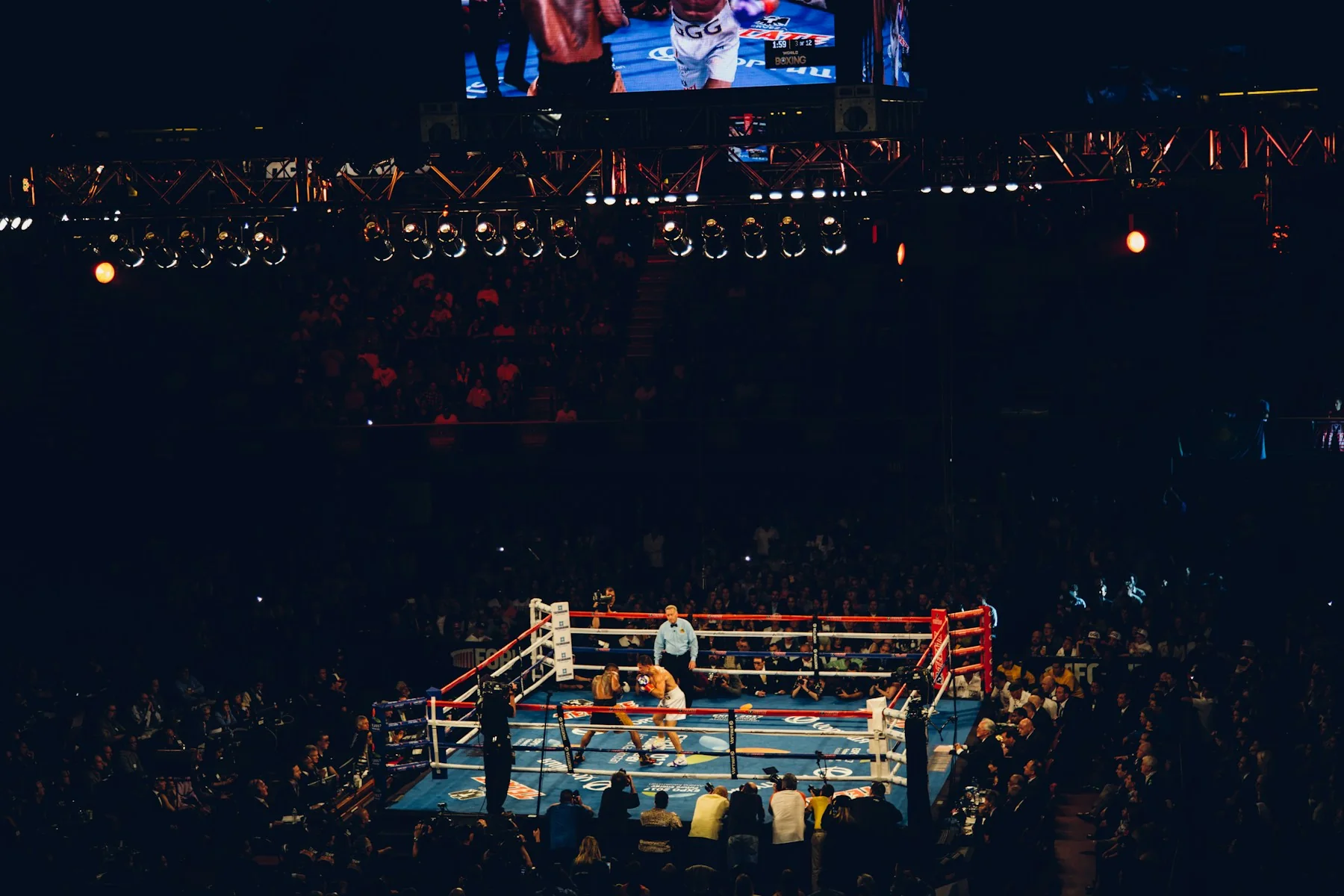
Boxing does not have one standard start time. A listing can show when the arena opens, when the first undercard bout begins, when a television or streaming window starts, when the headline fighters are expected to walk, or when round one should begin. Those clocks do not contradict one another; they describe different points in the same show.
The safest way to read a schedule is to look at the label beside the time before looking at the hour itself. If a page says only “coverage begins,” assume it identifies the broadcast window until the page explicitly says otherwise. If it says “estimated ringwalk,” treat it as a planning range rather than an appointment. For a current example, start with tonight’s boxing schedule and note which event stage each time names.
Doors, First Bell and Prelims
Doors is information for people attending the venue. It tells a ticket holder when entry begins, not when a home viewer should necessarily open a stream. There may be a gap for security, finding seats and in-arena preparation before boxing begins. A broadcaster may also join after doors have opened.
First bell or first fight normally means the first scheduled bout is ready to begin. That can be earlier than the advertised main broadcast. The earliest contests are often called prelims, preliminary bouts or an early undercard. They may appear on a different service, an official free feed, or nowhere on television. Some smaller shows do not split the card into branded “prelims” and “main card” blocks at all, so the promoter’s wording matters.
A bout also occupies more clock time than the number printed beside its rounds. A four-round contest contains boxing, one-minute rests between rounds, entrances, introductions, the result and the turnover to the next matchup. The Indian Boxing Council’s event-operations guide, for example, uses roughly 15 minutes as an operational estimate for a four-round fight. That is a useful illustration of event sequencing, not a universal timer for every promotion.
| Label | What it usually means | What it does not promise |
|---|---|---|
| Doors | Spectator entry opens | First televised punch |
| First bell / prelims | Opening bout or early-card block | Headline fight |
| Main card | Featured broadcast block | Immediate main event |
| Ringwalk | Fighter entrances | Exact opening bell |
Main Card, Ringwalks and Opening Bell
The main card start is when the featured, usually most widely distributed portion begins. It often contains several bouts. The main event is normally last, so a 7 p.m. main-card listing may put the headliners in the ring hours later. BBC event guides show the distinction clearly: one recent guide listed a main card just after 19:00 but an expected headline ringwalk around 22:00; another separated an 18:00 first fight from a ringwalk expected around 22:30.
A ringwalk is the entrance sequence. The fighters still have to enter, be introduced, receive final instructions and prepare for the bell. The opening bell is the actual start of round one. On a large production, entrances and introductions can take several minutes, so “10 p.m. ringwalk” should never be silently rewritten as “the fight starts at exactly 10 p.m.”
How to Find the Correct Start Time for Your Location
Before converting a number, capture four details: the event stage, the venue or source time zone, the full date, and your location. “8 p.m.” alone is incomplete. “Main card at 8 p.m. ET on Saturday” is usable. “Estimated ringwalk at 8 p.m. in Las Vegas” describes a different moment and a different clock.
Start With the Event’s Local Time Zone
Use the promoter, venue or official broadcaster listing to identify the source time. If a guide gives several zones, check that every conversion describes the same event stage. Do not combine a main-card time from one page with a ringwalk time from another and assume one of them is wrong.
US abbreviations need care. Eastern Time and Pacific Time are seasonal labels: according to NIST, Eastern can be EST (UTC-5) or EDT (UTC-4), while Pacific can be PST (UTC-8) or PDT (UTC-7). A shortcut remembered from winter can be an hour wrong in summer. The UK similarly switches between GMT and BST. Use the actual event date in a location-aware converter instead of manually applying a permanent offset.
Convert the Date as Well as the Hour
Enter the host city, your city and the event date in a reputable world-clock converter. Then copy the complete result—weekday, date and time—into your calendar. This prevents the classic mistake of converting the hour correctly while keeping the wrong day.
For example, a Saturday-night card in North America may be a Sunday-morning event in Britain, Europe or Australia. An afternoon card in Japan or Saudi Arabia may land earlier on the same day for many US viewers. The International Date Line can create an even larger-looking calendar difference. None of that changes when the bout happens; it changes only the viewer’s local label for the same instant.
A reliable conversion workflow
- Copy the exact label: prelims, main card or ringwalk.
- Confirm the full date and the source city or zone.
- Convert that dated time to your city.
- Save the converted weekday and date, not only the hour.
- Repeat for the estimated ringwalk if you need both reminders.
Verify the Broadcaster in Your Country
A correct clock does not guarantee that the same channel, app or purchase works in every country. Sports rights are territorial. A platform can carry a card in one market while another broadcaster owns it elsewhere; prelims and the main card can also have different distribution. DAZN’s own terms note that content composition and availability can vary, which is why a generic “watch on DAZN” search result is not enough.
Open the broadcaster’s page for your country, make sure the event appears in the schedule, and check whether it requires a normal subscription, a separate pay-per-view purchase or a supported television provider. Do this before fight night, especially if you need to create an account or test a device. The boxing calendar is the better starting point for future cards because it keeps the event identity and date together; the official territorial broadcaster remains the final authority for access.
How to Estimate the Main Event Ringwalk
The best estimate is the one published or repeated by the official promoter or territorial broadcaster close to fight night. If no reliable estimate exists, the running order can produce a useful window—but not an exact minute. Boxing is variable-length competition wrapped inside a live production.
Count the Bouts, Then Use a Range
Start with the published main-card start and count every bout scheduled before the headline fight. Note whether each is set for four, six, eight, ten or twelve rounds. Scheduled rounds establish a ceiling for the in-ring action, not the elapsed broadcast time. Under unified professional rules, a typical round lasts three minutes and the break between rounds lasts one minute, but event time also includes entrances, introductions, referee instructions, a decision or stoppage announcement, interviews and the ring being prepared for the next contest.
That makes bout count more useful than one blanket “minutes per fight” formula. A card with two undercard bouts has fewer variables than one with six. A ten-round co-feature creates a larger possible range than a four-round prospect bout. When a credible event guide says the ringwalk is “around 10:30,” keep that as the center of your plan and add an early-arrival margin; do not overwrite it with home-made arithmetic.
Estimator hierarchy
- Best: an updated official ringwalk estimate or `not before` time.
- Next: a credible running order with approximate bout slots.
- Fallback: main-card start, number of bouts and scheduled rounds, expressed as a broad range.
- Fight night: live results showing which bout is in progress.
Suppose a main card begins at 8 p.m. with three bouts before the headliner. It is reasonable to expect a wait measured in hours, not minutes. It is not reasonable to declare that the ringwalk will occur at 10:17 p.m. unless the event itself supplies that precision. Your practical answer might be: “Check for an official update; otherwise be watching by 10 p.m. and treat 10:00-11:00 as the working window.”
Why Knockouts Do Not Always Move Everything Forward
A first-round knockout removes many possible rounds, yet the next fighters may not walk immediately. A television partner may be protecting the advertised start of a featured bout. The crew may need a commercial break, replay package or interview. The commission and medical staff still complete post-bout work, while the next corners need their planned warm-up time. On a card with a fixed network window, the production can deliberately absorb time.
The reverse also applies. Several fights going the distance can pressure the schedule, but producers may trim analysis, entrances or gaps to recover time. This is why a knockout changes the estimate without mechanically shifting the entire remaining card by the number of unused round minutes.
Use the vocabulary that reliable boxing guides use: expected, around, approximately and not before. BBC Sport, for example, has paired an expected ringwalk with the warning that it depends on how the undercard develops. That caveat is not evasive; it is the most accurate description of a live boxing schedule.
Why Published Ringwalk Times Move
A ringwalk estimate can be accurate when published and still move on the night. The timetable depends on three changing systems: how long the bouts last, how the live production is paced, and whether the announced card survives intact. The Nevada State Athletic Commission’s event calendar puts the principle plainly: events are subject to change.
Full Distances, Stoppages and Swing Bouts
When several undercard contests go the full scheduled distance, their rounds, breaks and decisions use most of the available window. A difficult score compilation or post-fight interview can add more. When a bout ends in the first round, the in-ring portion becomes much shorter—but the saved time is not automatically passed straight to the headliner.
Some productions keep a short swing bout available. BoxRec describes this as a contest that can be placed at short notice to fit the television window, including before a main event if earlier bouts finish quickly. The practice explains why counting unused rounds after a knockout is not a reliable countdown. Even without a swing bout, a broadcaster can fill the gap with analysis, highlights or interviews.

Broadcast Holds and Operational Delays
Television introduces timing commitments that the scorecard does not show. A featured bout may have an intended network window. Commercial breaks, studio segments, national anthems, celebrity introductions or an elaborate entrance can affect the opening bell. Conversely, producers can shorten analysis and transitions when the undercard is running late.
Safety and event operations come first. Doctors may examine a boxer, officials may review an incident, judges’ scores must be collected, the canvas may need cleaning, and equipment or lighting can require attention. The next fighters also warm up for an expected slot; rushing them into the ring because the preceding bout ended early is not always desirable. Viewers should avoid guessing the cause of a pause unless the broadcast explains it, but they should expect pauses to exist.
Sport
Full distances, stoppages, decisions
Production
Broadcast windows, breaks, entrances
Operations
Medical checks, equipment, revised order
Late Card Changes
Boxers can withdraw through illness or injury, fail medical clearance, miss contractual conditions, or lose an opponent. A contest can be removed, replaced or shifted in the order. In one documented BBC Sport example, the scheduled main event between Conor Quinn and Jake Dodd was cancelled at the request of the British Boxing Board of Control and another bout was elevated. A change that large plainly invalidates an earlier timing model.
The weigh-in is therefore a useful checkpoint, not a ceremonial detail. Confirm that the headliners weighed in, that the card still contains the expected bouts and that the broadcaster has not revised its listing. On the day itself, trust a newer official update over an old search snippet or poster. If the live page says `TBA`, uncertainty is the answer; inventing a precise ringwalk would be less useful than admitting that no verified time exists.
A Fight-Night Timing Checklist That Prevents Missed Bouts
The most dependable plan uses three checkpoints rather than one old screenshot. Confirm the card after the weigh-in, prepare the legal feed before the event stage you want, and use live results to track the running order. That approach works whether the show is in Las Vegas, London, Riyadh, Tokyo or a local arena.
The Day Before: Card and Weigh-In
Open the promoter, broadcaster or commission page again after the official weigh-in. Confirm that both headliners participated, the opponent and venue remain unchanged, and the matchup is still the main event. Look for an updated running order; promoters such as Matchroom sometimes publish official weights and fight-night order together, which is more useful than an announcement poster released weeks earlier.
Then record two reminders: the confirmed broadcast or main-card start and the latest estimated ringwalk. Label them in your calendar so you do not confuse them. Include the broadcaster name and purchase status in the note. If the ringwalk remains TBA, choose a conservative window from the card order and plan to follow the earlier bouts.
One Hour Before: Open the Right Feed
Open the official app or channel well before the earliest time you are willing to miss. Make sure you are signed into the correct account, the event tile is visible in your country and any pay-per-view transaction is complete. Some services require purchases to be made in a browser, phone app or through a QR-code flow rather than directly on every television device. Discovering that at the advertised ringwalk is too late.
Test the device you will actually use. DAZN’s troubleshooting guidance notes that a speed result applies to the device tested; a fast phone does not prove that a distant smart TV has the same connection. Update the app, check audio, and have a supported backup device or cable ready. If you care about the entrances, join at least 20 to 30 minutes before the lower end of an estimated ringwalk range. For an unusually uncertain card, join earlier.
Five-minute preflight
- ☐ Correct country listing
- ☐ Correct event and stage
- ☐ Subscription or PPV active
- ☐ App updated and signed in
- ☐ Video and audio tested
- ☐ Backup device available
During the Card: Follow Live Results
Once the first bell has sounded, the live running order is better evidence than a pre-event countdown. Follow the official broadcaster, promoter or a credible live-results page. If the co-main event has begun, the main event is next regardless of whether the original estimate is now ten minutes early or thirty minutes late. If the card has lost a bout, immediately widen your early-arrival margin.
Use all upcoming fights to identify the correct event, then switch to live coverage as the show unfolds. Do not let an unlabelled social-media clock overrule the named broadcaster or a live page. A post may be in another time zone, may refer to the broadcast rather than the headliner, or may have been published before a card change.
The no-miss rule
Treat the main-card start as fixed only when the broadcaster confirms it. Treat the ringwalk as a range. Recheck after the weigh-in, open the legal feed early, and let live results update your plan.
So, what time does boxing start? The precise answer is the time attached to the stage you want: first bell for the whole card, main-card time for the featured broadcast, or an estimated ringwalk for the headliner. Once the label, date, time zone and territorial broadcaster all agree, you have a trustworthy viewing plan.
Keep reading
Related boxing articles
Fight Guides
Why UNLV Moved a Football Game for Canelo–Crawford at Allegiant Stadium
By Boxing Schedule Editorial TeamFight Guides
Boxing Ringwalks and NFL Kickoffs: A Sports Viewing Guide
By Boxing Schedule Editorial TeamFight Guides
Join the conversation
Comments
Comments are reviewed before publication. Keep the discussion useful and focused on boxing.
Sign in with Google to comment
Your public comment shows your account name. Your email address is not displayed.
Commenting as
Loading comments…