Undefeated Boxing Records: Perfect Careers, Draws and the Longest Unbeaten Runs
Understand unbeaten boxing records through Mayweather, Marciano, Calzaghe, Ward, Ricardo López and Jimmy Wilde, with clear distinctions between perfect careers, draws and streaks.
Undefeated, Perfect and Unbeaten Streak Mean Different Things
An undefeated boxing record means the official record contains no losses. It does not necessarily mean every contest was a win. Draws can coexist with an unbeaten career, while a long unbeaten streak can belong to a fighter who eventually lost. Those distinctions are essential before comparing the sport's famous zeroes.
For clarity, this guide uses “perfect” for a professional record consisting entirely of victories, with no draws or no contests. “Unbeaten” or “undefeated” describes the absence of a defeat, with any draws and no contests still shown separately. “Streak” identifies a continuous run within a career. It needs a beginning and an endpoint or a clearly stated current cutoff.
| Description | Fictional example | What it establishes |
|---|---|---|
| Perfect career snapshot | 20-0, no draws or NC | Every listed professional contest was a win |
| Unbeaten with a draw | 20-0-1 | No defeats, but not twenty-one wins |
| Unbeaten with a no contest | 20-0, one NC | The additional contest did not become a victory |
| Unbeaten streak | Twenty contests without defeat inside a longer career | A run, not necessarily an unbeaten career |
A zero also describes an official result, rather than an uninterrupted experience of dominance. An unbeaten fighter can lose rounds, suffer knockdowns, survive difficult stretches and win close decisions. The record preserves the verdict; it does not erase everything that happened before the announcement.
Keep professional bouts separate from amateur appearances and exhibitions. A boxer may have amateur defeats while maintaining an unbeaten professional career. An exhibition can be a substantial public event without adding a professional victory. The classification must be checked rather than inferred from the fame of the participants or the size of the audience.
The examples below are selected historical landmarks, not a complete list of every undefeated boxer or a ranking of present contenders. Mayweather's famous 50-0 milestone is identified by its 2017 endpoint, because later retirement and comeback announcements require separate checks. Marciano, Calzaghe, Ward, López and Wilde illustrate different ways the same language can be used. Understanding their differences is more useful than putting every impressive number into one supposedly perfect-record table.
Mayweather and Marciano: Two Famous Perfect Milestones
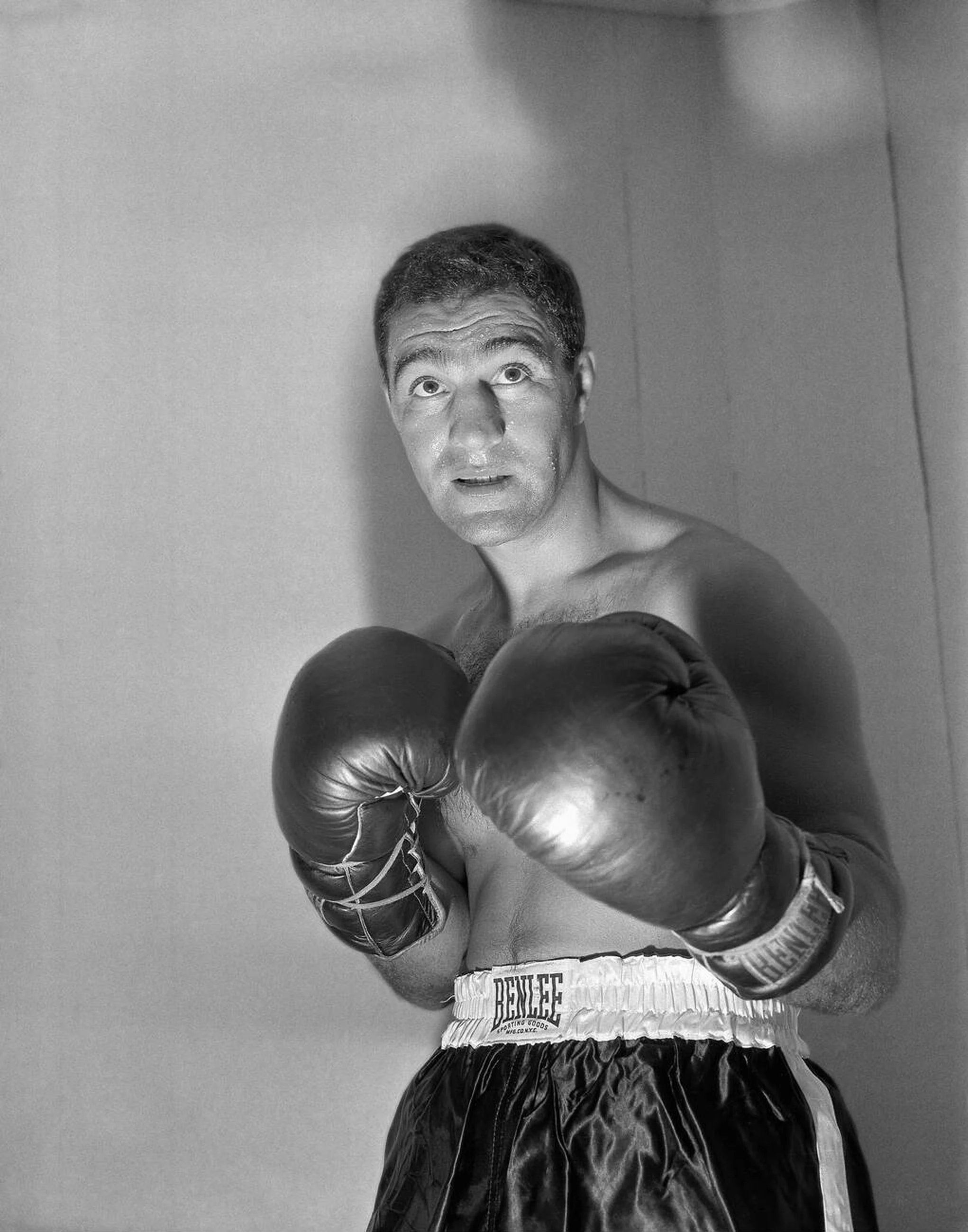
Floyd Mayweather's 50-0 and Rocky Marciano's 49-0 are the most recognizable numbers in many unbeaten-record discussions. Their fame makes them useful starting points, provided the comparison retains the weight class, opposition and historical endpoint behind each number.
Mayweather's 50-0 Is a Professional Record with a Date
Mayweather reached 50 professional victories without a defeat when he stopped Conor McGregor in 2017. His BoxRec professional page, checked on October 14, 2026, still lists 50-0 with 27 knockouts and a professional career ending in 2017. That is a dated record check, rather than a prediction about whether he could ever return.
Retirement status and the historical milestone are separate. A boxer can announce retirement, appear in exhibitions, and later discuss or announce a professional comeback. An announced event does not become another professional win until it actually takes place and receives an official result. Equally, a public exhibition does not automatically alter the professional ledger.
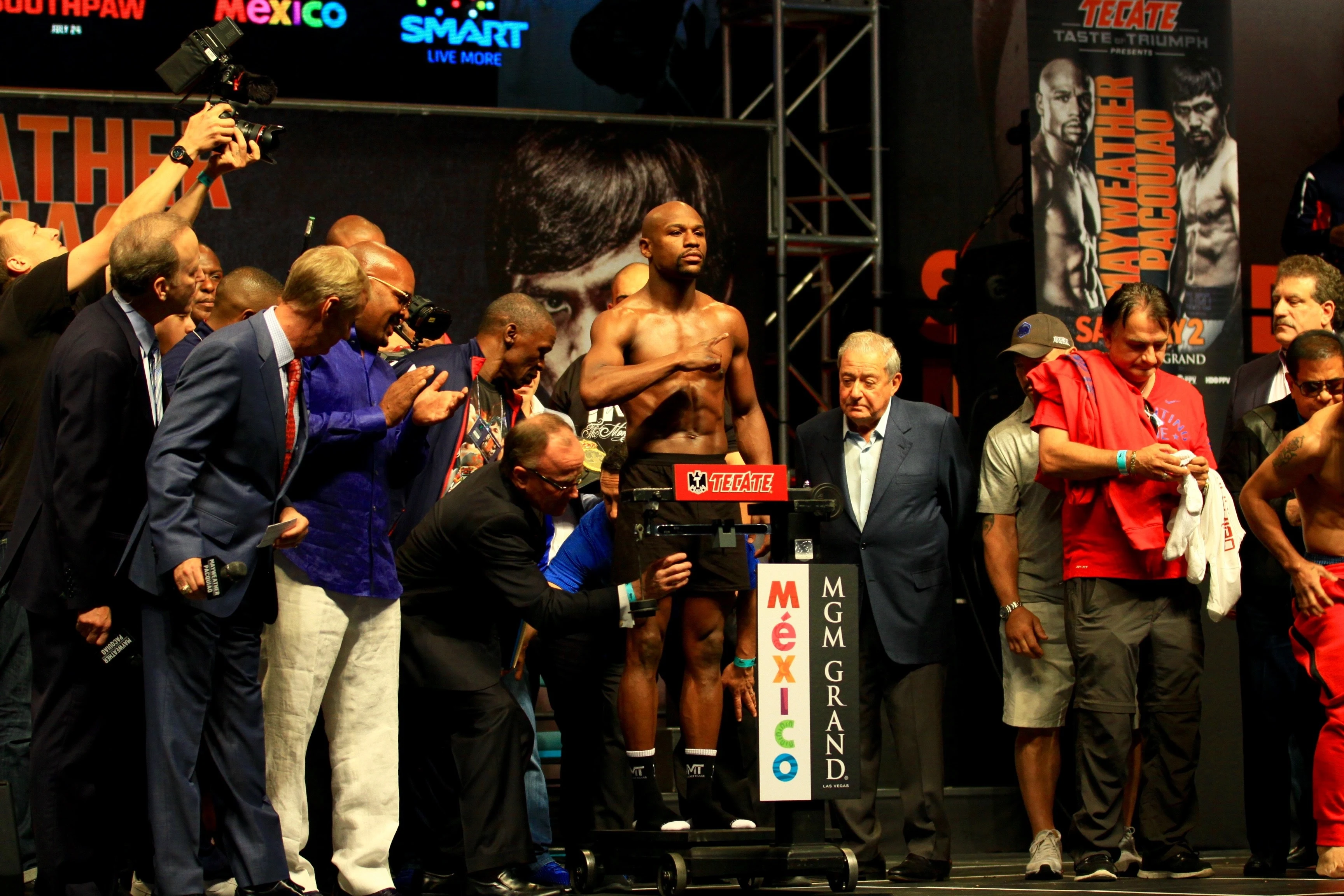
McGregor's appearance supplied the fiftieth win, but the record's boxing substance also includes championship opponents such as José Luis Castillo, Ricky Hatton, Canelo Álvarez and Manny Pacquiao. Reading only the crossover finale misses the earlier career. Reading only fifty victories misses differences in weight, style and the stage of an opponent's development.
The useful discussion is therefore about both consistency and the individual tests. How did Mayweather handle pressure, a different reach or an opponent who forced a rematch? The zero identifies successful official outcomes across those situations. It does not supply one explanation that covers every victory.
Marciano's 49-0 Belongs to the Heavyweight Championship Story
Marciano finished 49-0 with 43 knockouts. He won the heavyweight championship by stopping Jersey Joe Walcott in round thirteen in 1952, then made six successful defenses. His final professional contest was a ninth-round knockout of Archie Moore in 1955. That heavyweight championship context is the distinction to preserve when comparing him with a boxer whose titles came in lighter divisions.
Unbeaten did not mean untouched. Marciano had to recover from a knockdown against Moore, and his first title-winning performance against Walcott required a late finish. Those examples make the record more interesting: he sometimes had to solve danger rather than prevent it from appearing.
Mayweather's fifty is numerically larger than forty-nine. That does not settle who had the better championship résumé or how they would compare across eras. Their careers tested different physical and tactical demands. The sensible comparison identifies those demands first and lets the official records remain precise facts within the larger debate.
Calzaghe and Ward Show Why the Opponents Matter
Joe Calzaghe and Andre Ward finished with fewer professional victories than Mayweather, but their unbeaten records contain important championship tests. Their careers illustrate why the number of wins should be read alongside the opponents, title stakes and official scores.
Calzaghe's Unifications Put 46-0 in Context
Calzaghe retired with 46 wins, no defeats and 32 knockouts. His super-middleweight story includes defeating Jeff Lacy in 2006 to add the IBF championship, then beating Mikkel Kessler in 2007 to unify the WBA, WBC and WBO titles. Those contests give the zero more substance than a list that treats every professional victory as an identical test.
Be precise about the belts. Winning championships from all four organizations at different points does not mean holding all four simultaneously. Calzaghe had relinquished the IBF title before the Kessler contest. His career demonstrates both successful unification and the need to read title timelines carefully.

Calzaghe then moved to light heavyweight and beat Bernard Hopkins and Roy Jones Jr. in 2008. The relevant question is how those contests extended his career beyond a familiar division, while acknowledging the stage each opponent had reached. The names are important, but a famous name should not automatically be treated as the peak version of that fighter.
For technical study, examine what enabled him to sustain offense as the opponent tried to interrupt his rhythm. Hand speed alone is an incomplete answer: position, the ability to keep working after an opponent's response, and recovery from difficult moments are all questions worth watching. The undefeated total tells you he obtained the official wins; film explains the varying problems he had to solve.
Ward's Kovalev Fights Separate the Verdict from the Debate
Ward's final professional record was 32-0. His first Sergey Kovalev fight provides a useful warning against treating “unanimous decision” as a synonym for comfortable dominance. Ward was dropped in round two, yet all three judges scored the contest 114-113 in his favor. The WBO's contemporary report records the knockdown and identical one-point margins.
That official outcome preserves the unbeaten record. It does not require a spectator to pretend the fight was easy or forbid a different independently scored opinion. Separate the administrative fact of the verdict from the analytical question of how you allocated close rounds.
A knockdown makes that distinction especially clear. It changes the scoring of a round and shows that the boxer encountered a serious problem; it does not settle all the other rounds. To assess the recovery, watch whether the boxer changes the distance, disrupts the opponent's rhythm or creates opportunities to work inside. Avoid turning one dramatic moment into a substitute for reviewing the complete contest.
Ward won their 2017 rematch by an eighth-round technical knockout. Taken together, the contests show why rematches matter to a career assessment: they revisit a major opponent after both camps have evidence from the first meeting. The precise official results remain part of the record, while evaluating the performances requires attention to range, pressure, inside exchanges and the different ways each fight ended.
Ricardo López and Jimmy Wilde Explain the Counting Rules
A number larger than fifty can describe a different kind of unbeaten achievement without contradicting Mayweather's famous milestone. Guinness attributes an opening unbeaten run of 103 contests to Jimmy Wilde, spanning 1911 to 1915. Its entry identifies the endpoint as defeat against James “Tancy” Lee on January 25, 1915.
That is a run within a longer career. It should not be written as a 103-0 career endpoint, and “unbeaten contests” should not silently become “consecutive victories.” The source's category and wording matter. Early records also require attention to the distinction between official decisions, newspaper verdicts and other historical classifications.
The Wilde entry demonstrates why one giant leaderboard is unhelpful. A long run that eventually ended, a perfect completed career and a still-open unbeaten record answer different questions. Define the question first and the apparent contradiction disappears.
A Draw Can Preserve an Unbeaten Record
Ricardo López finished 51-0-1 with 38 knockouts according to BoxRec's career account. He had more professional victories than Mayweather's 2017 total, but his career was unbeaten rather than perfect under the terminology used here. The draw stays visible; it is neither a concealed defeat nor an additional victory.
His 1998 meeting with Rosendo Álvarez ended in a technical draw after a cut associated with a head clash. López then won their rematch by split decision later that year. The return contest added a victory; it did not alter the first contest's official result. The correct career arithmetic remains fifty-one wins plus one draw, rather than fifty-two straight wins.
That distinction does not diminish the interest of the rivalry. Facing again the opponent who interrupted a winning sequence is a substantive competitive response. For a viewer, the rematch invites questions about how each fighter adjusted to the range, timing and exchanges seen in the first meeting. Those questions are more revealing than dismissing the draw because neither boxer acquired a loss.
López also illustrates why lower-weight champions belong in a serious records discussion. A minimumweight or light-flyweight career should be evaluated through its own opponents and championship tests, rather than excluded because heavyweight names attract more casual attention. The definition of a win, draw or unbeaten record does not become less exact at a lighter weight.
Put the three cases together and the counting rule becomes clear: Mayweather's 2017 milestone measures a perfect professional snapshot, López's completed record includes a draw without a defeat, and Wilde's Guinness entry measures an opening run that later ended. Their numbers can all be accurate within those separate descriptions.
How to Judge an Unbeaten Fighter Before the Next Test
When an unbeaten contender appears on the weekend boxing schedule, start with the opponent rather than the zero. Identify the best comparable test already present in the contender's record. If there is no useful comparison, treat that as an unanswered question, not automatic evidence of either greatness or fraud.
Read recent opponents as they were on those fight nights. Consider weight, experience, scheduled rounds and the way the contest ended. A short sequence of early stoppages may reveal finishing ability, but it may leave unanswered how the boxer responds to sustained pressure late in a longer contest. A series of decisions may show composure and distance management, yet still require film before you can identify the reason.
Then watch the actions that could transfer to the next matchup. Does the jab create a safe entry or merely touch the gloves? Can the boxer exit after a combination without retreating in a straight line? What happens when body work slows the legs or an opponent refuses to give ground? Those are analytical questions; the record supplies the fights in which to investigate them.
Keep official scores and your own conclusions in separate notes. A one-point decision remains a win, while showing that small scoring differences mattered. A draw remains a draw after a successful rematch. A loss, if it eventually arrives, does not erase previously achieved championships or transform every earlier performance into a false result.
It also helps to state what evidence would change your view. Perhaps the next opponent is the first who can match the contender's jab, or the first who consistently attacks the body without abandoning defense. If that problem has not appeared in earlier bouts, leave the answer open. The purpose of reviewing a record is to identify what has already been demonstrated and what remains uncertain, rather than to manufacture confidence from the absence of a defeat.
- Confirm that the total describes professional boxing, with a clear cutoff date.
- Display draws and no contests instead of hiding them behind the word unbeaten.
- Separate a completed career, a return announcement and an active run.
- Compare the opposition and championship tests before comparing raw win totals.
- Use individual bouts and film to explain the skill behind the official outcomes.
After the next contest, check the completed boxing results for the actual verdict and method. Update your understanding with what the performance revealed, rather than protecting a prediction because the fighter previously had no losses.
The attraction of an unbeaten record is understandable: a long sequence of successful outcomes creates a story that can change in one night. The most rewarding way to follow that story is to keep its terms exact. Perfect careers, unbeaten careers with draws and long streaks all deserve attention, with the numbers and sporting context presented together.
Keep reading
Related boxing articles
Fight Guides
Why UNLV Moved a Football Game for Canelo–Crawford at Allegiant Stadium
By Boxing Schedule Editorial TeamFight Guides
Boxing Ringwalks and NFL Kickoffs: A Sports Viewing Guide
By Boxing Schedule Editorial TeamFight Guides
Join the conversation
Comments
Comments are reviewed before publication. Keep the discussion useful and focused on boxing.
Sign in with Google to comment
Your public comment shows your account name. Your email address is not displayed.
Commenting as
Loading comments…