Top American Boxers in 2026: Established Champions and Names to Follow
Follow eight United States men's professional boxers through verified title-winning results, new divisions and practical viewing questions, with a clear editorial shortlist rather than an official ranking.
What This American Boxing Shortlist Measures
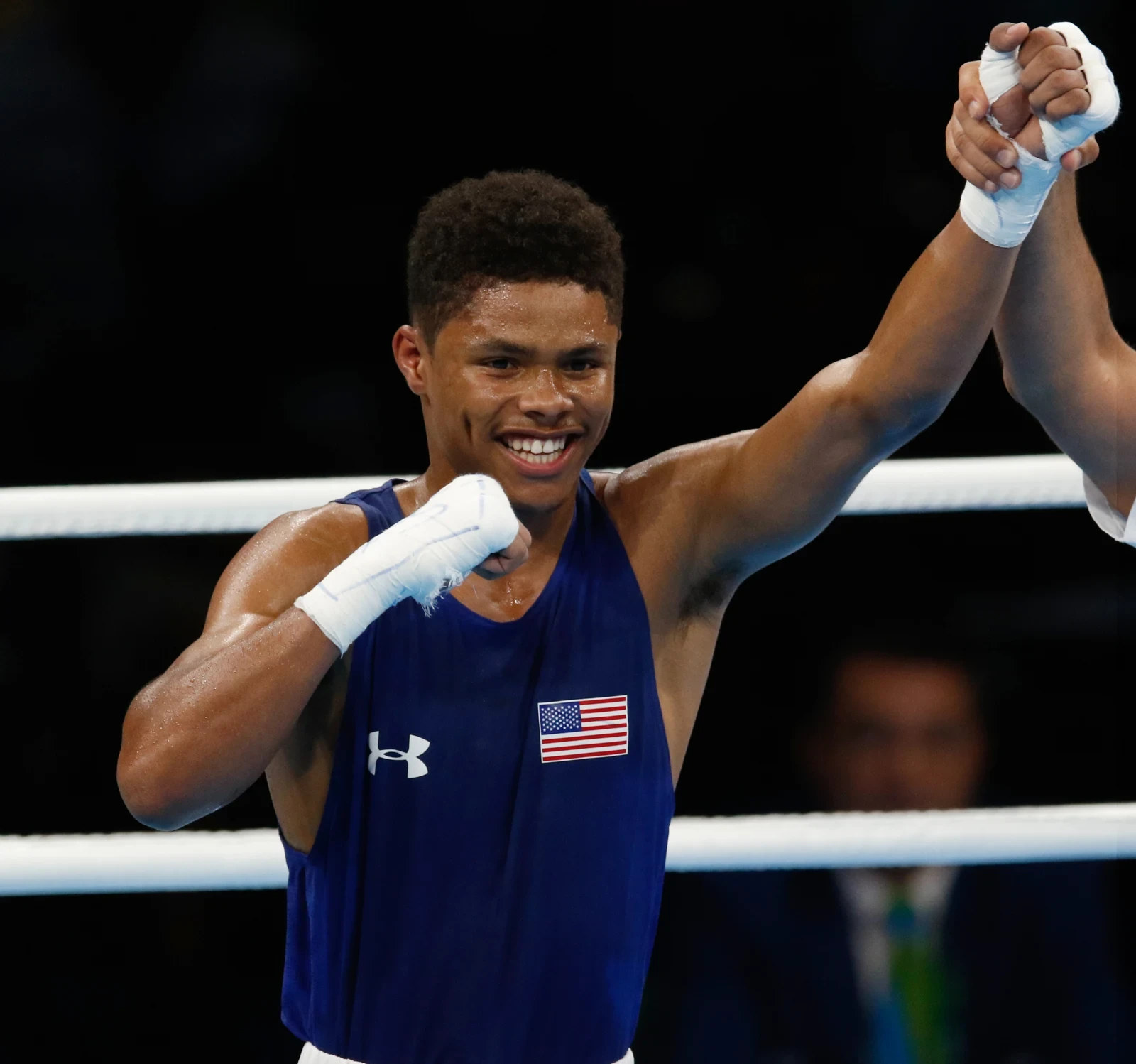
Shakur Stevenson, Jesse Rodriguez, Jaron Ennis, Vergil Ortiz Jr., David Benavidez, Devin Haney, Abdullah Mason and Bruce Carrington provide eight useful starting points for following American men's professional boxing in 2026. They represent different divisions and stages of championship development. This is an editorial shortlist checked on October 14, not an official national ranking or a claim that every important American fighter is included.
Here, American means identified with the United States in the sporting context. It does not mean every fighter from the Americas, every boxer training in a US gym or every athlete appearing on a US broadcast. Puerto Rico has distinct sporting representation; this guide does not merge that identity into a list merely because a boxer trains or competes on the mainland. Heritage and personal identity are broader questions than the scope of this selection.
The shortlist combines three kinds of evidence: performances against substantial opponents, championship achievements in a defined division and the questions raised by a newer campaign. Those criteria need not produce the same order as a magazine's pound-for-pound list. They help explain why a boxer is worth following without suggesting that popularity or one impressive finish resolves every comparison.
| Names | What this guide examines |
|---|---|
| Stevenson and Rodriguez | Translating skill into another division |
| Ennis and Ortiz | The opponent behind a championship claim |
| Benavidez | Testing success against bigger opponents |
| Haney, Mason and Carrington | Different routes through a championship career |
Women have their own championship scene and are covered separately. Historical American greats also answer a different question from the present watchlist. Keeping those scopes clear allows the article to concentrate on actual recent opponents, current division references and useful fights to study. For each name below, read the result before adopting the reputation.
Stevenson and Rodriguez Make Skill Translate Across Divisions
Stevenson and Rodriguez belong near the beginning of an American boxing watchlist because their 2026 results require you to update the weight-class reference. Neither should be permanently described through an earlier championship division. The new opponent supplies the evidence that matters when discussing the latest phase.
Shakur Stevenson: The Lopez Win Changes the Weight-Class Reference
Stevenson defeated Teofimo Lopez by unanimous decision over twelve rounds on January 31, 2026. The WBO's dated January report records the result at junior welterweight, the 140-pound division also called super lightweight. That is the appropriate reference for this championship chapter, rather than an unchanged label from his lightweight years.
The result carries more weight than an abstract description of defensive talent because Lopez was the opponent whose championship Stevenson took. A technical reputation still needs an actual performance against someone able to interrupt it. Naming that opponent and division gives the claim a clear sporting basis.
When watching, distinguish avoiding an attack from controlling the next exchange. Ask whether Stevenson leaves the opponent too far away to score, whether his reply arrives before the opponent can recover and where both men finish. These questions help explain effective distance without assuming that every quiet passage is successful defense or that every forward step is effective aggression.
A later opponent can alter those conditions. Treat the Lopez victory as strong completed evidence, then evaluate a new pairing on its own terms. The next step in a career is not automatically established by the most attractive name circulating in discussions.
Jesse Rodriguez: Follow the Move to Bantamweight
Rodriguez added the WBA bantamweight championship by stopping Antonio Vargas in the sixth round in June 2026. The WBA's June report identifies the championship and finish, while its September list places him in the bantamweight picture. Continuing to describe him only as a super-flyweight fighter would miss that transition.
The report emphasizes the angles and timing that made Vargas struggle to answer. Use that as a viewing question rather than a universal diagnosis: how does Rodriguez change the line of the exchange, and can the opponent still find a useful reply? A change of position is valuable when it creates an advantage, not merely because it looks busy.
Moving to 118 pounds also means meeting the division's particular opposition. Success at a lower weight establishes credentials, while a victory at the new weight supplies additional evidence. Keeping those layers separate is more useful than assuming either that all earlier achievements disappear or that a larger opponent can present no new problem.
Ennis and Ortiz Show Why the Opponent Matters
Ennis and Ortiz are useful names to follow together because a reputation for finishing fights still needs to be tested against specific opposition. Their championship references also require care: a full organizational championship and interim recognition are different statuses. Neither should be replaced with a vague description of collecting belts.
Jaron Ennis: A New Division Needs New Evidence
Ennis' June 2026 seventh-round stoppage of Xander Zayas supplied that evidence at 154 pounds. The WBA's result report identifies acquisition of its super-welterweight title alongside the WBO championship. Junior middleweight is the alternative name for the same division. An older welterweight description alone no longer captures that campaign.
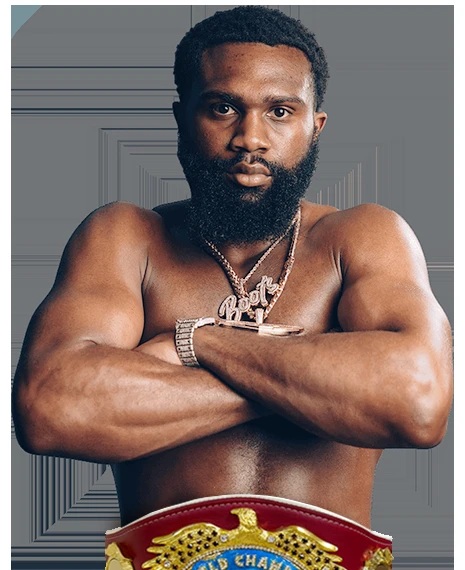
The opponent is the important part of the claim. An ability to overwhelm one fighter cannot automatically be projected onto everyone at the new weight. Watch how Ennis creates the first useful opening, how quickly the opponent can reply and whether his attack remains organized after the first combination.
Power and variety become more meaningful when the opponent attempts to disrupt them. Preserve those attempts when evaluating a performance. It is easier to understand a convincing victory when you can explain what the opponent tried and why it stopped working, rather than describing the winner as naturally gifted and ending the analysis there.
Vergil Ortiz Jr.: Interim Recognition Has a Specific Meaning
Ortiz won the WBC interim super-welterweight title through a majority decision over Serhii Bohachuk in August 2024. That wording should remain intact: interim is a championship designation with its own place in the organization, rather than a claim that no other WBC champion exists in the division.
His November 8, 2025 Lubin result supplies another concrete checkpoint. The Texas commission's official sheet records Ortiz winning by KO at 1:30 of round two. Keeping that recorded method and time is more precise than using a broad knockout reputation to describe every fight in the same terms.
Compare the Bohachuk and Lubin contests to see why one statistic cannot do all the work. The former required a twelve-round decision; the latter ended early. Those different outcomes invite different questions about opposition, exchanges and adjustments. They do not independently prove how a future matchup would unfold.
An Ennis–Ortiz pairing may interest fans, but their inclusion beside each other here is a comparison of completed evidence. Check a current event announcement before treating any proposed meeting as booked, sanctioned or ready for the calendar.
Benavidez Carries the Argument Into the Bigger Divisions
Benavidez's May 2, 2026 victory over Gilberto Ramirez changed the division at the center of his current championship story. He won the WBA and WBO cruiserweight titles by knockout at 2:59 of round six at T-Mobile Arena in Las Vegas. The PBC event report records the finish and the two knockdowns behind it.
That makes cruiserweight, at 200 pounds, an essential reference. An introduction describing only his earlier super-middleweight campaign would omit a substantial recent achievement. At the same time, two organizational championships make this a unification; they do not establish possession of all four major belts.
The move also creates a useful technical question: which strengths remain effective against a bigger opponent, and what needs to change? A pressure fighter cannot be evaluated only by the number of steps he takes forward. Watch how he reaches a usable distance, whether combinations land cleanly and what defensive options remain when the opponent pushes back.
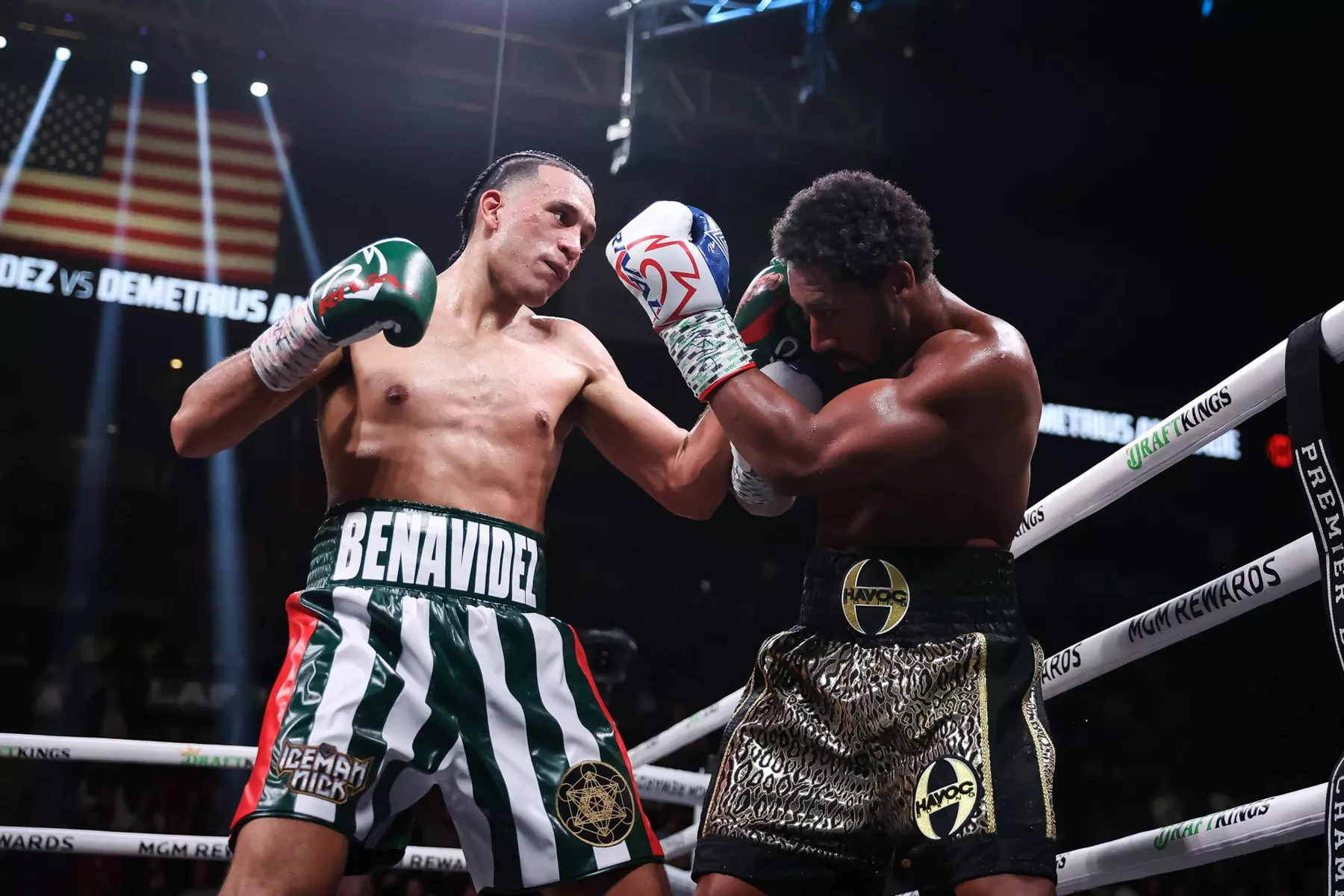
The Ramirez victory gives that discussion a completed result rather than an assumption. You can examine the performance and then compare it with an earlier Benavidez contest, preserving the difference in opponent and weight. The photograph above belongs to the earlier Andrade fight, not to the later cruiserweight title change.
A compelling next opponent is a separate matter. Championship obligations, negotiations and actual event announcements determine what can happen next. A strong win can make a proposed matchup attractive without proving it has been signed. Keep the achievement already earned beside the question still waiting to be answered.
For an American shortlist, Benavidez contributes a distinct test from the smaller fighters: translating a successful championship career into a substantially bigger division. The verified Ramirez result supports his inclusion without requiring an unsupported declaration that he is the sport's best fighter or that every earlier title remains his today.
Haney, Mason and Carrington Offer Three More Paths to Follow
These three names add different stages to the watchlist: an established fighter building another division's chapter, a young boxer already beyond the prospect-only description and a featherweight whose title breakthrough needs an accurate result. They do not need identical career totals to provide useful viewing.
Devin Haney: Read the Welterweight Chapter on Its Own Terms
Haney defeated Brian Norman Jr. by unanimous decision on November 22, 2025 to take the WBO welterweight championship. The WBO's dated event report establishes the acquisition at 147 pounds. September 2026 organizational references continue to identify him in that championship picture.
Older lightweight achievements remain relevant to his career, but they do not substitute for the particular questions at welterweight. Watch how he establishes the distance for his first useful attack, how the opponent tries to cross it and whether he can maintain control when that first plan is disrupted.
A patient performance can be technically effective without every stretch being equally persuasive. Preserve the opponent's clean work and examine what Haney does afterward. That produces a more informative assessment than deciding in advance that every exchange must confirm either a perfect defensive reputation or a permanent weakness.
Abdullah Mason: A Young Champion Is More Than a Prospect Label
Mason won the vacant WBO lightweight title by outpointing Sam Noakes over twelve rounds on the same November 2025 card. That completed acquisition changes the description. A young world champion may still have substantial development ahead, but calling him only a prospect leaves out an achievement already earned.
Vacant-title success also needs to be described precisely. It is a legitimate championship acquisition; it is not a victory over the reigning holder of that particular belt. Keep both facts together when comparing his career with boxers who won titles through different routes. The actual opponent remains the best starting point for evaluating the win.
For a viewing exercise, ask what survives when an opponent answers the first attack. Speed and sharp combinations are easier to appreciate when you also watch the recovery position, the reply and the next attempt. A newer champion's strongest evidence comes from handling progressively different demands, not from assuming his future ceiling has already been reached.
Bruce Carrington: Test the Featherweight Claim Against the Result
Carrington won the WBC featherweight title by knocking out Carlos Castro in round nine on January 31, 2026. Brian Mahoney's Associated Press event report records that acquisition. The WBA's September cross-reference still names him as the WBC holder at 126 pounds; that is a dated reference, rather than independent verification of a complete October WBC list.
A ninth-round finish leaves earlier rounds to examine; the final sequence does not explain them automatically. Compare the opening exchanges with the later rounds to see how the contest developed before the decisive attack.
Watch how the route to the finish develops. Does an opening recur, does the opponent change his response or does the successful attack arrive through a new adjustment? Carrington's breakthrough is worth following because it offers completed championship evidence and further questions, rather than merely another promotional promise.
Build Your Own American Boxing Watchlist
Build a watchlist around questions that the next opponent can answer. Stevenson and Rodriguez make you examine a new division; Ennis and Ortiz make you examine the evidence behind a finishing reputation; Benavidez makes you consider bigger opposition; Haney, Mason and Carrington offer different routes through a championship campaign. You can value all of those stories without forcing them into an apparently official numerical order.
Keep three short notes for each boxer: the most relevant completed result, the division and title actually established, and the next sporting question. For example, a vacant-title victory belongs in the achievement column while defending successfully against another kind of opponent belongs in the question column until it happens. That distinction prevents a prediction from becoming part of the record.
Use dated organizational references for championship status. A September report checked in October does not automatically certify every development after publication. A newer specific result or ruling can matter more than a familiar name in an older overview. When sources disagree, retain the date and qualification rather than choosing whichever claim makes your preferred boxer look strongest.
For actual upcoming cards, start with the weekend boxing schedule. Follow the event details before treating an appealing rivalry as confirmed. A place on a watchlist is a reason to pay attention, not a guarantee that two listed fighters will meet.
After the bout, check the boxing results and then compare the performance with your original question. Did the boxer solve the problem you expected, or did the opponent create a different one? Preserve that difference. An unexpected challenge can be informative even when the official winner is the fighter you favored.
The strongest American boxing discussion begins with specific opponents and performances. Popularity can help you discover a name, and a championship can identify an achievement, but neither removes the need to watch what happened. Follow these eight careers with that standard and the next result becomes evidence you can evaluate, rather than another slogan to repeat.
Keep reading
Related boxing articles
Fight Guides
Why UNLV Moved a Football Game for Canelo–Crawford at Allegiant Stadium
By Boxing Schedule Editorial TeamFight Guides
Boxing Ringwalks and NFL Kickoffs: A Sports Viewing Guide
By Boxing Schedule Editorial TeamFight Guides
Join the conversation
Comments
Comments are reviewed before publication. Keep the discussion useful and focused on boxing.
Sign in with Google to comment
Your public comment shows your account name. Your email address is not displayed.
Commenting as
Loading comments…