One-Sided Boxing Match: What Dominance Really Means
Understand one-sided boxing through verified Calzaghe, Bivol, Crawford, Marquez and Mayweather bouts, with clear distinctions between decisions, knockouts and stoppages.
A One-Sided Match Describes the Action, Not an Official Result
A one-sided boxing match is a bout in which one boxer repeatedly controls the useful action while the opponent struggles to produce an effective answer. It is a description of the fight's pattern, rather than an official result category. A boxer can dominate a long decision, build toward a stoppage or lose a competitive fight to one decisive punch. The finishing method alone cannot tell you which of those things happened.
The useful viewing question is whether the losing boxer can change the terms of the exchanges. Can that boxer enter punching range without being caught, force the opponent to reset, interrupt a combination or create an opening after defending? A bout becomes distinctly lopsided when the same problem keeps returning and the attempted solutions offer little improvement. Watching those attempts explains more than labeling the winner superior and stopping there.
Separate the Outcome From the Pattern
Official results preserve a different kind of information: who won and whether the bout ended through a decision, knockout or another recorded method. A unanimous decision does not automatically mean a shutout. It means the judges agreed on the winner; the margins and round-by-round allocations still matter. Likewise, a dramatic knockout can end a fight that was competitive immediately beforehand.
The Association of Boxing Commissions' guidelines organize judging by rounds and include clean punching, effective aggression, ring generalship and defense. That is a useful reminder that a fight is not scored simply by the audience's impression of who looked busier. The applicable commission and bout rules still govern the actual event.
For this guide, the historical dates, results and cards are recorded evidence; the discussion of how pressure, distance and timing can limit an opponent is technical analysis. It is not a new official scorecard or a diagnosis of what happened physically to a boxer. Nor is it a ranking of the worst mismatch in history, which would require a definition and comparisons far beyond a few famous clips.
The examples below show several routes to a lopsided performance and one important counterexample. They also separate a pre-fight expectation from the fight itself. Two highly accomplished boxers can produce a wide result, while a feared puncher can remain dangerous without winning many rounds. A precise description should preserve those distinctions and give the losing boxer the credit due for the actual opportunities created.
Wide Decisions Can Reveal Different Kinds of Control
A long fight gives you repeated evidence to examine. If the opponent tries to press, retreat, counter and exchange at close range, yet the same boxer keeps finding the effective punches, the description of dominance becomes more persuasive. Still, the scorecards should remain part of the explanation. They prevent a vivid overall impression from erasing rounds in which the eventual loser had some success.
Calzaghe–Lacy: Volume That Kept the Opponent Behind
Joe Calzaghe defeated Jeff Lacy by unanimous decision in Manchester on March 4, 2006. BoxRec's bout record lists 119–107, 119–107 and 119–105, with Lacy knocked down in the twelfth round. It also preserves the context of Calzaghe's eleventh-round point deduction. Those details matter when comparing the final totals with an ordinary twelve-round score.
The instructive contrast is between building an attack and repeatedly having to answer one. Calzaghe's combinations kept Lacy occupied; Lacy's wider single punches gave the faster exchanges less interruption. For a viewer, the question is what happened between Lacy's attempts. Did he obtain a stable position from which to punch again, or was he immediately asked to defend another sequence? That distinction explains why courage and continued participation do not necessarily make a fight competitive.
Calling this a display of volume should not mean counting every movement as a scoring punch. Look for the clean connections inside a sequence, the opponent's response and whether the attacker remains available for a counter. The useful lesson is the recurring lack of a sustainable answer, rather than an assumption that a busy boxer automatically wins.

Bivol–Ramirez: Control Without a Shutout
Dmitry Bivol's November 5, 2022 victory over Gilberto Ramirez in Abu Dhabi offers another model. The WBA's report records a unanimous decision, 118–110, 117–111 and 117–111, and emphasizes Bivol's jab and hand speed. Control here need not look like an uninterrupted storm of punches. A boxer can make the opponent's approach difficult, choose when to combine and then restore distance.
The WBA's judging breakdown is particularly helpful: all three judges gave seven rounds to Bivol and the tenth to Ramirez, while their choices differed in four other rounds. The overall winner was clear, but describing twelve identical rounds would distort the record.
When watching a performance like this, distinguish possession of space from merely standing far away. Does the retreating boxer reestablish a useful jab, make the pursuer hesitate or create another favorable exchange? Does the pursuer get close enough to work effectively? These questions help explain measured control while leaving room to acknowledge the losing boxer's better passages.

Crawford–Spence Shows How a Competitive Matchup Becomes Lopsided
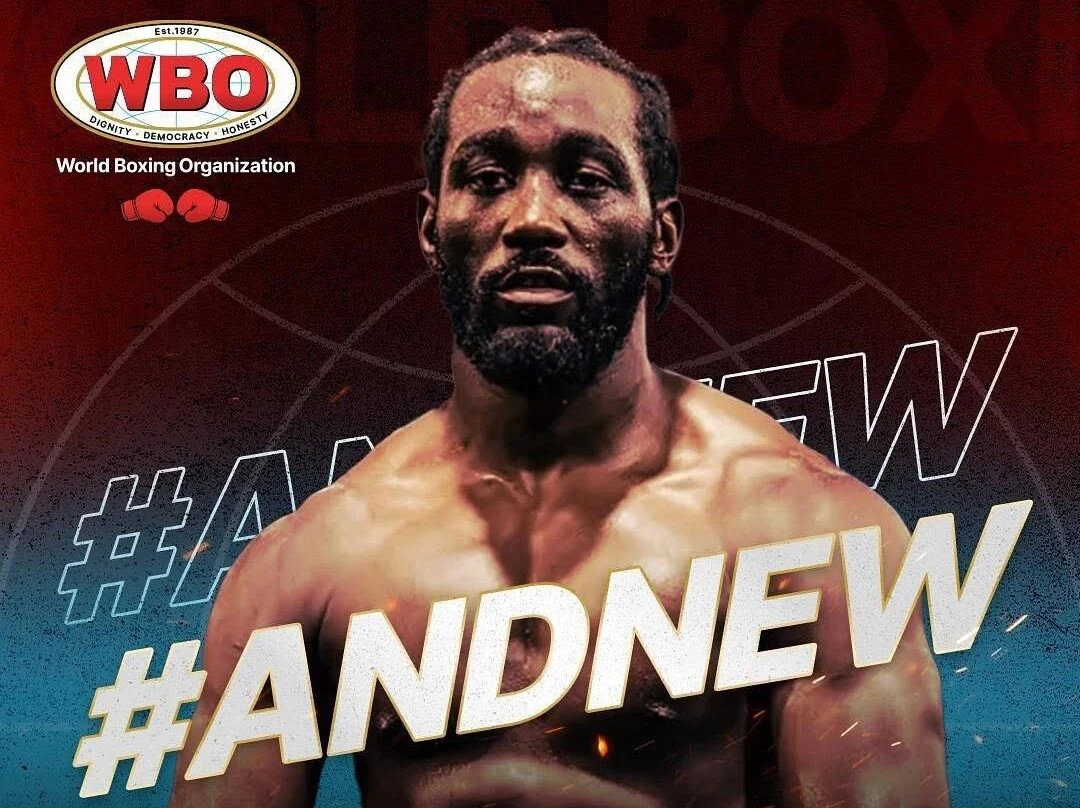
Terence Crawford and Errol Spence Jr. brought different portions of the welterweight championship to their July 29, 2023 meeting at T-Mobile Arena in Las Vegas. Crawford held the WBO title; Spence held the WBC, WBA and IBF belts. This was a unification between established champions, rather than a prospect being matched with an unknown opponent. The outcome illustrates why a wide defeat and an obviously unsuitable pre-fight pairing are different claims.
The PBC event report records Crawford's ninth-round technical knockout, with referee Harvey Dock intervening at 2:32. Spence went down in the second round and twice in the seventh. Crawford led 79–70 on all three cards after eight completed rounds. Those were the cards at the stoppage, not the final totals of a nine-round decision.
The opening also matters. PBC describes Spence beginning aggressively with his jab and body attack, then trying to reverse the second-round setback with another attack in the third. Crawford worked primarily from southpaw and used a firm jab and accurate counters. Keeping those early attempts in the account makes the later separation more meaningful: Spence sought to impose his usual work, but Crawford increasingly interrupted its development.
One helpful way to watch the fight is to follow the first meaningful punch of an exchange. Does it let the attacker build a combination, or does the reply make that boxer reorganize before the next punch? A jab can function as an entry, an interruption or a way to make an opponent plant the feet before a counter arrives. Identifying its job explains the sequence better than assuming that all jabs are interchangeable.
Then follow what happens after an attempted adjustment. A boxer who raises the pace might create more scoring chances, but might also supply more predictable entries. A boxer who pauses could recover a useful position or allow the opponent to dictate the next exchange. In analysis, the answer comes from the specific sequence, rather than an automatic rule that pressure beats movement or that a counterpuncher always defeats an aggressive fighter.
Crawford's win also cautions against turning one night's superiority into a complete explanation of Spence's career or physical condition. The verified result shows a decisive performance in this particular bout. It does not establish a medical cause for the losing performance, prove every hypothetical rematch would be identical or erase the achievement represented by the titles Spence brought into the ring.
For the spectator, the distinction changes the vocabulary. “Crawford won a lopsided fight” describes the observed result and action. “The fight should never have been made” requires separate evidence about the decision to arrange it. Keeping those judgments separate lets you appreciate an exceptional performance without pretending it was inevitable before the first bell.
A Sudden Knockout Is Different From Sustained Dominance
A short highlight can collapse several different stories into the same image: one boxer standing and the other on the canvas. To decide whether a fight was one-sided, rewind beyond the finishing exchange. The earlier rounds may show an opponent repeatedly unable to compete, or they may show both boxers finding meaningful success before one extraordinary punch settles the result.
Marquez–Pacquiao IV: The Finish Changes Everything
Juan Manuel Marquez knocked out Manny Pacquiao at 2:59 of the sixth round at the MGM Grand in Las Vegas on December 8, 2012. Yet the bout record has Pacquiao leading 47–46 on all three cards after five rounds. Marquez had knocked Pacquiao down in the third; Pacquiao had scored a knockdown in the fifth. The eventual winner was not simply cruising through an uncompetitive contest.
This is a useful counterexample because the finish is so decisive. Its force can dominate memory, but the result does not reverse the earlier round-by-round scoring. Pacquiao's opportunities were real, and Marquez's ability to produce the deciding punch was real. An accurate account can hold both facts at once instead of treating the ending as proof that only one boxer had been effective.
On a replay, compare the final entry with earlier entries that worked. Consider the distance, the timing of the lead punch and what was available as a reply. The purpose is to identify how a particular exchange changed the outcome, without pretending that every previous exchange had already demonstrated the same superiority. A competitive fight can produce an emphatic ending.
Mayweather–Gatti: A Corner Ends a Repeated Pattern
Floyd Mayweather's June 25, 2005 victory over Arturo Gatti at Boardwalk Hall in Atlantic City shows a different pattern. BoxRec records a retirement at the end of the sixth round, with Mayweather ahead 60–52, 60–53 and 60–52. Trainer Buddy McGirt ended Gatti's participation between rounds.
The contemporary Saddo Boxing report describes Mayweather repeatedly succeeding with left hooks, straight rights and combinations. It calls the outcome a technical knockout, while the bout record uses RTD. When looking up old fights, preserve the label used by the record you cite and explain the actual ending: Gatti did not return for another round.
Here the ending confirmed an established pattern rather than overturning the position on the cards. That is the important comparison with Marquez–Pacquiao IV. One ending resolved a fight with substantial two-way success; the other followed repeated superiority and a corner's decision to withdraw its boxer.
Neither example asks you to equate willingness to continue with competitiveness. A boxer may keep trying without producing enough effective answers. Conversely, a boxer who is ahead may still be exposed to a decisive counter. Describing the process carefully gives both the winner's work and the opponent's actual contributions their proper place.
The Stoppage Question Belongs to the Actual Bout and Rules
A wide lead answers who has been winning the scored rounds. It does not, by itself, answer whether the next exchange should be allowed to happen. These questions involve different evidence and responsibilities. A spectator might reasonably describe the action as lopsided while still needing the actual officials' account to explain why the contest continued or ended at a particular moment.
Referee Decisions, Corner Signals and Commission Procedures
In its regulatory guidelines, marked as modified in July 2005, the ABC identifies the referee as the sole arbiter authorized to stop the contest. It also provides for consultation with the ringside physician and a corner signaling the referee. The supervising commission resolves disputes under those guidelines. That describes a defined framework; it should not be presented as a guarantee that every jurisdiction uses identical procedures.
A current commission-specific example makes the distinction clearer. Washington's WAC 36-12-130, checked October 1, 2026, provides for a technical knockout when the referee judges a boxer outclassed or unable to continue because of punishment. It also separately includes a corner signaling termination and a boxer signaling a wish to stop after making a good effort. The rule locates these outcomes in an officiating process rather than a fan's preferred point margin.
For a historical fight, therefore, look for the documented sequence. Did the referee intervene during an exchange? Was the boxer examined between rounds? Did the corner communicate that its boxer would not continue? Recording those events is more informative than asserting that a towel, a swollen face or a large unofficial lead always produces the same official ending.
The cards and the video can help describe what had happened. They cannot give a remote viewer every observation available to the referee, physician or corner. A technical critique can discuss whether attacks were being answered, whether an adjustment worked and how the dominant boxer created openings. It should not quietly turn those observations into a diagnosis or claim access to conversations that were not reported.
That boundary also improves the debate about a late or early stoppage. Start with the relevant rule, the visible sequence and the stated reason, then explain the disputed judgment. Simply saying that a fighter was losing every round skips the decision that actually needed to be made. The size of the sporting gap and the official reason for ending the bout belong in the same account, with each supported by its own evidence.
Watch for the Losing Boxer's Available Answers
To assess another fight, begin with a small record of what you actually know: the date, scheduled distance, winner, ending method and any available cards. Our boxing results page provides a starting point for recent completed cards. Follow the event and its supporting result source when you need more detail; a result line alone cannot recreate every round.
Then choose full rounds rather than only the finishing highlights, wherever an authorized replay is available. Watch an early round, a round in which the apparent loser did something better and a later round. That sequence helps separate a pattern present from the opening from a gap that developed as the fight progressed. If all you have is a short clip, limit the claim to the action shown in that clip.
- Identify the problem before praising the solution. Is the losing boxer struggling to reach range, get the first useful punch away or exit after attacking? A specific problem gives the next exchange something to confirm or challenge.
- Look for an attempted answer. A change in pace, position or punch selection may matter even when it fails. Ask whether it produced a better exchange and whether that improvement lasted, rather than treating any forward movement as a successful adjustment.
- Check the strongest counterevidence. Preserve the losing boxer's clean work and better rounds. Bivol–Ramirez demonstrates how a clear overall result can coexist with disagreement about individual rounds.
- Separate the finish from the buildup. Pacquiao's lead before Marquez's knockout shows why the decisive punch should not rewrite everything that came before it.
A short note after each sampled round can be more useful than a stream of adjectives. Write what initiated the exchange, what reply was available and where both boxers ended up. If the same unsuccessful entry recurs, you have a concrete explanation of control. If the responses improve, your description should reflect that change, even when the official winner is already known.
For a new event, use the weekend boxing schedule to select a bout and check the listed viewing information. Consider the pairing before it starts, then keep that expectation separate from your notes on the action. This avoids using the final score to pretend that the pre-fight question never existed.
The strongest description is usually specific: one boxer repeatedly interrupted the opponent's entries, controlled the useful exchanges or turned a previously competitive fight toward a stoppage. “One-sided” becomes useful when it introduces that explanation. Without the recorded result, the opponent's attempts and the sequence that established the gap, it remains only an impression.
Keep reading
Related boxing articles
Fight Guides
Why UNLV Moved a Football Game for Canelo–Crawford at Allegiant Stadium
By Boxing Schedule Editorial TeamFight Guides
Boxing Ringwalks and NFL Kickoffs: A Sports Viewing Guide
By Boxing Schedule Editorial TeamFight Guides
Join the conversation
Comments
Comments are reviewed before publication. Keep the discussion useful and focused on boxing.
Sign in with Google to comment
Your public comment shows your account name. Your email address is not displayed.
Commenting as
Loading comments…