History of Boxing: Origins, Rules and the Modern Sport
Trace boxing from ancient contests and the English prize ring to Queensberry rules, global champions and the modern sport.
Ancient Boxing Was a Different Contest
Boxing has no single documented inventor. People organized fist contests long before the modern professional sport developed in Britain, and the ancient Olympic tournament represents one important stage in that longer story. The clearest useful starting date is 688 BC, when men's boxing entered the ancient Olympic program. That date describes inclusion in a particular festival; it does not mean nobody had boxed before it.
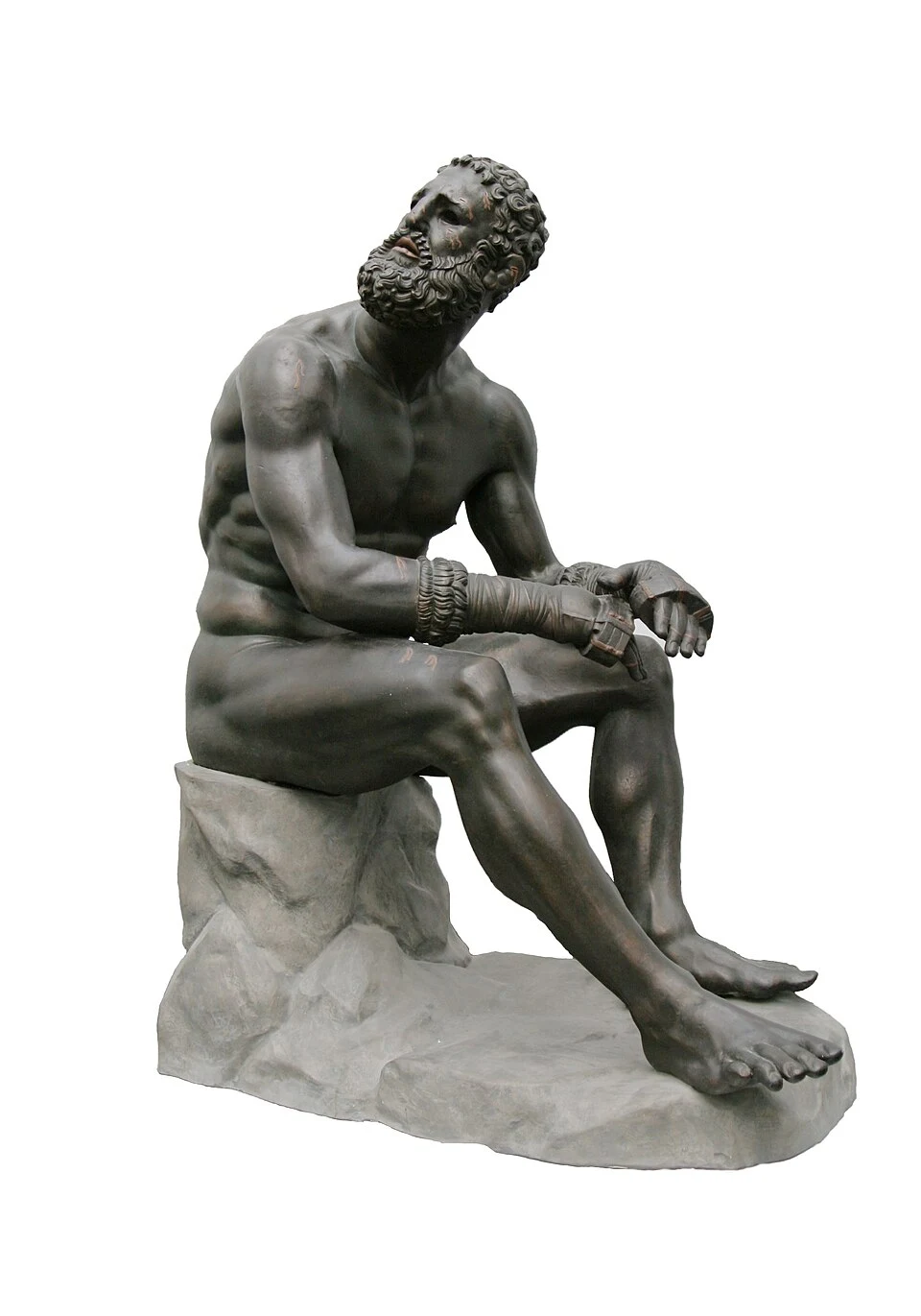
The Acropolis Museum's account identifies leather straps around the hands and wrists. These were different equipment from today's padded competition gloves. Ancient boxing also lacked the modern package of timed rounds and weight divisions. A fighter could concede or become unable to continue. Comparing such a contest with a twelve-round title fight without explaining those conditions gives a distorted picture of both.
Earlier evidence comes from images and objects associated with the ancient Near East and Mediterranean. Their existence is meaningful, but an image of two people punching does not supply a complete rulebook. It cannot tell us every legal target, the method of matchmaking, or how consistently a prohibition was enforced. A careful history therefore separates evidence that fist contests existed from evidence for the precise system used to organize them.
The surviving Boxer at Rest sculpture makes that distinction tangible. Its wrapped hands and damaged face record how an ancient artist represented a seasoned fighter. The figure offers visual evidence of equipment and bodily wear, rather than a medical chart or a list of results. Calling it a modern heavyweight, assigning it a stance from a single pose, or identifying a named opponent would add information the sculpture does not provide.
For a present-day fan, the interesting comparison concerns the problems each sporting system had to solve. Organizers needed a way to recognize a winner, limit interference and distinguish an accepted contest from an uncontrolled fight. Fighters needed distance, timing and endurance. Those broad problems are familiar, even though the solutions and physical risks varied. Similar questions do not establish that an ancient boxer could step directly into a modern ring and understand all its procedures.
This is also why mythological inventors should remain in the category of mythology. Stories about heroic fighters show the cultural importance of strength, courage and technique, but they cannot serve as verified professional records. The sport's history is more convincing when it admits what remains uncertain. Ancient boxing supplies a deep past; the institutions, gloves, championship structure and commercial arrangements familiar today require a separate explanation.
The English Prize Ring Turned Fighting into a Business
The foundations of modern professional boxing took shape in the English prize ring. Competitors fought for money, backers supplied support, and spectators wagered on results. James Figg's recognition as an English champion in 1719 belongs to that story. It should not be confused with a declaration that he invented punching or created all the rules used afterward. A champion was a public claim to superiority, supported by performances and recognition, before there was a worldwide sanctioning system.
The commercial setting helps explain why written rules mattered. A contested finish could determine who received the stake as well as who earned sporting prestige. Organizers needed shared expectations for seconds, boundaries and a fighter's ability to continue. Standardization was a practical response to those disputes. The evolution of boxing was therefore shaped by promoters and money alongside the skills developed by the boxers themselves.
Broughton and the First Written Framework
Jack Broughton's 1743 rules supplied an influential framework. They prohibited hitting an opponent who was down and described how seconds brought their fighters back to a marked central area. The British Boxing Board of Control's historical account places this development before the London Prize Ring Rules of 1838 and their revision in 1853. Those dates show a succession of changes rather than one founding moment.
The important connection with modern boxing is the attempt to define when a fighter is vulnerable and when a contest may legitimately resume. A prohibition on attacking a downed opponent requires somebody to recognize the condition and enforce the boundary. That principle makes the referee's authority meaningful. It does not make eighteenth-century contests identical to today's regulated bouts, whose medical oversight and technical provisions belong to a later institutional history.
Why a Bare-Knuckle Round Was Different
Under the London Prize Ring framework, a round ended when a fighter went down. The subsequent recovery and return to scratch followed their own procedure. A modern professional round, by contrast, ordinarily runs to a scheduled bell. An old report of dozens of rounds can therefore contain many short intervals of fighting, while a twelve-round modern contest can demand a long sustained effort within each timed period.
That difference changes how we read historical feats. A very high round total is evidence that a contest repeatedly resumed; it is not a stopwatch. To evaluate endurance, ask about elapsed time, conditions, falls and the reason the contest ended. To evaluate tactics, ask what the rules rewarded. When going down ends a round, the timing of a fall has a different meaning from receiving a modern knockdown count.
None of this diminishes the difficulty of prizefighting. It makes the comparison fairer. The skill of managing distance, protecting injured hands and adapting to an opponent operated inside a different system. Understanding that system lets a fan appreciate the earlier sport without turning an impressive number into an unsupported claim about superiority over every later generation.
Queensberry Rules Changed the Shape of a Fight
The Marquess of Queensberry Rules supplied the recognizable framework of modern gloved boxing. John Graham Chambers wrote the code, which received the backing of John Sholto Douglas, the ninth Marquess of Queensberry. Histories distinguish earlier development during the 1860s from the conventional publication date of 1867. The patron's name became famous; the authorship belongs to Chambers. Neither man invented fist fighting.
The historical rule text specified three-minute rounds, one-minute intervals and fair-sized gloves. It prohibited wrestling or hugging and allowed ten seconds for a fallen fighter to rise unaided. These provisions changed what happened between the ropes. A fighter could no longer treat every fall as the end of a round, and a corner received a regular interval in which to speak to its boxer.
Consider the tactical effect of a timed round. A boxer can establish a jab, test an opponent's reactions, accelerate late and then receive instructions at the bell. That rhythm creates a recognizable relationship between preparation, action and adjustment. The old prize ring offered other rhythms. The new rules did not suddenly invent intelligence in fighting; they changed the situations in which intelligence had to operate.
Gloves also changed the physical interface of punching and defending. They cover and cushion the fist, but they do not make blows to the head harmless. A history that treats gloves as proof that boxing became safe confuses a change in equipment with the elimination of risk. Their introduction belongs alongside later developments in medical oversight, matchmaking and stoppage procedures, whose effectiveness must be considered separately.
Sullivan and Corbett Made the Transition Visible
On September 7, 1892, James J. Corbett defeated John L. Sullivan in New Orleans, stopping him in the twenty-first round. The heavyweight championship moved from a fighter strongly associated with the bare-knuckle prize ring to a champion identified with the gloved era. It is a convenient historical dividing line because the transition had a famous face, an established championship and an unmistakable result.
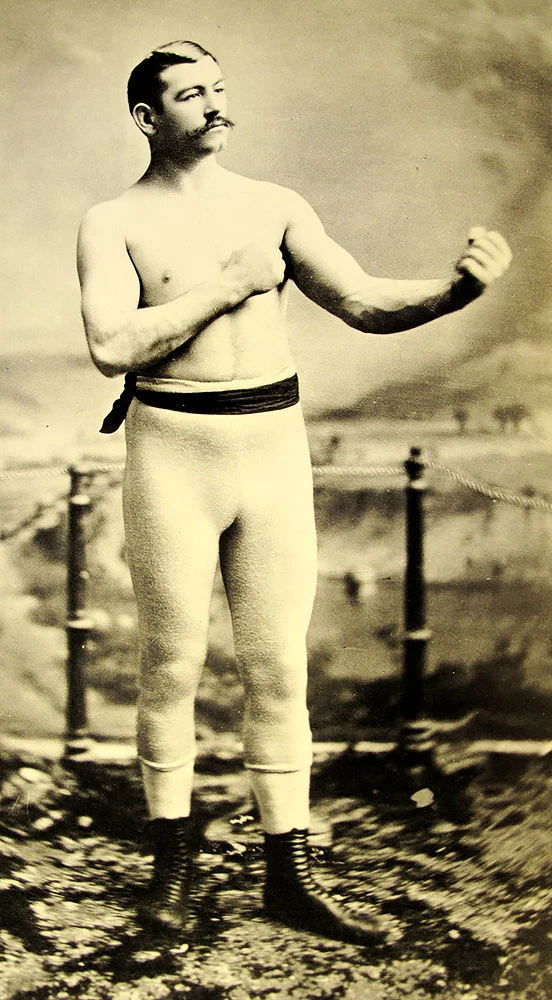
Sullivan himself had already boxed in gloves. The 1892 bout therefore should not be described as the first gloved boxing match. Sporting transitions rarely happen when one rulebook appears or one celebrity loses. Different contests and jurisdictions adopt practices at different times, and an old champion can participate in the new system before losing his place within it.
For fans watching surviving material or reading accounts of Corbett, the useful question is how movement and distance fitted the rules of that particular contest. A championship result can symbolize a transition without proving that one era was entirely crude and the next entirely scientific. Boxing's tactical history becomes richer when the fighters receive credit for responding to their actual conditions rather than serving as caricatures of progress.
Champions, Race and Broadcasting Made Boxing Global
The heavyweight championship gave boxing a powerful public symbol, but the sport's global growth cannot be explained by heavyweights alone. Fighters in lighter divisions developed national followings, rivalries crossed borders, and broadcasters carried contests beyond their venues. Newspapers, radio and television each changed how an audience could follow a champion. The significance of those changes is access: a fan could participate in a shared sporting moment without being close enough to buy a ringside ticket.
That larger audience also changed the meaning of a fight. A sporting contest could become a vehicle for national identity, racial expectations or political arguments. Those meanings were attached by participants, promoters and spectators; they were not all contained in the mechanics of a jab. Historical analysis works best when it recognizes the relationship without reducing either boxer to a symbol.
Joe Louis and Muhammad Ali Beyond the Ring
Joe Louis won the heavyweight championship in 1937 and made twenty-five successful defenses. The Hall of Fame account of Louis identifies his sustained championship success and his popularity across racial lines. The sporting foundation mattered: he could set up a powerful combination, finish precisely and remain the reference point of a division over repeated challenges.
Muhammad Ali's historical importance combines exceptional championship performances with a public life that reached far outside boxing. His refusal of military induction in 1967 interrupted his career. The Supreme Court reversed his conviction in 1971. Those events should be distinguished from his ring results. A legal judgment does not award a championship, just as a sporting defeat does not settle a political argument.
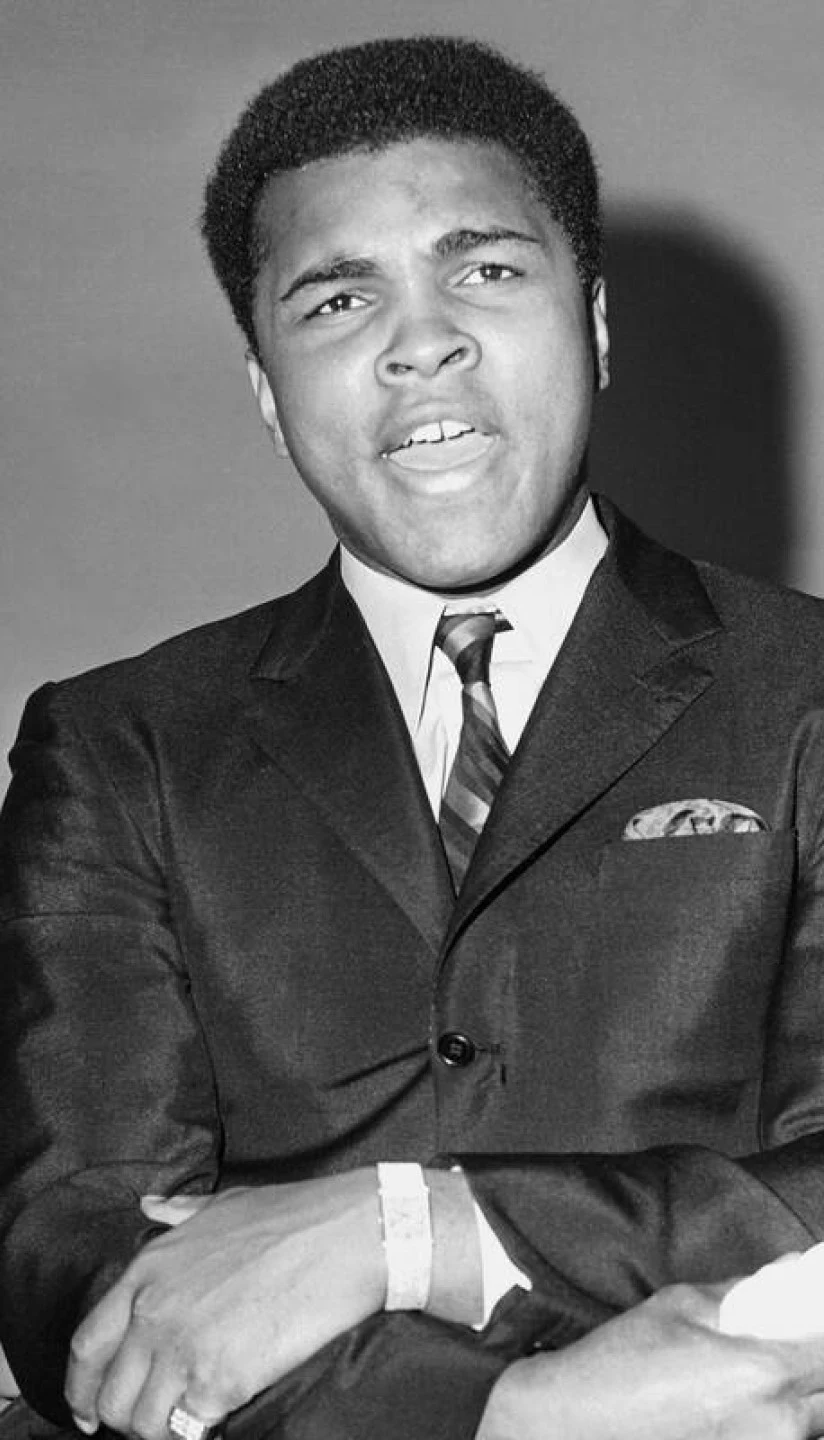
When revisiting either career, watch the actual opposition and the tactical solutions. Louis's balance and finishing sequences and Ali's management of space offer more insight than treating fame as a substitute for technique. Their cultural stature explains why the public cared so intensely; their boxing explains why the events were worth caring about as sport.
The Olympic Path and Women's Boxing
Boxing joined the modern Olympic program in St. Louis in 1904 and was absent at Stockholm in 1912. Women's medal boxing entered at London 2012. The Australian Olympic Committee's history records those milestones. The 2012 date is an expansion of Olympic opportunity, not the beginning of women training or competing in boxing.
Olympic success and professional championship success answer different questions. A tournament rewards progressing through its draw under its competition rules. A professional career develops through negotiated matches, rankings and championship opportunities. Some fighters flourish in both settings, but a medal is not a professional world belt. Keeping the distinction clear also leaves room for great athletes whose careers did not follow the commercial professional route.
A fuller history thus includes who gained access to competition, who could attract backing and who was permitted to challenge established champions. The people excluded from a system are part of its story. Remembering that makes boxing history more useful than a parade of famous names alone.
What Boxing History Explains About Today's Sport
Professional boxing's history helps explain why the championship picture can be confusing. The World Boxing Association traces its roots to the National Boxing Association established in 1921. Other organizations developed their own rankings and championship recognition. Commissions regulate contests within their jurisdictions, while promoters organize cards and broadcasters distribute them. Those roles overlap in the fan's experience, but they are not interchangeable.
A modern belt therefore needs context. Which organization recognizes it? In which weight division? Is the boxer also holding another organization's championship? The terms unified and undisputed describe relationships between recognized titles, rather than how frightening a fighter looks in a promotional video. History shows why the sport did not emerge as a single league with one championship table covering every professional contest.
The same caution applies to records. A career total is a starting point, not the finished argument. Ask which opponents were beaten, when they were faced, how the result was decided and what level of championship was at stake. Older fighters often competed under different schedules and record-keeping conventions. Exhibitions require separate treatment. Combining every appearance into one apparently precise statistic can make a comparison less accurate rather than more complete.
When you watch an archival bout, try an evidence-first approach. Start with a full round rather than a knockout compilation. Observe where the lead hand is placed, how the boxer exits an exchange and whether the opponent can reset safely. Then read the result and the conditions. A spectacular punch may be the conclusion of a long tactical process, and a grainy recording may hide defensive work that a modern camera would reveal clearly.
A useful viewing notebook has three columns: what happened, what it might mean and what you still need to verify. A fighter repeatedly stepping outside the opponent's lead foot belongs in the first column. The idea that this opened a route for the rear hand belongs in the second. The official score, an injury explanation or a claim about the corner's instructions belongs in the third until a reliable record supports it. That separation keeps enthusiasm from becoming invented evidence.
Use the boxing results page to practice connecting methods of victory with the actual story of a contest. A unanimous decision means all the judges selected the same winner; it does not tell you every round was easy. A stoppage records a finish, but the rounds before it explain how the opportunity appeared. The habits that clarify modern results also help when reading older reports.
For the next generation of the sport, the boxing calendar gives a practical route from historical interest to watching current contests. Look beyond the main event and follow how contenders develop. Boxing history is a study of changing rules, opportunities and audiences. Its most valuable lesson for a fan is to ask sharper questions about the fight in front of you: what is being contested, what evidence supports the claim and how the boxers solve the problems their particular era presents.
Keep reading
Related boxing articles
Fight Guides
Why UNLV Moved a Football Game for Canelo–Crawford at Allegiant Stadium
By Boxing Schedule Editorial TeamFight Guides
Boxing Ringwalks and NFL Kickoffs: A Sports Viewing Guide
By Boxing Schedule Editorial TeamFight Guides
Join the conversation
Comments
Comments are reviewed before publication. Keep the discussion useful and focused on boxing.
Sign in with Google to comment
Your public comment shows your account name. Your email address is not displayed.
Commenting as
Loading comments…