Greatest Boxers of All Time: A Top 10 with Clear Criteria
A transparent top ten of men's professional boxing greats, comparing opposition, championship achievement, technical range and longevity.
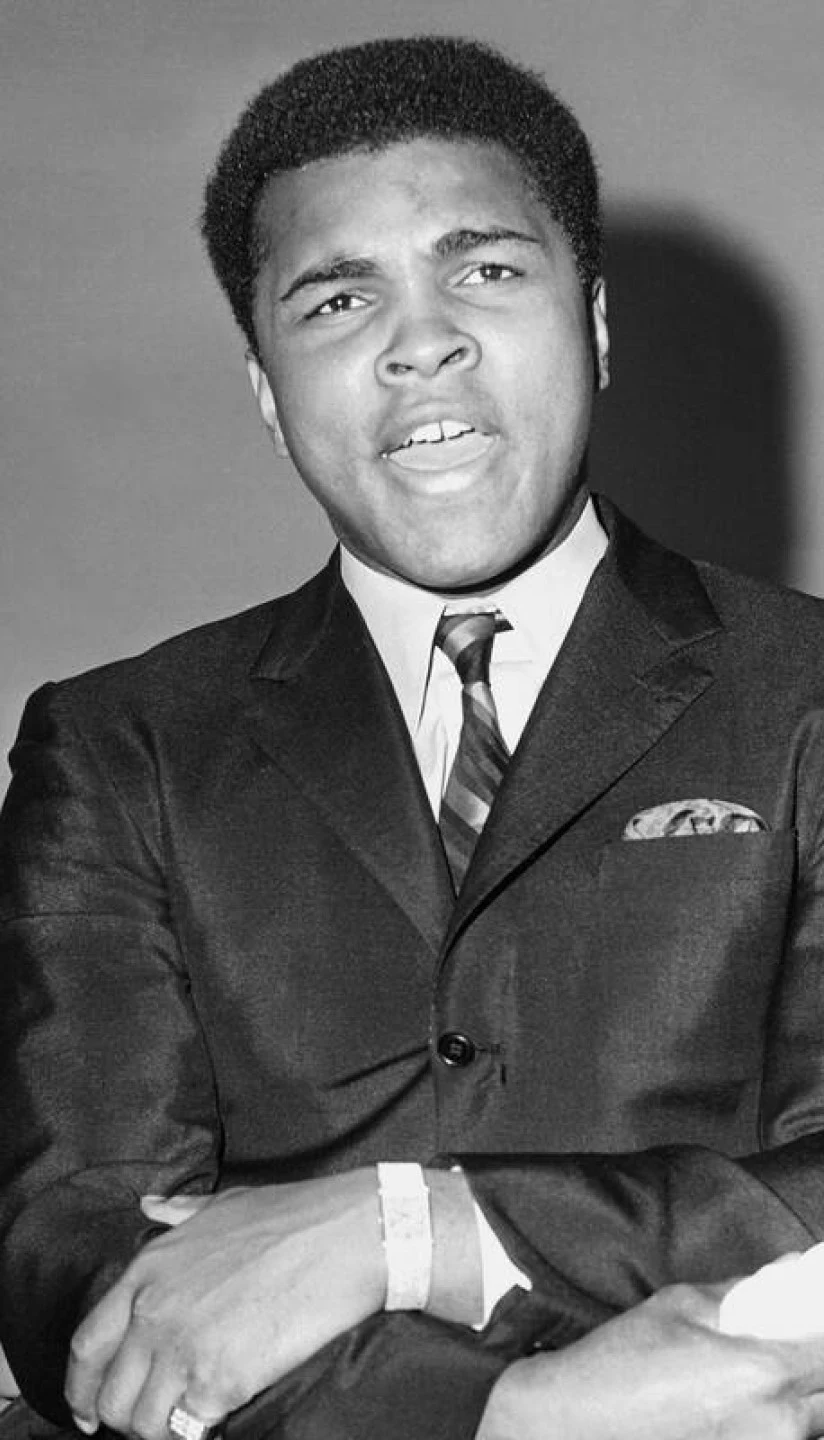
How This All-Time Ranking Works
Sugar Ray Robinson is our choice as the greatest men's professional boxer of all time. The complete top ten is Robinson, Henry Armstrong, Harry Greb, Muhammad Ali, Roberto Duran, Joe Louis, Willie Pep, Ezzard Charles, Sugar Ray Leonard and Floyd Mayweather Jr. This is an editorial pound-for-pound ranking of careers. It compares achievement relative to a fighter's size and circumstances, rather than imagining that a featherweight could physically defeat a heavyweight.
The most important criterion is opposition: who a boxer defeated and how meaningful those victories were at the time. Championship achievement comes next, with attention to the strength and recognition of the title. We then consider sustained excellence, adaptability and technical range. Fame, earnings and an unbeaten record can add context, but none automatically outweighs an exceptional body of competitive work.
These priorities are qualitative. Assigning every victory a supposedly exact number would disguise difficult judgments about era, opponent condition and opportunity. A fighter can earn credit for overcoming disadvantages without receiving automatic compensation for every match that never happened. We distinguish demonstrated achievement from the plausible but unprovable idea that somebody would have beaten an opponent if politics had allowed the contest.
Published rankings show why disagreement is reasonable. The International Boxing Research Organization's 2019 poll and the three lists published by Sky Sports in 2012 contain overlapping names in different orders. Those are dated judgments by identifiable people. They are useful reference points, not a governing body's binding declaration of the best athlete in history.
The scope here is men's professional boxing because that is the historical comparison addressed by this particular ranking. It does not merge women's professional careers or Olympic careers into a poorly defined universal table. Those deserve their own criteria and complete treatment. A list can be useful only when the reader knows the population being compared and the type of achievement being rewarded.
We also avoid punishing every late-career defeat equally. A veteran's unsuccessful final years may alter a career assessment without erasing the performances that established greatness. The reverse is equally important: one wonderful night does not necessarily outweigh years of success against top opposition. Peak skill and career greatness are related questions with different answers.
As you read the profiles, look for the evidence that could change a position. Would you give greater weight to domination of one division, success across several divisions, or victories over other exceptional champions? Explaining that choice creates a better argument than calling disagreement ignorance. The order below is deliberately open to scrutiny, while the underlying dates, opponents and championship achievements remain factual claims that require verification.
The Top Three: Robinson, Armstrong and Greb
The first three places reward a combination of extraordinary competitive depth and achievement that remains difficult to reproduce. Their claims are different. Robinson supplies the most complete blend, Armstrong offers a singular championship feat, and Greb forces us to weigh a remarkable résumé against the limits of surviving visual evidence. Putting them together does not mean pretending that they fought the same opponents under the same circumstances.
1. Sugar Ray Robinson
Robinson became welterweight champion by defeating Tommy Bell in 1946 and won the middleweight championship from Jake LaMotta in 1951. His record against important opponents supplies substance behind the reputation: he defeated Kid Gavilan twice and won five of his six meetings with LaMotta. The BoxRec career chronology separates those accomplishments from exhibitions and disputed amateur folklore.
Our argument for first place combines the ability to box at range, punch in combinations and finish with either hand with repeated high-level success. The technical point is balance. A fighter who can threaten while moving and attack without abandoning his ability to recover presents an opponent with several problems at once. Robinson's career gives that skill a substantial competitive setting. He was more than an elegant collection of highlights.
Losses and difficult nights belong in the assessment. They demonstrate that greatness need not mean invulnerability. His standing comes from the total quality and duration of achievement, rather than a requirement that every performance conform to the legend. A comparison based only on his final win percentage would erase the work that makes the career exceptional.
2. Henry Armstrong
Armstrong simultaneously held the featherweight, lightweight and welterweight championships in 1938. Those are three different divisions, not three organizations' belts at one weight. His featherweight title had been won in 1937; the later victories completed the simultaneous championship position. The distinction matters because modern belt terminology can make a very unusual cross-division accomplishment sound routine.
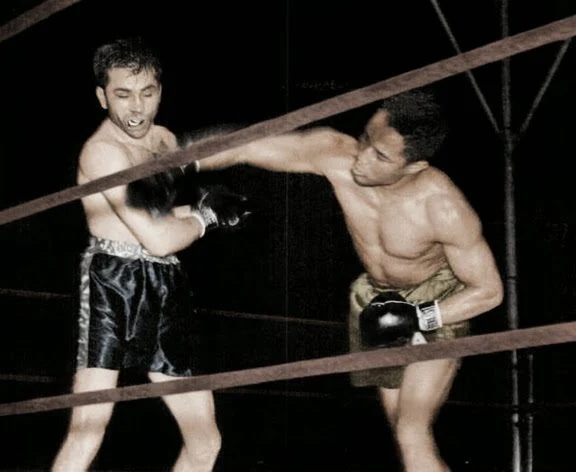
His greatness argument is built around pressure that did useful work. Effective inside fighting denies an opponent comfortable space, opens routes to the body and makes resetting expensive. It requires more than walking forward. Armstrong ranks this high because his pressure translated into championship success across markedly different weight limits. We do not need speculative claims about unusual physiology to explain the sporting evidence.
3. Harry Greb
Greb won the world middleweight championship in 1923 and defeated Gene Tunney and Mickey Walker. His competitive record contains the kind of opposition that an all-time comparison must take seriously. However, reports and records carry much of the evidential burden. We cannot narrate an unavailable official bout as though we have personally watched every combination.
That limitation is part of the judgment, rather than a reason to discard the boxer. Historical greatness cannot be restricted to careers filmed in modern high definition. We place Greb third for the strength and range of his competitive evidence, while acknowledging greater uncertainty about precise technical comparisons. A reader who gives surviving full-fight film more weight can reasonably choose a different order.
Places Four to Six: Ali, Duran and Louis
These three careers test the relationship between dominance and the quality of the challenge. Ali's heavyweight opposition, Duran's achievements beyond his strongest division and Louis's sustained championship work all produce powerful arguments. Their order would change if a reader prioritized one of those qualities above the others. Our placement gives them substantial weight without allowing cultural celebrity to settle the pound-for-pound question.
4. Muhammad Ali
Ali defeated Sonny Liston, Joe Frazier and George Foreman and became a three-time lineal heavyweight champion. Those names and achievements form the sporting foundation of his position. The first-place argument for Ali should begin with his opposition and capacity to solve different heavyweight problems, rather than the observation that he is boxing's most widely recognized historical figure.
His career invites a useful technical comparison between movement and adaptation. A boxer who can control range with the lead hand and feet may still need another solution when an opponent cuts off space or when age changes physical capacity. Ali's greatness includes adjusting to demanding contests across different phases of his career. The later defeats belong in the record but do not erase the championship performances.
Why fourth? Our top three receive additional credit for competitive breadth and achievements relative to smaller weight divisions. That is a criterion decision, not a claim that Ali lacked courage or skill. A heavyweight-focused list would be answering a narrower question and could legitimately place him first.
5. Roberto Duran
Duran won world championships at lightweight, welterweight, junior middleweight and middleweight. His victory over Sugar Ray Leonard in 1980 and his middleweight win against Iran Barkley in 1989 demonstrate why his career cannot be reduced to one famous rematch defeat. The Duran career record supplies the divisions and opposition behind that argument.
Inside craft is the key technical theme. Successful close-range boxing involves position, balance and space for one's own punches while restricting the opponent's. Duran's reputation as a pressure fighter is insufficient unless it explains how pressure becomes effective scoring and damage. The ability to work inside against larger opponents makes his later achievements particularly relevant to a pound-for-pound assessment.
His defeats prevent a simplistic story of uninterrupted dominance. They also sharpen the real case: a long career containing exceptional success at his natural competitive level and important victories above it. Taking the weight context seriously is more useful than either excusing every loss or treating all losses as identical.
6. Joe Louis
Louis captured the heavyweight title from James J. Braddock in 1937 and made twenty-five successful defenses. He stopped Max Schmeling in their 1938 rematch. His position rests on repeated championship proof, with accurate finishing and combination punching giving the numbers their sporting meaning.
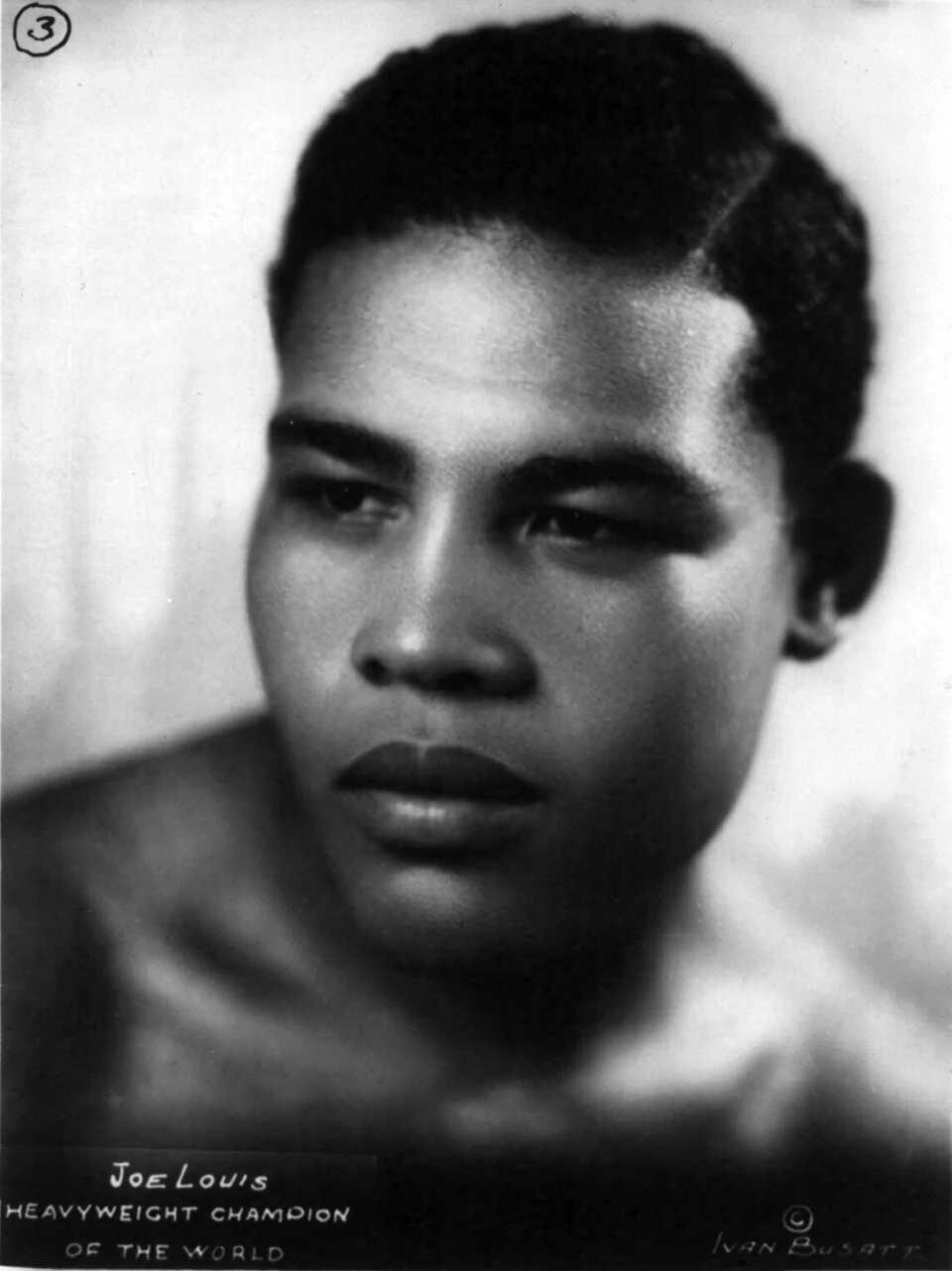
Our sixth place rewards that consistency while keeping opposition and breadth central to the comparison. An excellent finisher does more than hit hard: he recognizes an opening, preserves punching position and connects the next blow to the previous one. That is the useful technical question when watching Louis. The defense total is impressive because it represents recurring competitive responsibility, rather than serving as an automatic conversion into first place.
Places Seven to Ten: Skill Across Different Eras
The final four positions show why technical excellence needs a competitive setting. Defense, combinations and ring management become greatness arguments when they repeatedly solve serious opposition. These careers also warn against judging a fighter only by the belt he never received, one rivalry, or the final number beside his name. Each profile has a distinct strength and a limit that should remain visible.
7. Willie Pep
Pep gained featherweight championship recognition in 1942 and reclaimed the title from Sandy Saddler in 1949. He lost three of their four meetings overall. Both facts belong in the account. The victory shows the level he could reach against an exceptional rival; the series prevents a myth of defense so perfect that no opponent could disrupt it.
His argument centers on movement that changes the opponent's available choices. Good footwork does more than take a boxer away from danger. It can leave him close enough to score while forcing the other fighter to turn, reach or restart. That relationship between avoidance and offense is more useful than repeating the unverified story that Pep won a round without throwing a punch.
We reward his featherweight excellence heavily while keeping the Saddler series in view. A boxer can rank among the best defensive craftsmen without winning every difficult matchup. The technical question is what his movement achieved across the career, not whether it supplied immunity against every style.
8. Ezzard Charles
Charles defeated Archie Moore three times, Charley Burley twice and Joe Louis in 1950. The Charles opponent record is central to his position. He did not need a world light-heavyweight belt beside every important victory for those performances to count. Championship opportunity and competitive quality are related but separate measures.
His career rewards a résumé-led approach. If a fighter beats exceptional opponents while moving through demanding competitive settings, an all-time list should register that work even when the administrative title picture does not neatly reflect it. Our eighth place values Charles's breadth and craft over a simpler count of championship divisions.
The caution is chronological. Beating a famous name does not mean meeting that opponent at his strongest. Each victory should be considered when it happened. Charles's strongest case comes from the combined body of opposition, rather than using the Louis victory alone as a shortcut to ranking above every heavyweight.
9. Sugar Ray Leonard
Leonard defeated Wilfred Benitez, Roberto Duran, Thomas Hearns and Marvin Hagler. His 1981 stoppage of Hearns and 1987 split decision against Hagler are particularly useful comparison points. They show different competitive problems and different kinds of results. A split decision remains an official victory, but its closeness should not disappear from the description.
Our case for Leonard emphasizes adaptability and the quality of his best opposition. Speed is valuable when it supports decisions: when to establish distance, when to counter and when to increase pressure. A shorter career can produce exceptional achievement if the major performances are strong enough. It still cannot be treated as an infinitely extended hypothetical career with every unanswered matchup counted as a win.
10. Floyd Mayweather Jr.
Mayweather won world titles in five divisions and finished his professional career at 50-0. His victories include Manny Pacquiao and Canelo Alvarez. Exhibition appearances are separate from that professional record. The undefeated total is striking, but our criteria require examining opposition and timing rather than stopping at the zero.
His technical case rests on making defense productive: controlling distance, reducing openings and returning accurate scoring shots. Readers can reasonably put him higher if they give greater weight to consistent execution across championship fights. We place him tenth because the historical competitive depth of the other selections receives more weight here. That judgment recognizes his achievement without pretending that an unbeaten record alone can settle every cross-era comparison.
Close Calls and How to Make Your Own Comparison
A top ten imposes a hard boundary on an argument that has no natural stopping point. Sam Langford and Manny Pacquiao are particularly strong alternatives to our final selections. Langford's competitive range and opposition demand serious attention, while discriminatory barriers limited his access to the standard championship opportunities that shaped other careers. Evaluating him only through a count of recognized world belts would reproduce the unfairness of that system.
Pacquiao's widely recognized eight-division championship achievement presents a different challenge. That phrase includes lineal or Ring recognition at certain weights; it should not be translated into eight sets of the modern four organizations' belts. His cross-division success supplies one of boxing's strongest arguments for adaptability relative to size. A reader placing greater weight on breadth could move him into the top ten without abandoning a defensible method.
Rocky Marciano's 49-0 professional career is another familiar point of debate. The unbeaten finish matters, but it cannot automatically decide every comparison. Opponent quality, timing and the scale of opportunity still need examination. Otherwise the method would declare any undefeated career superior to a longer career with many more difficult challenges. A record is evidence to interpret, rather than a machine that produces an all-time ranking by itself.
Other names, including Benny Leonard, Archie Moore and outstanding champions of later generations, deserve full profiles rather than a dismissive label of honorable mention. Our cutoff means that ten careers received detailed treatment here. It does not claim that eleventh place is measurably inferior to tenth in a way that every informed observer must accept.
To construct your own list, begin by writing one sentence describing what you reward most. Then choose a few representative victories for each candidate and identify their dates, conditions and significance. Check whether the boxer solved a deep group of contemporaries, dominated a strong division, or carried effective skills into a different competitive setting. Keep cultural influence in a separate column if your goal is sporting achievement.
Next test your argument with its awkward evidence. Include a difficult loss, a narrow decision and an opponent met after his prime. If the explanation survives those details, it is stronger than one built only from a highlight compilation. This approach is equally useful with the latest boxing results, where a familiar name and an official method alone do not explain the whole performance.
Finally, keep all-time greatness separate from the question of who is best today. Current pound-for-pound lists depend on recent performances, activity and a precise date. The upcoming boxing calendar helps you follow the contests that may change those judgments. Historical greatness develops over a career. Watching new evidence carefully is how future all-time arguments begin.
Keep reading
Related boxing articles
Fight Guides
Why UNLV Moved a Football Game for Canelo–Crawford at Allegiant Stadium
By Boxing Schedule Editorial TeamFight Guides
Boxing Ringwalks and NFL Kickoffs: A Sports Viewing Guide
By Boxing Schedule Editorial TeamFight Guides
Join the conversation
Comments
Comments are reviewed before publication. Keep the discussion useful and focused on boxing.
Sign in with Google to comment
Your public comment shows your account name. Your email address is not displayed.
Commenting as
Loading comments…