Best Boxers of the 21st Century: Careers Since 2000
Compare men's professional boxing achievements since 2000, from Mayweather and Pacquiao to Crawford, Usyk and Inoue, with a separate 2000s view.
What Counts as a 21st-Century Boxing Achievement
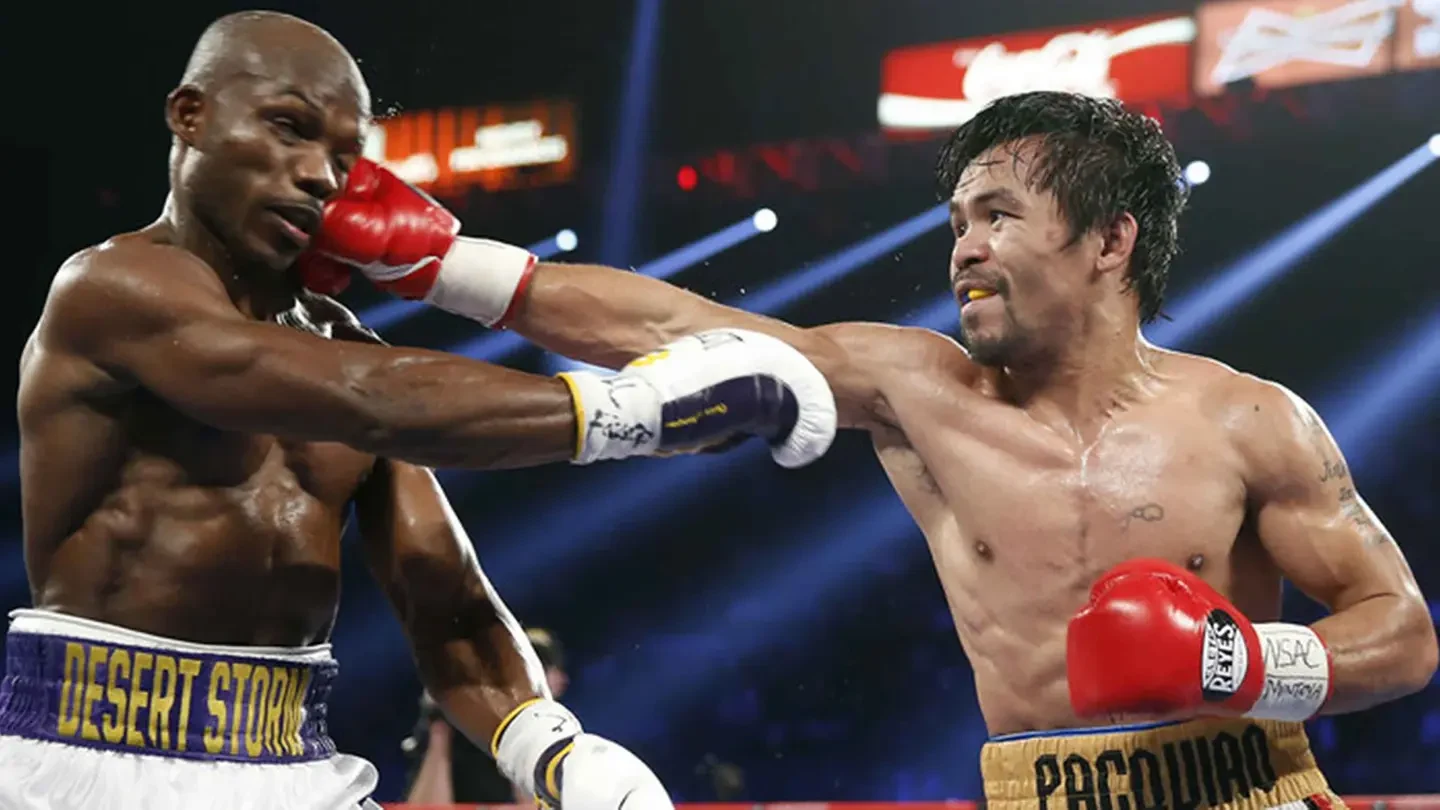
Floyd Mayweather Jr. leads our editorial ranking of men's professional boxing achievements since 2000, followed by Manny Pacquiao, Terence Crawford, Oleksandr Usyk and Naoya Inoue. Those first five names represent different strengths: consistent championship execution, extraordinary movement through weight divisions, repeated undisputed achievement, success against much larger opponents and dominance at smaller weights. The ranking is a comparison of demonstrated work, not a popularity poll.
The assessment uses January 1, 2000 through October 1, 2026 as its window. Strictly speaking, the twenty-first calendar century begins in 2001; boxing comparisons commonly use the sporting shorthand of results since 2000. We state that convention because the eligibility of a performance should never depend on an unstated assumption. Only work inside the window receives credit here.
That matters for fighters who were already outstanding in the 1990s. Mayweather and Pacquiao both began their professional careers before 2000. Bernard Hopkins, Roy Jones Jr. and Lennox Lewis also brought established reputations into the new period. Earlier victories explain how those careers developed, but they do not automatically improve a ranking confined to later achievements. A since-2000 list can therefore differ sharply from an all-time list without contradicting it.
Opposition quality carries the greatest weight, followed by meaningful championship success, adaptation and sustained performance. We distinguish winning several belts in one division from succeeding in several weight divisions. Neither is automatically superior: consolidating a strong division can be more demanding than collecting a loosely recognized title elsewhere. The question is what problem the boxer actually solved.
We also separate cumulative greatness from current pound-for-pound form. A boxer can have an excellent place in the history of this period while no longer being eligible for an active ranking. Conversely, a fast-rising champion may currently look exceptional without having accumulated enough work to displace a career spanning many demanding contests. This article does not claim to be an organization's official rankings.
Finally, the best boxers of the 2000s form a separate comparison. That decade ends on December 31, 2009. Mayweather's victory over Pacquiao in 2015 cannot resolve which man achieved more during the earlier ten years. Crawford's later championships and Usyk's heavyweight victories do not belong in a 2000s ranking either. A fair cutoff keeps the evidence consistent.
The profiles below explain the major cases before a complete top ten appears at the end. The scope is men's professional competition, with exhibitions and Olympic medals considered separately. Our placements are open to disagreement, but the dates and distinctions provide a common basis for discussing it. That makes the list useful as a guide to watching significant performances rather than a claim that history has produced an exact, final score.
Mayweather and Pacquiao Set the Standard
Mayweather and Pacquiao remain the leading reference points because their most important work spans a large portion of the eligible period. Their rivalry also exposes a common ranking error: allowing one head-to-head result to stand in for an entire career comparison. Mayweather's official victory matters. So do the different opponents, divisions and tactical challenges that each man successfully negotiated before and after it.
Floyd Mayweather Jr.: Control Across Championship Fights
Mayweather stopped Diego Corrales in 2001, defeated Jose Luis Castillo twice in 2002, beat Canelo Alvarez in 2013 and won a unanimous decision against Pacquiao in 2015. These are eligible post-2000 achievements. The range of opponents gives his position more substance than the simple observation that his overall professional career finished undefeated.
Our first-place case centers on repeatable control. Defense needs to support scoring: distance management creates openings, accurate counters interrupt an opponent's attack, and disciplined position allows the fighter to reset without handing away an easy return. That is a different standard from moving merely to survive. Mayweather's championship performances repeatedly turned those qualities into official wins.
The comparison still requires opponent timing. Alvarez's later achievements do not mean the 2013 version already possessed every skill of his later career. Pacquiao's 2015 defeat cannot retroactively remove his earlier victories. A strong argument for Mayweather acknowledges those limitations and then points to the accumulated high-level work that remains.
For fans revisiting his fights, follow the opening of each exchange. Watch whether the opponent gets the distance he wants, how Mayweather responds to a lead punch and where both men are left afterward. The decisive work can precede the scoring shot. It is often easier to understand in complete rounds than in clips assembled only from clean counters.
Manny Pacquiao: Success Against Larger Opponents
Pacquiao's victories over Marco Antonio Barrera in 2003, Erik Morales in their 2006 rematches, Ricky Hatton and Miguel Cotto in 2009, and Keith Thurman in 2019 provide a remarkable eligible body of work. The official Thurman fight release records a split decision at age forty, extending his championship evidence into a later generation.
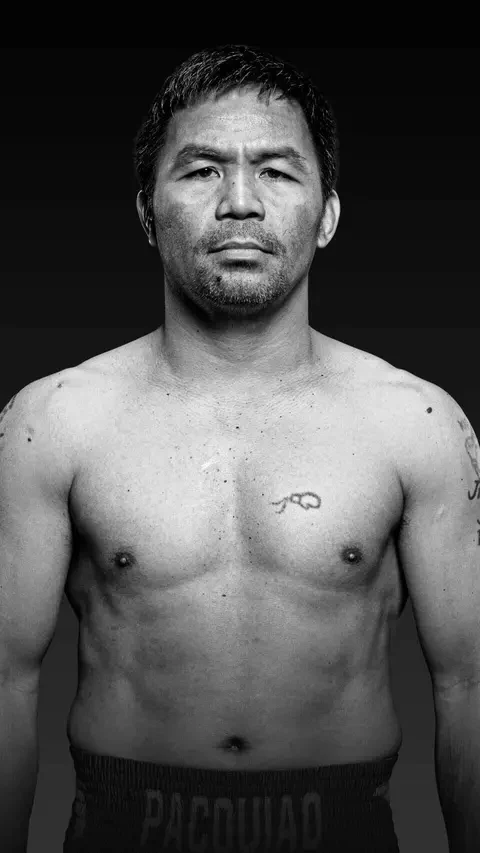
The eight-division championship description includes his pre-2000 flyweight success. We do not count that earlier title as a new achievement inside this window. The distinction leaves an exceptionally strong later case: fast combinations, changing angles and success while moving into larger competitive settings. The point is what those tools accomplished against real opposition.
Our second place recognizes both breadth and sustained achievement. A reader who rewards the risks and adaptations involved in moving through divisions more heavily can put Pacquiao first. That disagreement has a clear basis. Treating either man as obviously inferior because their styles look different misses the central evidence: both repeatedly solved difficult championship problems.
Crawford, Usyk and Inoue Expanded the Argument
The strongest recent challengers to Mayweather and Pacquiao offer three different arguments. Crawford crossed increasingly demanding weight boundaries. Usyk beat heavyweight champions after dominating cruiserweight. Inoue established supremacy in divisions that receive less attention from casual American viewers. Their achievements belong in a century comparison because they happened after 2000, rather than requiring credit for an earlier era.
Terence Crawford's Three-Division Undisputed Achievement
Crawford's victory over Canelo Alvarez on September 13, 2025 changed the scale of his claim. He won a unanimous decision in Las Vegas, with scores of 116–112, 115–113 and 115–113, becoming undisputed super middleweight champion. That followed his undisputed championships at junior welterweight in 2017 and welterweight in 2023, recorded in BoxRec's championship history. The WBO's official report confirms the Alvarez result.
For this comparison, the important question is how a boxer carried his game into a larger division. Crawford could not assume that his smaller-weight physical advantages would transfer against Alvarez. The result therefore strengthens an adaptability argument already built through championship success at 140 and 147 pounds. It also makes an older article that treats his welterweight accomplishments as the end of his story materially incomplete.
Oleksandr Usyk's Cruiserweight-to-Heavyweight Success
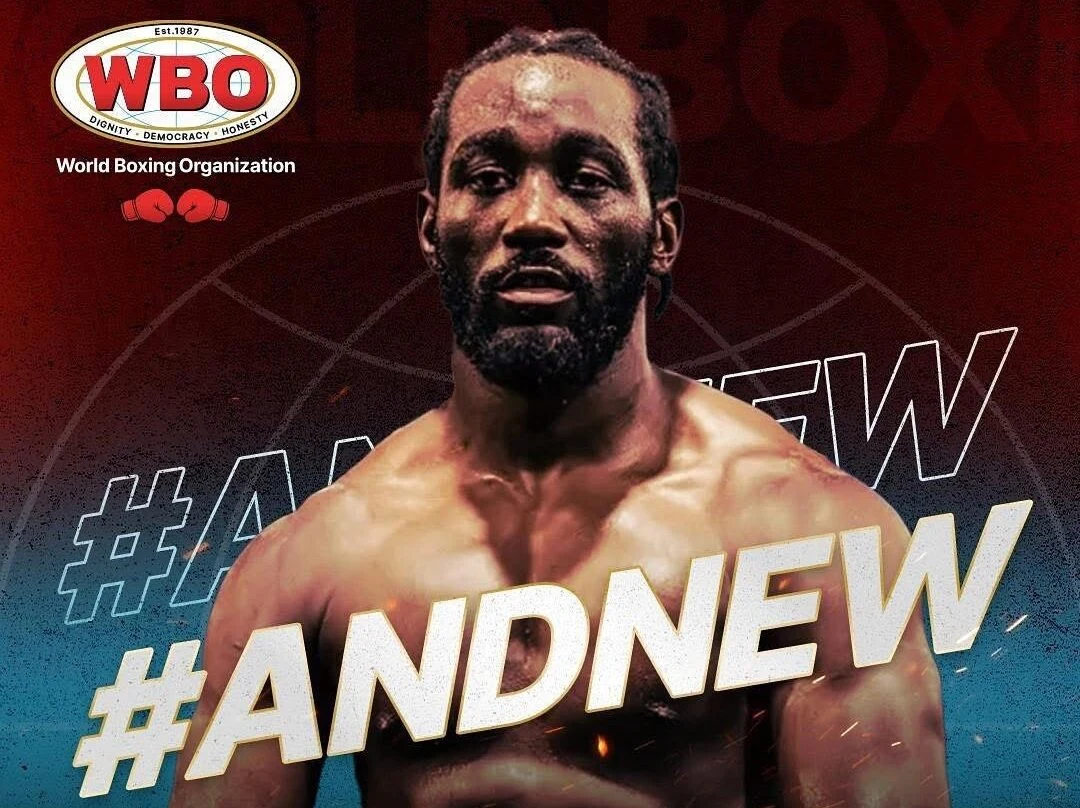
Usyk became undisputed cruiserweight champion by defeating Murat Gassiev in 2018. His heavyweight case then grew through victories over Anthony Joshua and two decisions against Tyson Fury in 2024. On July 19, 2025, he knocked out Daniel Dubois in round five at Wembley, restoring his possession of all four major heavyweight belts. The WBA's Dubois report places that result in his championship progression.
Winning heavyweight titles after cruiserweight success makes size part of the evaluation. Usyk's work is useful to study for how movement, repeated attacks and distance management can reduce a larger opponent's advantages. Those are technical viewing questions rather than a claim that every bigger heavyweight is automatically a better opponent. His repeated heavyweight unifications count as accomplishments in one division; together with cruiserweight, they establish two undisputed divisions, not Crawford's three.
Naoya Inoue's Dominance at Smaller Weights
Inoue's title achievements span light flyweight, super flyweight, bantamweight and super bantamweight. He completed the four-belt collection at bantamweight against Paul Butler in 2022 and did so at super bantamweight against Marlon Tapales in 2023. BoxRec's championship history documents those divisions and opponents.
His case needs no imaginary heavyweight matchup. Compare the accuracy and timing of his finishing attacks with the quality of the opponents who survive them. The demanding 2019 Nonito Donaire fight also belongs in the discussion: a difficult victory can reveal more about adjustment than an effortless knockout. Ranking him fifth here respects an exceptional body of work while leaving room for readers who put greater weight on his sustained dominance to place him higher.
The Best Boxers of the 2000s Need a Separate Comparison
The best boxers of the 2000s means a tighter window: January 1, 2000 through December 31, 2009. For that decade alone, this guide gives Manny Pacquiao the strongest claim, followed by Floyd Mayweather Jr. and Bernard Hopkins as the leading alternatives. That ordering differs from the full-period list because the evidence changes when the clock stops. Mayweather's 2015 win over Pacquiao cannot settle a debate that ended in 2009.
Pacquiao's 2009 victories illustrate the distinction. He stopped Ricky Hatton in the second round on May 2 and Miguel Cotto in the twelfth on November 14. The two bouts tested his work against established opponents at different weights. A viewer can compare the short fight's explosive finish with the longer fight's accumulated pressure, rather than treating both as interchangeable entries in a knockout column.
Contemporary assessments help preserve the argument people were making then. Queensberry Rules and Inside Pulse both published decade lists in December 2009. They are useful evidence of the contemporary debate, not sanctioning-body declarations of an official winner. Read their individual reasoning alongside the dated results.
Hopkins and the Four-Belt Turning Point
Hopkins deserves more than an honorable mention. On September 29, 2001, he stopped Felix Trinidad in round twelve at Madison Square Garden, bringing the WBA, WBC and IBF middleweight titles together. The bout record fixes that achievement firmly inside the decade. His original IBF title victory came earlier, so this article credits the championship work he performed during the selected window rather than importing his entire reign.
On September 18, 2004, Hopkins knocked out Oscar De La Hoya in round nine and added the WBO middleweight belt. The WBA's retrospective confirms that he now held all four major middleweight titles. It is a particularly useful milestone because it connects championship terminology to an actual fight, opponent and finishing round.
The technical comparison is also different from Pacquiao's. Hopkins offers a study in taking away an opponent's preferred work, choosing moments and controlling exchanges. A fan watching the Trinidad fight should ask when Trinidad gets a clean opportunity to establish his attack and how Hopkins answers it. That produces a more informative comparison than assuming that the boxer who attacks more visibly always controls the action.
A decade list should also resist hindsight. Juan Manuel Marquez's knockout of Pacquiao in 2012 strengthens his full-period case, but cannot be evidence for 2000–2009. The later undisputed achievements of Crawford, Usyk and Inoue fall outside this window too. Keeping those boundaries makes the decade answer useful on its own and explains why it need not reproduce a list covering more than twice as much boxing.
A Top Ten Since 2000 and the Performances to Revisit
Our complete editorial order is: 1. Floyd Mayweather Jr.; 2. Manny Pacquiao; 3. Terence Crawford; 4. Oleksandr Usyk; 5. Naoya Inoue; 6. Canelo Alvarez; 7. Bernard Hopkins; 8. Andre Ward; 9. Wladimir Klitschko; 10. Juan Manuel Marquez. The ranking covers achievements within the stated period, rather than a claim that these ten would defeat one another regardless of size. The remaining places deserve their own evidence, especially because a century list should represent more than the best-known welterweight rivalry.
Canelo Alvarez occupies sixth through championship work that culminated in his November 6, 2021 victory over Caleb Plant. The eleventh-round stoppage completed the four-belt super middleweight collection, as the WBA's contemporary report records. The Crawford defeat remains part of his record, but it does not erase the earlier accomplishment. When reviewing Alvarez, consider how an opponent's movement changes his approach and how he creates opportunities to attack the body. Those questions explain both his success and the challenges that stronger opponents presented.
Hopkins is seventh for the post-2000 portion of his work described above. Andre Ward follows in eighth. His victory in the Super Six tournament and championships at super middleweight and light heavyweight establish a different kind of breadth: success through a concentrated set of demanding opponents. Ward's record includes wins over Mikkel Kessler, Carl Froch, Chad Dawson and Sergey Kovalev. A useful viewing question is how his preferred distance changes with the opponent. A tournament title provides context, but the opponents themselves explain why it matters.
Wladimir Klitschko ranks ninth. His win over David Haye on July 2, 2011 is a clear checkpoint in a long heavyweight championship career. His championship history also prevents a common error: the Klitschko brothers collectively held the major belts, while Vitali held the WBC title. Wladimir's collection should be called unified rather than attributing his brother's belt to him. Revisit his fights to examine how the jab controls the approach and sets up the right hand. Long periods of command deserve attention even when they do not produce constant exchanges.
Juan Manuel Marquez completes the ten. He won his first world championship by stopping Manuel Medina in 2003, and his sixth-round knockout of Pacquiao in 2012 supplied the decisive victory in their rivalry. Marquez's career history confirms both. His case is broader than that single finish, but the fight is an excellent study of counterpunching against an aggressive opponent. Watch the sequence preceding the finishing right hand, then compare it with exchanges earlier in the bout. A highlight provides the outcome; the preceding rounds explain the problem each boxer was trying to solve.
For a practical viewing route, choose one fight for each distinct question: Mayweather for range control, Pacquiao for attacks across weight boundaries, Crawford for adaptation, Usyk for managing size, and Inoue for accuracy at speed. Then use the other five to examine championship consolidation, close-range control, heavyweight distance and countering. Keep your notes tied to the actual opponent, date and result. That makes a disagreement about ranking specific enough to discuss.
This historical ranking does not tell you who leads today's active pound-for-pound table or which boxer fights next. Use the boxing calendar for upcoming events and boxing results for completed bouts. New results can change a later edition of this assessment; they should never silently change the time window or rewrite an earlier decade's evidence.
Keep reading
Related boxing articles
Fight Guides
Why UNLV Moved a Football Game for Canelo–Crawford at Allegiant Stadium
By Boxing Schedule Editorial TeamFight Guides
Boxing Ringwalks and NFL Kickoffs: A Sports Viewing Guide
By Boxing Schedule Editorial TeamFight Guides
Join the conversation
Comments
Comments are reviewed before publication. Keep the discussion useful and focused on boxing.
Sign in with Google to comment
Your public comment shows your account name. Your email address is not displayed.
Commenting as
Loading comments…