Bentley vs Hernandez: Purse Bid and WBO Title Decision
The official $200,000 purse bid, its 80–20 allocation, Hernandez's mandatory rights and Bentley's reported decision to leave the WBO title route for Zuffa.
What changed after the Bentley–Hernandez purse bid?
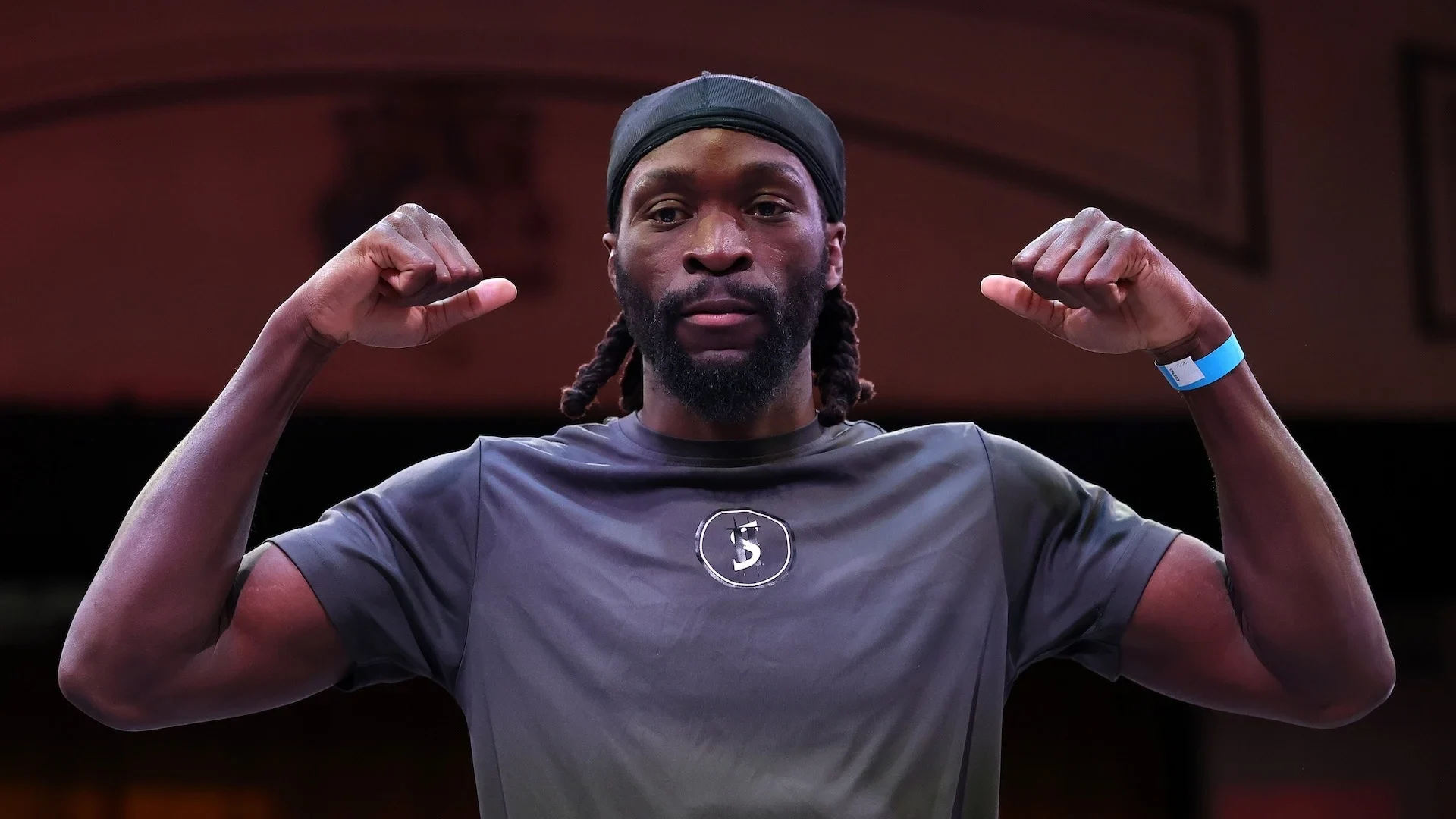
The Bentley versus Hernandez purse bid has become a decision about what a world title is worth to its holder and what a mandatory challenger is entitled to pursue. Warriors Boxing won the September 29, 2026 bidding with a $200,000 offer. The WBO's official result graphic allocates 80 percent to Denzel Bentley and 20 percent to Yoenli Hernandez. That is $160,000 and $40,000 respectively, before considering any separate private arrangements.
The story then moved beyond the bid. In an October 1 report, FIGHTMAG said Bentley had reportedly vacated his WBO middleweight title and signed a multi-fight agreement with Zuffa Boxing, attributing the development to journalist Dan Rafael and a source with direct knowledge. That is a later development than earlier reports describing him as considering departure. A formal WBO notice confirming the completed vacancy was not independently obtained for this article.
Those facts create two distinct questions for fans. The financial question concerns whether the proposed defence made sense for Bentley compared with other opportunities. The sporting question concerns what happens when a champion leaves before facing the mandatory challenger. Sympathy with a boxer weighing his career does not settle the second question; frustration at losing the matchup does not reveal the terms of his alternative contract.
A purse bid also should not be mistaken for a completed fight announcement. It awards promotional rights under the sanctioning body's process. It does not mean that both boxers have signed and will necessarily enter the ring on the promoter's preferred date. That distinction is particularly relevant here because the subsequent reporting describes Bentley choosing another direction.
The figures have drawn attention partly because the champion's title and the commercial offer appear to point in different directions. Championship recognition gives the contest sporting significance, but it does not guarantee that several promoters will compete to stage it. The bid provides evidence about interest in this specific proposition. It cannot establish the value of every middleweight bout, the size of a new Zuffa payday or the likely result of Bentley–Hernandez. Understanding the decision requires keeping those limits visible while following both boxers' next opportunities.
What the $200,000 bid actually means
The winning bid is the starting number for the proposed championship contest's purse distribution. It is not the champion's individual allocation, the promoter's total production budget or a statement of how much money the card would collect. Confusing those measures makes the discussion less useful for both boxers.
Why Warriors obtained the promotional rights
Warriors, Hernandez's promoter, won with the stated minimum of $200,000. The Ring and BoxingTalk reported that there was no other bid; Queensberry did not submit an offer. That lack of competition explains why the auction did not drive the amount upward. It does not establish that no future buyer would ever value Bentley differently in another matchup.
Promoters evaluate a particular package: opponents, location, broadcast opportunity and the audience they expect to reach. A title can strengthen that proposition, but it cannot force a competing offer into existence. The result leaves a reasonable question about support for this specific defence. It does not answer why each potential bidder made its decision, and an absent bid alone does not reveal a promoter's private negotiations or wider plans.
How the official 80–20 split works
The WBO's official result graphic specifies the allocation: $160,000 for Bentley and $40,000 for Hernandez. Multiplying $200,000 by 0.80 and 0.20 gives those two figures. Earlier coverage carrying a 75–25 division and $150,000 for Bentley conflicts with that specific published result.
The difference should not be resolved by assuming that every WBO title defence has one universal split. The organisation's published regulations distinguish between circumstances involving the champion's country or a neutral venue and the challenger's country of origin, residence or nationality. For this proposed contest, the actual result graphic provides the clearest answer. A generic percentage found in an older report cannot override its stated allocation.
A gross allocation is not take-home pay
Those allocations describe the bid's terms for a fight that would still have to take place. They are not evidence that either boxer has already received the money. They also do not tell us what would remain after a fighter's individual arrangements and expenses. Without those details, calculating an exact net amount would produce another unsupported number.
Private compensation can also differ from the auction's distribution. BoxingTalk noted the possibility of a separate agreement between Hernandez and Warriors, but did not establish a different payment. That possibility belongs as a limitation, not an extra purse figure. The same restraint applies to Bentley's reported new contract: the existence of a multi-fight commitment does not disclose its guarantees. Fans can regard the bid as disappointing while acknowledging that the comparison with an alternative offer remains incomplete.
Why Hernandez's mandatory position blocked unification
Bentley's interest in Aaron McKenna did not remove Hernandez from the WBO process. In its September 2 negotiation order, the organisation instructed the Bentley and Hernandez teams to negotiate the mandatory championship contest. It allowed twenty days to reach an agreement and established the middleweight purse-bid minimum at $200,000. That provides a direct documentary starting point for the later auction.
A mandatory challenger is an opponent designated through the sanctioning body's process for an enforced title opportunity. The designation has a different function from a promoter selecting a voluntary defence because it believes the matchup will sell. Its sporting value is access: a challenger can pursue the championship without depending entirely on whether the holder finds him commercially attractive.
That does not mean every mandatory matchup is automatically the division's most exciting contest. Fans can prefer a unification, question a challenger's credentials or debate the timing of an order. Those are valid sporting discussions. They still need to account for the existing obligation instead of assuming that a more appealing commercial proposal supersedes it.
An elevated champion inherits obligations
Bentley won the interim WBO title by stopping Endry Saavedra in the seventh round on April 4, then became full champion in July after Janibek Alimkhanuly moved up in weight. Interim and full recognition describe different stages of his title status; neither should be confused with winning a unification bout against another reigning champion.
In its September 5 report, The Ring relayed WBO president Gustavo Olivieri's explanation that Bentley inherited the division's pending mandatory obligations when he was elevated. Olivieri said the enforcement determination preceded the proposed unification agreement with IBF champion McKenna. The stated issue was therefore the order of obligations, rather than a claim that Bentley and McKenna could never meet.
For fans, the distinction matters because unification also has real sporting appeal. Two titleholders can reduce the number of champions and provide a more direct comparison between leading boxers. But postponing an already enforced mandatory also postpones the challenger's route. A reasonable debate has to recognize both gains and costs. Wanting the unification is understandable; explaining the WBO decision requires following the earlier order and the challenger it was intended to serve. No assumption about a platform's motives is necessary to make that chronology clear.
Hernandez loses a champion to challenge, not just a payday
The champion's decision dominates the headline, but Hernandez also has a stake in what happens next. His allocation under the original bid was the smaller $40,000 share. In the September 30 boxing discussion on Reddit, one contributor specifically asked why sympathy for Bentley's proposed purse was receiving more attention than Hernandez's. That is an individual viewpoint, but it identifies a fair question: both fighters' opportunities belong in the assessment.
Hernandez's case also has a sporting history. He defeated Francisco Daniel Veron by majority decision over ten rounds on August 22 in Las Vegas. That brought him to 11-0 with nine knockouts at the time. The result establishes a recent performance to discuss; it does not prove how a twelve-round championship fight with Bentley would have unfolded. A mandatory designation creates the opportunity to answer that question in the ring, rather than awarding the answer in advance.
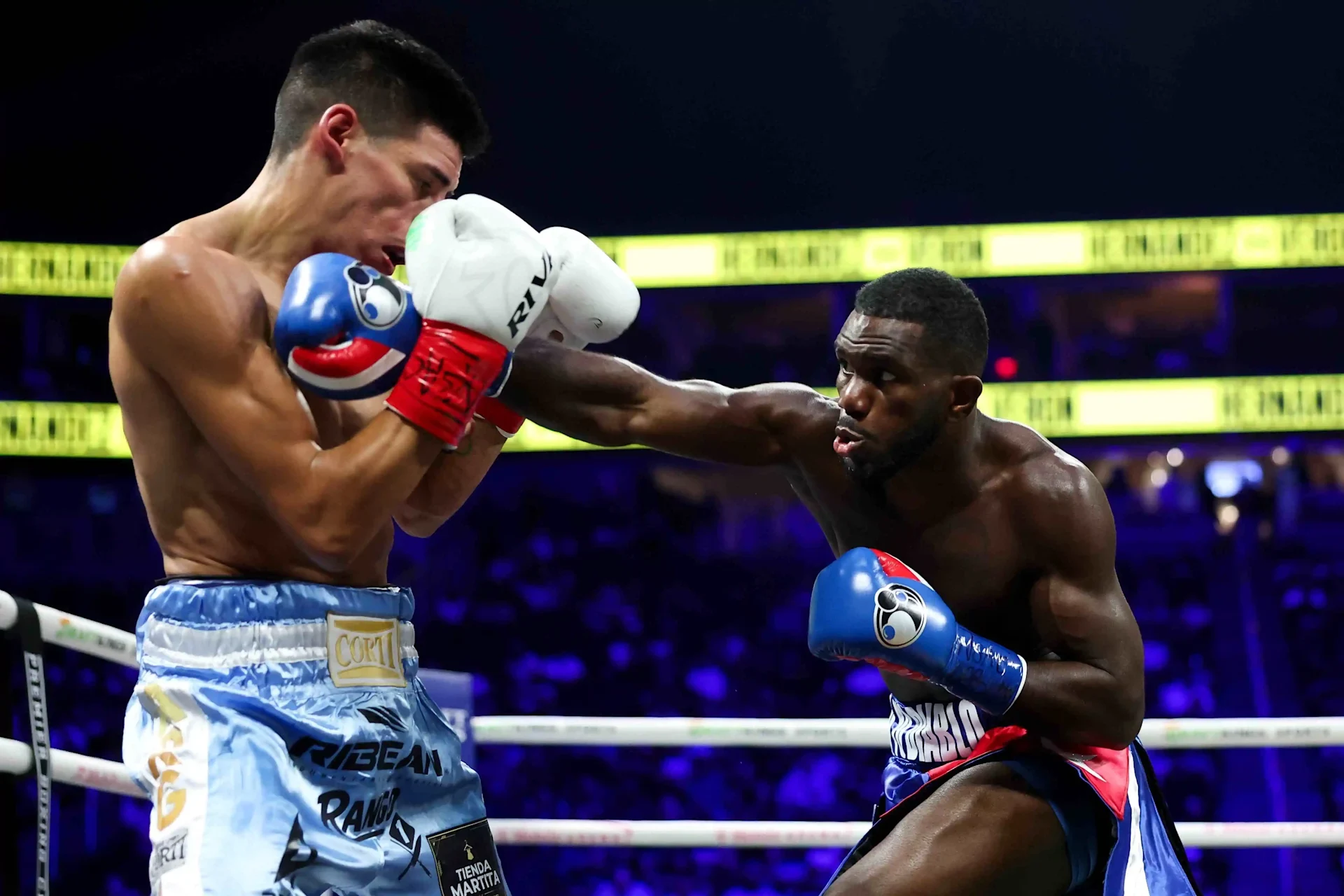
If the reported departure is completed, Hernandez would lose the chance to take this particular championship from its incumbent. A vacant-title opportunity could still carry substantial value, but it would be a different contest against a different opponent. Its difficulty, timing and commercial terms cannot simply be carried over from the Bentley proposal.
Nor does a reported vacancy automatically make Hernandez the new champion. The WBO's published vacant-title procedure gives its committee responsibility for determining the contest or contests used to fill the opening. A specific order would establish who is involved. Fans naming Tim Tszyu or another preferred opponent are discussing possibilities; their proposals are not the organisation's appointment or a signed fight announcement.
The challenger therefore faces uncertainty as well as potential opportunity. His team needs a defined opponent and a workable arrangement, while fans want a meaningful test that helps clarify the division. It is possible to respect Bentley's freedom to choose a promotional direction and still regard the missing champion-versus-mandatory contest as a sporting disappointment. The two judgments do not cancel each other.
For evaluating Hernandez's credentials, start with the bouts he has actually completed and the opponents he has actually faced. The boxing results page helps separate past performances from future proposals. A changed title route should be assessed when its real matchup emerges, rather than treated as a guaranteed easier path or a guaranteed larger payday.
What a Zuffa deal can change for Bentley
A multi-fight promotional agreement can offer something a single purse bid cannot: a framework for more than one appearance. It may give a boxer and promoter a longer period in which to build an audience, choose suitable contests and establish a recognisable place on their cards. Those are possible advantages of continuity. They do not establish the payment, opponent quality or activity that a particular contract guarantees.
Separate the reported departure from a completed title process
The latest reporting says Bentley has chosen that route. FIGHTMAG's October 1 account attributes the reported title departure and Zuffa signing to Rafael's source. It describes a November 7 return in London in the co-feature beneath Chris Billam-Smith against Cheavon Clarke, with Bentley's opponent still to be determined. Those details should retain their reported status until the relevant official announcements specify them.
A fighter deciding to relinquish a title, a journalist reporting that decision and the sanctioning body publishing its next championship order are separate steps in the public record. The absence of an independently obtained WBO vacancy notice here is not proof that the reported decision is false. It means the article can describe the latest attributed information without claiming to have seen a document it has not verified.
Financially, the key comparison remains undisclosed. No verified Zuffa purse for Bentley is available in the reporting reviewed. Calling the move an immediate pay rise would therefore go beyond the evidence. A boxer can value a longer commitment for reasons other than the next cheque; fans still need the actual matchmaking to judge its sporting value.
A McKenna fight would need a different label
McKenna remains part of the discussion because the earlier proposal involved the IBF and WBO middleweight champions meeting. If Bentley relinquishes the WBO title, he cannot bring that belt into a subsequent contest. A fight against McKenna while McKenna holds the IBF championship could be a title challenge, but it would not unite those two belts.
That distinction changes the stakes without making the matchup meaningless. Facing a leading titleholder can still provide a valuable sporting test and an opportunity to become champion. It simply asks a different question from combining championships already held by both participants. Neither the reported new contract nor the earlier interest establishes that Bentley–McKenna has been booked. The opponent eventually named for Bentley's next bout will provide the first concrete evidence of the direction this change creates.
What fans should check before judging the decision
The discussion around the reported move contains two legitimate concerns. Some fans dislike seeing an enforced championship matchup disappear. Others defend a prizefighter's decision to seek terms he considers better for his career. The October 1 Reddit thread linking Rafael's report included both arguments, as well as hopes for more activity. Those reactions describe a debate; they do not reveal Bentley's complete contract or establish how he would have performed against Hernandez.
The first useful test is the opponent. If Bentley's new direction produces a meaningful challenge, fans can assess that contest on its own merits. If it produces a series of low-stakes appearances, the reported length of the deal alone will be less persuasive. The same standard should apply to Hernandez's replacement route: the boxer selected, the title at stake and the actual sporting test matter more than a preferred name circulating in a comment thread.
The second test is activity. A plan to compete more often becomes valuable when dates become bouts and bouts become performances. One scheduled appearance cannot establish the success of a multi-fight strategy. Conversely, a temporary gap while a new opponent is selected does not prove that the strategy will fail. Follow the announced contests over time rather than treating a contract headline as a completed career outcome.
The third test is the title description. Look for the WBO's next order for its middleweight championship and the official status attached to any Bentley fight. Championship recognition, a mandatory designation and a vacant-title contest are different pieces of information. Using the correct label helps fans understand what a victory would achieve and what remains unresolved in the division.
For watching and planning, confirm the opponent, event date, venue and regional broadcaster in the eventual announcement. The boxing calendar and boxing TV and streaming listings are useful places to follow the public schedule. A promoter's proposed date from a purse bid and a reported new appearance should not be combined into one confirmed itinerary.
The evidence currently supports a precise account: Warriors won the minimum bid, the official split heavily favoured Bentley, and later reporting described him leaving that title route for Zuffa. The promised comparison now needs real fights. Bentley's career choice and Hernandez's championship opportunity should both remain part of the story until those fights show what each boxer actually receives.
Keep reading
Related boxing articles
Fight Guides
Why UNLV Moved a Football Game for Canelo–Crawford at Allegiant Stadium
By Boxing Schedule Editorial TeamFight Guides
Boxing Ringwalks and NFL Kickoffs: A Sports Viewing Guide
By Boxing Schedule Editorial TeamFight Guides
Join the conversation
Comments
Comments are reviewed before publication. Keep the discussion useful and focused on boxing.
Sign in with Google to comment
Your public comment shows your account name. Your email address is not displayed.
Commenting as
Loading comments…