Artur Beterbiev Record: 21 Wins, 20 Stoppages and the Fights That Explain Them
Read Artur Beterbiev's verified 21-1 professional record, the twenty-stoppage run, his world-title milestones and the different streaks ended by the two Bivol decisions.
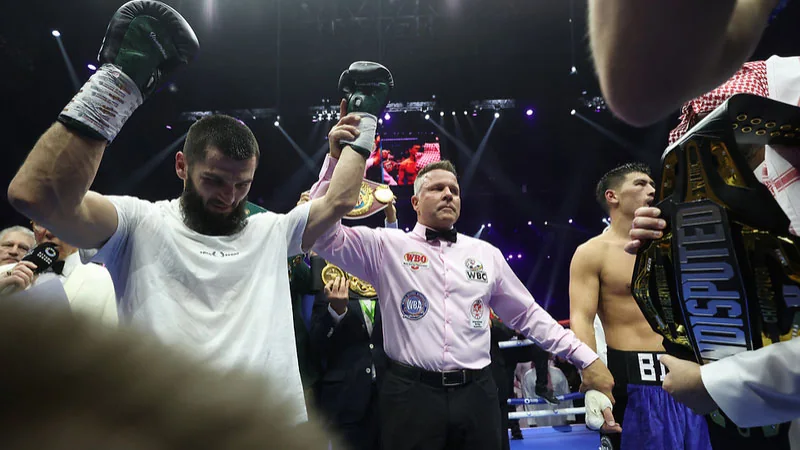
Beterbiev's professional record at a glance
Artur Beterbiev's verified professional record is 21 wins, one loss and no draws, with 20 stoppage victories, checked on October 14, 2026. The latest completed bout in that record is his February 22, 2025 majority-decision defeat to Dmitry Bivol. The WBA's current profile lists 21-1-0, while Top Rank's rematch result supplies the 20-stoppage total.
That line contains three distinct parts of the story: twenty wins inside the distance, one win on the judges' cards and one loss on the cards. It does not say that Beterbiev has been stopped professionally. His only recorded defeat in this total was a decision, and the same opponent had previously become the first professional boxer to take him to the final bell.
The percentage needs a denominator. Twenty stoppages in twenty-two contests is approximately 90.9 percent. Twenty stoppages among twenty-one victories is approximately 95.2 percent. Both calculations use the same career results, but neither is the old 100 percent figure that accompanied the first twenty wins. The end of a perfect finishing streak and the end of an unbeaten record happened in different fights.
Read older profiles with their last result in mind. Beterbiev's personal statistics page still ends at the October 2024 Bivol victory, showing 21-0. That is a historical checkpoint rather than the complete later record. Likewise, an announced opponent is not another result: a planned contest contributes nothing to the totals until it actually happens and an official outcome is recorded.
The professional line also should not be combined with amateur appearances. An experienced amateur can begin a professional career at 0-0, because those categories count different competitions. This article follows the professional results and the championship milestones that give them meaning.
The striking feature is not simply the number of stoppages. It is that the run continued through world-title fights, unifications and different types of opposition before Bivol forced a different kind of contest. To understand Beterbiev's record, trace how those opponents changed the problem he had to solve.
How the knockout run became a championship career
The IBF title and the Gvozdyk unification
Beterbiev won the vacant IBF light-heavyweight title by stopping Enrico Kölling in the twelfth round on November 11, 2017. That matters when interpreting the streak: a perfect finishing record did not mean every opponent disappeared immediately. His first world-title victory required him to keep working into the final scheduled round, rather than simply win a short exchange at the opening bell.
On October 18, 2019, he stopped Oleksandr Gvozdyk in the tenth to add the WBC title. This was a unification within the light-heavyweight division, not a move to a new weight class. The opponent and championship context made it more significant than another stoppage added to a development run. Beterbiev had converted a formidable finishing record into a victory over a fellow champion.
The distinction between winning a belt and unifying belts is useful here. The IBF victory established his first major world championship. Defeating Gvozdyk combined major titles. Neither result made him four-belt undisputed at that point. The record shows a sequence of accomplishments, not one title achievement repeated every time a belt appeared in a photograph.
Joe Smith Jr, Yarde and Callum Smith tested different problems
The Joe Smith Jr unification on June 18, 2022 ended in the second round and added the WBO title. The WBC report describes exchanges in which Beterbiev found accurate counters and combinations. The analytical lesson is that pressure does not have to mean taking turns trading the same punch. Position and timing can decide an apparently explosive meeting quickly.
Anthony Yarde took him into the eighth round on January 28, 2023. Callum Smith was stopped in the seventh on January 13, 2024. Those are different opponents and different contests; Callum Smith should not be confused with Joe Smith Jr. The first was another defense of the established championship position, while the second continued the run to twenty professional wins and twenty stoppages.
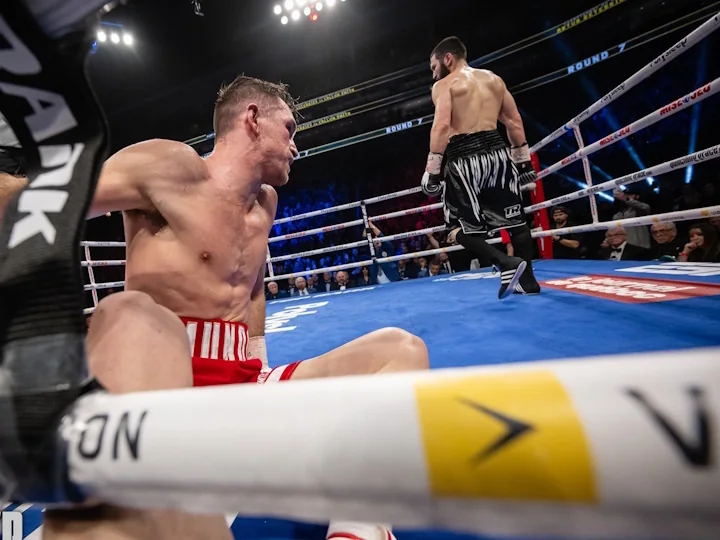
The WBC's Callum Smith report describes two seventh-round knockdowns before the finish. That is more informative than reducing the bout to another “KO.” It suggests looking at how an opponent's options narrowed as the contest developed, while the actual sequence still needs the report or footage rather than imagination.
Across these milestones, the rounds vary sharply: twelve, ten, two, eight and seven. A single career percentage compresses that variety. For a fight fan, the useful next question is what the opponent could sustain under pressure and what Beterbiev had to do to keep creating openings. The result table supplies the dates and endings; the quality of the opponents gives those endings their weight.
What the two Bivol decisions changed
A decision win ended one streak; a decision loss ended another
On October 12, 2024, Beterbiev defeated Dmitry Bivol by majority decision, with cards of 116–112, 115–113 and 114–114. He became the four-belt undisputed light-heavyweight champion, but the twenty-fight stoppage run ended. That is the important statistical combination: the result was a victory, the championship achievement grew, and the perfect finishing percentage disappeared.
The WBC's report records a majority decision, not a split decision or unanimous decision. Two judges selected Beterbiev and the third scored it even. The abbreviation tells you the pattern of agreement. It does not settle every disagreement about individual rounds or mean that Bivol failed to present a serious problem.
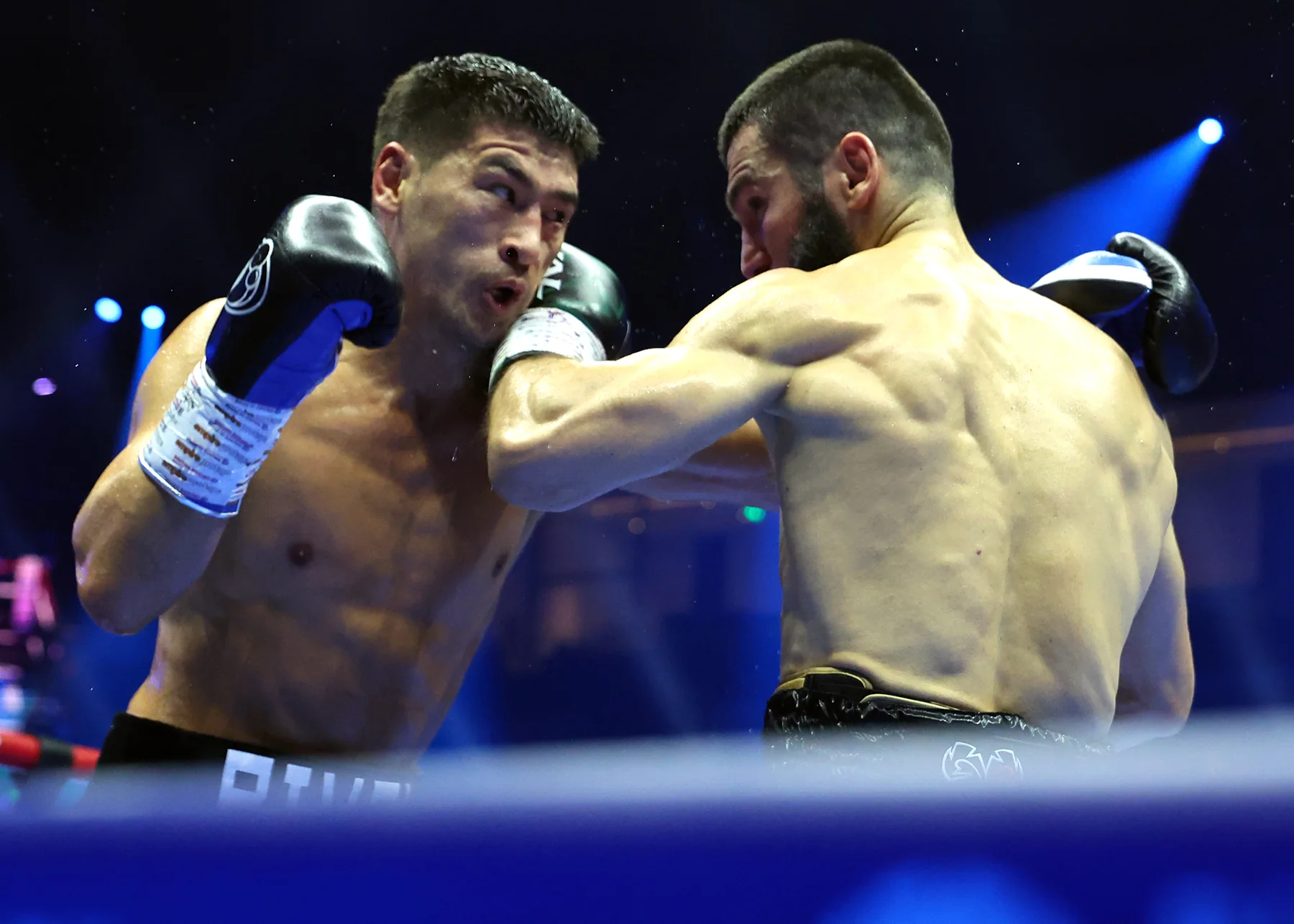
The February 22, 2025 rematch reversed the winner. Bivol received 116–112 and 115–113, with the remaining judge scoring 114–114. Beterbiev's career became 21-1, and his four-belt reign ended. Again, the method was majority decision. The matching final numerical pattern across two contests does not mean the judges saw identical rounds; each scorecard belongs to its own fight.
These are separate boundaries in the record. The first meeting established that an opponent could survive the distance and still lose to Beterbiev. The second established that Beterbiev could be outpointed. Neither established that he had been stopped professionally. Treating the second result as if it erased the first title win would flatten the chronology; treating the first as if the rematch never happened would leave the record incomplete.
The series was one victory each after those two meetings. That is not a draw on either man's career record. A drawn series description is ordinary shorthand for their rivalry; an official drawn bout would add a different kind of result. The distinction matters when checking totals or reading a headline without the underlying method.
For Beterbiev's career assessment, Bivol supplies a particularly demanding comparison because the opponent could contest distance, timing and rounds without conceding the usual stoppage. That is an analytical reason to study these fights alongside the earlier finishes, rather than regard them simply as interruptions to a knockout highlight reel. The Bivol fighter profile provides a separate place to follow the other side of the matchup.
Read the record as pressure, positioning and opponent quality
A high stoppage rate is an outcome, not a complete style
Calling Beterbiev a puncher is accurate but incomplete. A stoppage total tells you the ending, not how the opening was created. When studying his major fights, watch the distance before the exchange, the position of his feet and what the opponent can do afterward. Pressure is most revealing when it limits an escape route; simply walking after someone is not the same tactical achievement.
That is a viewing framework rather than a claim that every sequence follows one pattern. Ask whether the jab makes an opponent set, whether a step keeps Beterbiev in range without reaching, and whether body work changes the opponent's ability to leave. The useful detail is often the movement that makes the punch possible. A highlight that begins at the impact can remove precisely that explanation.
The Joe Smith Jr result and the later Callum Smith result also caution against describing every finish as identical. One ended very early; the other developed into the seventh. A high finishing rate can contain counters, combinations, cumulative pressure and responses to a changing opponent. You need the individual fight to identify which explanation applies.
Why the difficult rounds belong in the story
A strong record should include the problems faced along the way. The WBC's historical preview discusses professional knockdowns against Jeff Page Jr and Callum Johnson. Those episodes matter because being unbeaten was never the same as being untouched. They also show why an amateur claim on a profile should not be transferred to the professional career without checking the category.
Longer victories deserve similar attention. The Kölling and Gvozdyk finishes required more rounds than a quick compilation suggests. Marcus Browne's ninth-round loss is another result to study in full rather than treating its method as a complete account. Look at what the opponent tried, whether the pressure changed and how the boxer who eventually lost created difficulties before the finish.
Opponent quality changes the value of that evidence. Defeating a fellow champion in a unification asks a different question from dispatching a development opponent. A loss to an elite boxer also supplies information that an unblemished total might conceal. Beterbiev's career is more intelligible when the Bivol decisions sit beside the championship stoppages, rather than when either set is used to erase the other.
There is another useful comparison within a fight: what does the opponent spend to keep the contest at their preferred distance? A boxer may complete an effective escape but need to repeat it throughout the round. Conversely, a pressure fighter may reach the target once while conceding several cleaner scoring exchanges on the way. These are different kinds of success, which is why the same performance can create both threatening moments and close scorecards. Count the actual exchanges and their quality rather than awarding a round merely for forward movement.
That approach also avoids treating a late finish as inevitable after the fact. Once the ending is known, earlier resistance can look like a temporary delay in a predetermined story. Watch those earlier rounds without skipping them, and compare the exchanges before and after a tactical adjustment. Ask which adjustments were available, what worked for the opponent and when the pattern changed. A stoppage tells you that Beterbiev ultimately solved enough of the problem in that contest; it does not mean the problem never existed.
For future analysis, keep the distinction between a historical strength and a guarantee. The record supports describing an exceptional run of finishes at a high level. It does not prove that every later opponent will be stopped, that a decision was a failure of effort or that one defeat explains every possible matchup. That judgment still needs the specific opponent and the evidence available at the time.
Check the next completed result before changing the totals
The record in this guide ends with the completed Bivol rematch. A proposed return, a discussion about a trilogy or an old event listing does not add another win. In particular, a reported 2025 meeting with Deon Nicholson was subsequently described as cancelled by Boxing News. It should not appear as a completed result simply because the original announcement remains searchable.
For a future booking, look for a dated official announcement identifying the opponent, event and venue. For a completed contest, look for the official winner, method and distance before changing the career totals. The weekend boxing schedule and boxing results page serve different purposes: one helps plan viewing, while the other records what has actually happened. A scheduled matchup is not evidence about how Beterbiev performed in it.
These checkpoints make the career easier to keep in sequence:
| Checkpoint | What changed |
|---|---|
| Kölling, 2017 | First major world title, IBF |
| Gvozdyk, 2019 | Added the WBC title |
| Joe Smith Jr, 2022 | Added the WBO title |
| Callum Smith, January 2024 | Reached twenty wins and twenty stoppages |
| Bivol, October 2024 | Undisputed champion and first decision win |
| Bivol, February 2025 | First professional defeat, by decision |
When another result arrives, separate its effect on the numbers from its meaning in the ring. A decision victory would add a win without a stoppage. A stoppage would change both. Either still requires context: the opponent's level, the scheduled distance and the way the contest unfolded. A return after inactivity also raises questions about timing and sustained pressure that an opponent's name alone cannot answer.
For viewing, choose a concrete question instead of a prediction disguised as a certainty. Can he keep an opponent within punching range? Does he remain balanced after a combination? What happens when the other boxer exits before the follow-up? Those questions connect his historical strengths with the actual matchup, while leaving room for the evidence of a new fight.
Beterbiev's 21 victories, twenty stoppages and two major Bivol decisions form a career with several distinct phases. The accurate record preserves the finishing run, the undisputed achievement and the later defeat together. That is a more useful account than either a timeless “100 percent KO” label or a single loss treated as the whole story.
Keep reading
Related boxing articles
Fight Guides
Why UNLV Moved a Football Game for Canelo–Crawford at Allegiant Stadium
By Boxing Schedule Editorial TeamFight Guides
Boxing Ringwalks and NFL Kickoffs: A Sports Viewing Guide
By Boxing Schedule Editorial TeamFight Guides
Join the conversation
Comments
Comments are reviewed before publication. Keep the discussion useful and focused on boxing.
Sign in with Google to comment
Your public comment shows your account name. Your email address is not displayed.
Commenting as
Loading comments…